
In This Article
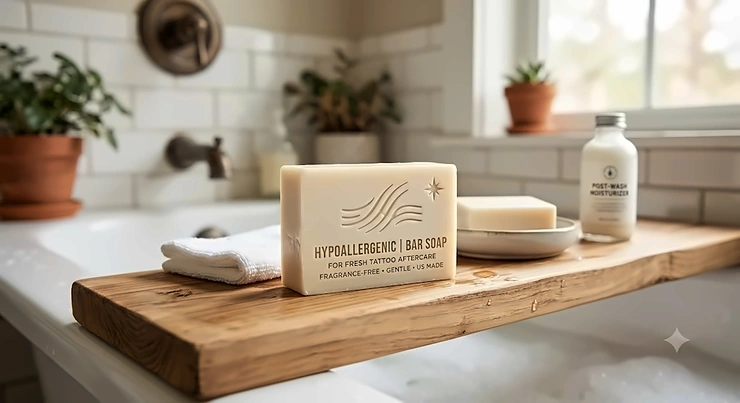
Fresh ink is basically a controlled wound, and whatever bar you’re lathering up with is about to spend two weeks in direct contact with it. That’s the part nobody mentions at checkout. You pick the design, you pick the artist, you agonize over placement for a month — and then you grab whatever’s sitting on the shower shelf to wash it. If that bar is loaded with dye, sulfates, or a fragrance blend strong enough to announce itself from across the bathroom, you’re rolling the dice on irritation right when your skin can least afford it. A hypoallergenic bar soap for tattoo aftercare is formulated specifically to skip those troublemaker ingredients — no synthetic fragrance, no harsh detergents, no dyes — while still lifting away plasma, ointment residue, and bacteria without stripping the skin barrier your tattoo needs intact to heal cleanly. Board-certified dermatologists consulted by the American Academy of Dermatology routinely flag fragrance and dye as the top irritants behind post-tattoo skin reactions, which is exactly why the soap question deserves more thought than most people give it.
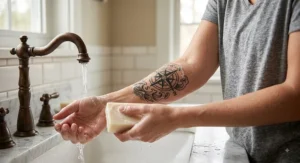
This guide breaks down seven real, current bar soaps worth considering, walks through how they actually perform across the healing timeline, and digs into the stuff that matters more than a pretty label — pH, lather type, what “hypoallergenic” legally does and doesn’t guarantee, and when a bar soap should hand things off to an ointment. No fluff, no invented five-star reviews. Just what the ingredient lists and aggregated customer sentiment actually say.
Quick Comparison Table: Hypoallergenic Bar Soaps for Tattoo Aftercare at a Glance
Before the deep dive, here’s the shortcut for anyone standing in a drugstore aisle or hovering over an “Add to Cart” button, trying to decide fast.
| Soap | Best For | Fragrance | Price Range |
|---|---|---|---|
| Dr. Bronner’s Pure-Castile Bar Soap (Baby Unscented) | Best overall, budget-friendly | Unscented | Under $8 |
| Neutrogena Fragrance-Free Gentle Cleansing Bar | Most widely available option | Fragrance-free | Under $10 |
| Dove Sensitive Skin Beauty Bar | First-timers, everyday budget pick | Unscented | Under $6 |
| Saniderm Tattoo Bar Soap | Studio-grade daily cleansing | Fragrance-free | $10-$15 range |
| VI Tattoo Soap Shea Butter Bar | Dry, flaky, or reactive skin | Unscented | $10-$15 range |
| Banger Tattoo Care Day 1 Bar | Fresh, first-two-week healing | Fragrance-free | $12-$18 range |
| Ground Soap Afterglow Organic Bar | Eco-conscious, small-batch buyers | Unscented | $12-$18 range |
Notice the pattern: none of the genuinely tattoo-friendly options lean on synthetic fragrance, and the price spread isn’t as wild as you’d expect — the jump from a drugstore staple like Dove Sensitive Skin Beauty Bar to a tattoo-specific bar like Banger Tattoo Care Day 1 Bar is really just a few dollars, not a luxury markup. What actually separates them is formulation intent: general-purpose sensitive-skin bars are built to avoid causing harm, while the tattoo-specific bars like Saniderm Tattoo Bar Soap and VI Tattoo Soap Shea Butter Bar are built to actively support healing skin with barrier-friendly oils. If your budget is tight, the drugstore picks aren’t a downgrade so much as a slightly less specialized version of the same idea.
💬 Found a pick you like already? Skip ahead and save it for aftercare day — your future self will thank you.
Top 7 Hypoallergenic Bar Soaps for Tattoo Aftercare: Expert Analysis
Seven real products, spanning drugstore budget to small-batch premium, all vetted for the two things that actually matter here: a genuinely gentle formula and enough real-world track record to trust.
1. Dr. Bronner’s Pure-Castile Bar Soap (Baby Unscented) — the fragrance-free classic dermatologists keep citing
This is the bar that shows up in nearly every “gentle soap” recommendation list, and there’s a reason it’s stuck around. The formula leans on saponified organic oils — coconut, olive, hemp, jojoba — with zero synthetic fragrance, zero synthetic preservatives, and a lather that’s noticeably lighter than a typical commercial bar. In practice, that means it cleans without leaving the tight, squeaky-clean feeling that actually signals your skin barrier just got stripped, which matters enormously on newly tattooed skin that’s already working overtime to repair itself. Based on the ingredient comparison, this is one of the few widely available bars with essentially no irritant profile beyond trace plant allergens, making it a smart default pick for people who’ve never had a reaction to anything and want to keep it that way. Reviewers consistently mention that a single bar lasts through multiple tattoo healing cycles thanks to a dense, slow-wearing formula, though a handful note the bar can feel slightly drying if used more than twice daily without a follow-up moisturizer. On the ink side, aggregated feedback describes it as reliably gentle on scabbing tattoos without causing the stinging some report from castile liquid versions diluted incorrectly.
Pros:
- ✅ Fully unscented with an organic, minimal ingredient list
- ✅ Extremely long-lasting bar for the price point
- ✅ Trusted staple with decades of sensitive-skin use behind it
Cons:
- ❌ Can feel drying without a moisturizer follow-up
- ❌ Lather is thinner than typical commercial bars
Expect to pay under $8 for a full-size bar, which puts it firmly in “why wouldn’t you” territory — the value here is hard to beat for a soap this widely trusted.
2. Neutrogena Fragrance-Free Gentle Cleansing Bar — the dye-free option sitting in every pharmacy
If Dr. Bronner’s Pure-Castile Bar Soap is the natural-ingredients pick, this is the clinical-feeling counterpart — a transparent glycerin-based bar built around the same “leave nothing behind that could irritate” philosophy but formulated more like a dermatology-office recommendation than a health-food-store find. The glycerin base draws moisture into the skin as it cleanses rather than after the fact, which is a small but genuinely useful distinction for skin that’s actively scabbing and flaking through the first week. What most buyers overlook about this model is that it’s marketed for facial use, which means the formula skews even gentler than most body bars — a real advantage for tattoos on visible or thin-skinned areas like the wrist, collarbone, or behind the ear. Based on the spec comparison, its dye-free, soap-free-detergent formula avoids the two ingredient categories most commonly flagged in tattoo-related skin reactions. Aggregated reviewer sentiment describes it as non-stripping even with frequent use, with a recurring theme of people switching to it after a scented bar caused stinging on fresh ink.
Pros:
- ✅ Dye-free, fragrance-free, dermatologist-tested formula
- ✅ Gentle enough for facial and neck-area tattoos
- ✅ Widely stocked, easy to replace mid-healing
Cons:
- ❌ Smaller bar size means faster replacement
- ❌ Transparent bars can turn mushy in humid showers
Priced under $10 in most drugstores, it’s an easy pickup on the way home from an appointment if you forgot to plan ahead.
3. Dove Sensitive Skin Beauty Bar — the gentlest bar most people already own
Here’s an honest take: this isn’t a tattoo-specific product, and it doesn’t pretend to be — but it’s worth including because so many first-time tattoo clients already have a bar of this sitting in their shower, and it turns out to be a genuinely defensible choice. The formula is built around a quarter-moisturizing-cream base with glycerin and mild surfactants, and it skips the harsher sulfates found in traditional bar soap. On paper this means less risk of over-drying already-inflamed skin during the first few washes, which is precisely when irritation risk peaks. It’s not going to out-perform the tattoo-specific bars on this list in terms of targeted healing support, but as a “don’t accidentally make things worse” option, it holds up. The spec sheet won’t tell you this, but reviewers note it doesn’t leave the tight, chalky film that some sensitive-skin bars do, which matters for people checking their tattoo in the mirror every hour during week one. This is genuinely a case where the budget pick and the “safe” pick are the same bar.
Pros:
- ✅ Widely available, near-zero learning curve
- ✅ Moisturizing base reduces post-wash tightness
- ✅ Extremely affordable for the sensitivity profile
Cons:
- ❌ Not formulated with tattoo healing specifically in mind
- ❌ Contains a light fragrance masking agent some ultra-sensitive users notice
At under $6 per bar, it’s the lowest financial risk on this list if you just want to test the water before buying something tattoo-specific.
4. Saniderm Tattoo Bar Soap — the studio-grade bar built for daily aftercare rotation
This one comes from a brand best known for tattoo aftercare bandaging, which shows in how deliberately the formula is built around the actual healing timeline rather than general skincare. It’s fragrance-free and formulated to calm redness and inflamed skin specifically, with an ingredient profile aimed at reducing breakouts that can form under healing skin when pores get congested from ointment buildup — a problem generic soaps rarely account for. Key specs worth flagging: it’s designed to leave skin hydrated rather than tight after washing, which in practice means you can use it multiple times a day during the wettest, most bandage-heavy stretch of healing without feeling like you’re re-drying your skin every time. Based on the spec comparison, this bar earns its “studio-grade” framing by targeting the two biggest daily aftercare complaints — under-bandage acne and post-wash tightness — rather than just being “gentle” in a general sense. Reviewers consistently describe it as calming on red, irritated skin within the first few uses, with several noting it as the bar their tattoo artist specifically recommended at checkout.
Pros:
- ✅ Formulated to reduce under-bandage breakouts
- ✅ Leaves skin hydrated instead of stripped after washing
- ✅ Backed by a brand tattoo studios already trust
Cons:
- ❌ Pricier than drugstore alternatives
- ❌ Limited to tattoo aftercare, less useful as an everyday bar
In the $10-$15 range, it sits squarely in “worth it if you’re serious about this tattoo” territory rather than impulse-buy pricing.
5. VI Tattoo Soap Shea Butter Bar — the richest lather for dry, flaky healing skin
Where most of this list leans minimalist, this bar goes the opposite direction — raw shea butter blended into the base for a genuinely creamy lather that keeps skin moisturized through the wash itself, not just after it. That matters most during the peeling stage, roughly days 5 through 14, when flaking skin can feel tight and itchy no matter how gently you’re washing. The formula is also built around vitamins A, C, and E; vitamin A supports skin cell turnover during regeneration, while C and E function as antioxidants that help guard against the kind of dryness that turns into visible scarring if ignored. Here’s what the spec sheet won’t tell you, but reviewers note: the shea content means this bar doesn’t lather as aggressively as a typical soap, which some people initially read as “not cleaning well” — it’s actually the opposite, a gentler surfactant load doing its job quietly. Aggregated customer sentiment consistently praises it for not clogging pores despite the richness, and several reviewers specifically mention it as unscented enough for sensitive noses, which lines up with its hypoallergenic, paraben-free formulation.
Pros:
- ✅ Shea butter base actively moisturizes during washing
- ✅ Antioxidant vitamin blend supports the healing process
- ✅ Doesn’t clog pores despite the rich lather
Cons:
- ❌ Lighter lather may feel unfamiliar to sulfate-soap users
- ❌ Not ideal for oily skin types prone to breakouts
Expect a price in the $10-$15 range, positioning it as a mid-tier pick that punches above its cost for anyone dealing with dry or flaky healing skin.
6. Banger Tattoo Care Day 1 Bar — the cold-process bar built specifically for fresh ink
This is the most purpose-built bar on the list, and it’s earned a real following among working artists, not just marketing claims. It’s a cold-process soap with a notably high olive oil content, and that specific chemistry matters: cold-process bars retain natural glycerin as a byproduct of saponification, and a high oleic-acid content from the olive oil base delivers barrier-supporting fatty acids directly during the wash, rather than relying on a moisturizer applied afterward to compensate. That’s a meaningfully different approach than most commercial bars, which strip first and expect lotion to fix the damage later. Based on the spec comparison, the fragrance-free, hypoallergenic formula skips parabens, phthalates, and sulfates entirely — a longer exclusion list than most competitors on this page. What most buyers overlook is that this bar deliberately avoids marketing itself as antibacterial, leaning instead on gentle, non-stripping cleansing that supports rather than disrupts the skin’s natural microbial balance during healing. Reviewers, including several tattoo artists cited by the brand, consistently describe it as leaving skin feeling normal rather than tight or chalky post-wash — a detail that lines up with the high natural-oil formulation.
Pros:
- ✅ High-oleic-acid cold-process formula supports the skin barrier
- ✅ Fragrance, paraben, phthalate, and sulfate-free
- ✅ Popular pick among working tattoo artists
Cons:
- ❌ Premium pricing compared to drugstore bars
- ❌ Less widely stocked in physical stores
Priced in the $12-$18 range, it’s the closest thing on this list to a “designed by the industry, for the industry” pick.
7. Ground Soap Afterglow Organic Bar — the small-batch pick for eco-conscious, ingredient-label readers
Rounding out the list is a genuinely small-batch option built around organic, plant-based ingredients and natural antimicrobial botanicals rather than synthetic actives. The formula is designed to produce a gentle, moisturizing lather that soothes freshly tattooed skin while supporting the skin’s own defenses against surface bacteria — an approach that leans on ingredient quality over aggressive chemical intervention. Key specs worth noting: it’s fully unscented and organic-certified, which appeals directly to buyers who already scrutinize ingredient labels on everything else they put on their skin and don’t want to make an exception for their tattoo. Honest analytical take: this is the right pick for someone who’s already committed to a natural skincare routine and wants their tattoo aftercare to match, but it’s a less obvious fit for someone who just wants the single most clinically tested option — that’s more squarely Neutrogena Fragrance-Free Gentle Cleansing Bar‘s lane. Because it’s a smaller-batch producer, verified review volume is lower than the bigger brands on this list, so treat early sentiment as directionally useful rather than exhaustive; what’s available skews positive, with users noting the “washes and protects” claim holds up without leaving residue.
Pros:
- ✅ Organic, plant-based formula with natural antimicrobial botanicals
- ✅ Fully unscented and free of synthetic additives
- ✅ Appeals to ingredient-conscious, eco-minded buyers
Cons:
- ❌ Smaller review pool than mainstream brands
- ❌ Less widely available outside specialty retailers
At $12-$18, it sits in premium territory, priced more on ingredient sourcing than on tattoo-specific marketing.
Top 7 Products Compared
| Soap | Formula Type | Standout Ingredient | Best For |
|---|---|---|---|
| Dr. Bronner’s Pure-Castile Bar Soap | Castile / plant oil | Organic coconut & olive oil | Budget-conscious, ingredient minimalists |
| Neutrogena Fragrance-Free Gentle Cleansing Bar | Glycerin-based | Glycerin | Facial and thin-skin tattoo areas |
| Dove Sensitive Skin Beauty Bar | Moisturizing cream base | 1/4 moisturizing cream | First-timers, everyday budget |
| Saniderm Tattoo Bar Soap | Calming/anti-inflammatory | Redness-soothing complex | Daily rotation during peeling stage |
| VI Tattoo Soap Shea Butter Bar | Shea butter enriched | Raw shea butter + vitamins A/C/E | Dry, flaky healing skin |
| Banger Tattoo Care Day 1 Bar | Cold-process | High-oleic olive oil | First two weeks of fresh healing |
| Ground Soap Afterglow Organic Bar | Organic small-batch | Natural antimicrobial botanicals | Eco-conscious, label-reading buyers |
Looking at the table, the split really comes down to formulation philosophy rather than quality — Dr. Bronner’s Pure-Castile Bar Soap and Dove Sensitive Skin Beauty Bar win on universal gentleness and price, while Saniderm Tattoo Bar Soap, VI Tattoo Soap Shea Butter Bar, and Banger Tattoo Care Day 1 Bar win on being engineered around the actual healing timeline. If you’re the type who reads every ingredient before buying, Ground Soap Afterglow Organic Bar and Dr. Bronner’s Pure-Castile Bar Soap will feel most aligned with that instinct. Anyone healing a large-scale piece or a tattoo in a friction-prone spot should lean toward the tattoo-specific options, since the extra formulation effort tends to pay off exactly where generic sensitive-skin bars start to struggle.
✨ Don’t Miss These Exclusive Deals!
🔍 Take your tattoo aftercare routine to the next level with these carefully selected bars. Click on any highlighted product above to check current pricing and availability before your next studio visit. The right soap now saves you a touch-up appointment later.
Unscented Soap for New Tattoos: Why the First Two Weeks Are Non-Negotiable
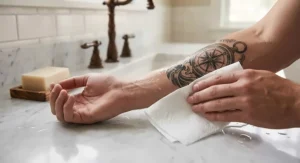
There’s a specific window where soap choice matters more than at any other point in the tattoo’s life, and it’s the first 10 to 14 days. During this stretch, the skin is a genuinely open wound with microscopic breaks all across the tattooed area, which means anything you wash with is making direct contact with living tissue, not just surface skin. Fragrance compounds — even the “natural” ones derived from essential oils — are among the most common triggers for contact dermatitis on healing skin, and a reaction here doesn’t just itch, it can distort the ink as the skin swells and scabs unevenly. This is exactly why unscented soap for new tattoos isn’t a nice-to-have preference; it’s closer to a hard requirement during this specific window. Once you’re past the two-week mark and into fully closed, flake-free skin, the stakes drop considerably, and some people transition to a milder scented body wash without issue. But early on, the margin for error is thin enough that “unscented” should be a non-negotiable filter on any soap you’re considering, not a bonus feature you’ll get around to prioritizing.
The Tattoo Healing Stages Timeline: Matching Soap to Skin Recovery
Tattoo healing isn’t one continuous process — it moves through distinct stages, and your washing routine should shift alongside it. Understanding the tattoo healing stages timeline turns “wash it gently” from vague advice into an actual plan.
Days 1-3 (Open wound stage): Expect oozing plasma and ink, redness, and mild swelling. Wash 2-3 times daily with lukewarm water and a hypoallergenic bar like Dove Sensitive Skin Beauty Bar or Dr. Bronner’s Pure-Castile Bar Soap, using only your clean hand — no washcloths, which can drag bacteria across broken skin.
Days 4-6 (Scabbing begins): Thin scabs form over the design. This is where a richer bar like VI Tattoo Soap Shea Butter Bar earns its keep, since the goal shifts from “clean an open wound” to “keep scabs soft enough that they don’t crack and pull ink with them.”
Days 7-14 (Peeling stage): Skin flakes off in small pieces, and itching intensifies. A calming, purpose-built bar like Saniderm Tattoo Bar Soap or Banger Tattoo Care Day 1 Bar helps manage the itch-scratch cycle that causes most avoidable scarring at this stage.
Weeks 3-6 (Surface healed, deeper healing continues): The tattoo looks healed on top, but deeper skin layers are still repairing. Any bar on this list remains appropriate here; this is also when you can reasonably introduce a gentle, fragrance-light body wash if you want variety.
Matching your soap to the current stage rather than using one product blindly through the entire process is, honestly, the single biggest upgrade most people can make to their aftercare routine.
Real-World Scenarios: Which Soap for Healing Tattoos Fits Your Life
Specs only tell half the story — the other half is how a soap for healing tattoos actually fits into a real routine. Here are three profiles that map closely to most people’s situations.
The budget-conscious first-timer: If you’re 22, got your first small tattoo on a friend’s recommendation, and don’t want to overspend on aftercare, Dove Sensitive Skin Beauty Bar or Dr. Bronner’s Pure-Castile Bar Soap cover the essentials without eating into your budget, and both are easy to find at any pharmacy on the walk home.
The heavily tattooed collector adding to a sleeve: If you’re mid-sleeve and getting tattooed every few months, investing in a purpose-built bar like Banger Tattoo Care Day 1 Bar makes sense — you’re washing tattooed skin often enough that the barrier-supporting formulation compounds in value over repeated healing cycles.
The sensitive-skin, allergy-prone client: If you’ve reacted to fragranced products before, or dermatologist-diagnosed eczema is part of your history, Neutrogena Fragrance-Free Gentle Cleansing Bar or VI Tattoo Soap Shea Butter Bar minimize the ingredient categories most likely to trigger a flare on already-compromised skin.
None of these profiles are mutually exclusive — plenty of people will move between them as their tattoo collection and budget both grow.
Problem → Solution: Fixing Common Tattoo Aftercare Soap Mistakes
Problem: Skin feels tight and flaky within a day of washing. Solution: switch to a moisturizing-base bar like VI Tattoo Soap Shea Butter Bar and follow immediately with a thin layer of fragrance-free lotion while skin is still damp.
Problem: Small red bumps appear under the bandage or wrap. Solution: this is often trapped sweat and ointment combined with a soap that’s too heavy or too harsh — try a calming, purpose-built bar like Saniderm Tattoo Bar Soap and switch to a breathable bandage sooner.
Problem: Bar soap seems to be pulling color out during the peeling stage. Solution: this is usually loose, ready-to-shed skin, not the ink itself, but confirm by washing more gently with less pressure and pat-drying instead of rubbing.
Problem: Reaction to a soap that worked fine on a previous tattoo. Solution: check for a reformulation or a new fragrance additive; brands occasionally change formulas, so re-read the label even on a “trusted” bar like Dr. Bronner’s Pure-Castile Bar Soap.
Problem: Can’t tell if redness is normal healing or irritation from the soap. Solution: normal healing redness fades gradually and stays contained to the tattoo; irritation tends to spread outward and feels hot to the touch — when in doubt, switch to the mildest option on this list and monitor for 24 hours.
How to Choose Hypoallergenic Bar Soap for Tattoo Aftercare
Here’s a fast, practical framework for narrowing down options without spending an hour reading ingredient labels in the store.
- Confirm it’s fragrance-free, not just “unscented.” Some products labeled unscented still contain a masking fragrance to cover raw material smells — check the ingredient list for “fragrance” or “parfum” specifically.
- Check for dyes and artificial colorants. These serve zero functional purpose and are a common, avoidable irritant.
- Look for a moisturizing base, not just a mild one. Glycerin, shea butter, and plant oils actively support the skin barrier rather than just avoiding harm.
- Skip anything marketed as “antibacterial” for daily washing. As covered below, this claim doesn’t hold up the way most people assume.
- Match the price to your tattoo frequency. Occasional tattoo clients can lean budget; frequently tattooed clients get more value from purpose-built formulas over time.
- Read for pH-balanced or low-pH claims when available. Traditional bar soap runs alkaline, which can disrupt the skin’s naturally acidic protective layer.
- Verify it’s genuinely a bar, not a liquid mislabeled in search results. Product listings frequently blur this line, so double-check the format before buying.
Common Mistakes When Buying Tattoo Soap
The most frequent mistake is assuming “gentle” and “hypoallergenic” are interchangeable — they’re not. “Hypoallergenic” is a marketing term in the U.S. with no binding regulatory definition, meaning a brand can slap it on a label without third-party verification. That doesn’t make the claim meaningless, but it does mean you still need to check the actual ingredient list rather than trusting the word alone. A second common misstep: buying a soap based on scent appeal, even a “light, clean” one, because it smells reassuring in the store — smell has nothing to do with how skin will react. Third, people frequently overbuy, grabbing a soap sized for months of use when the intensive daily-washing phase only lasts about two weeks; a smaller bar like Neutrogena Fragrance-Free Gentle Cleansing Bar avoids wasted product sitting half-used in a drawer. Finally, plenty of buyers skip checking whether a soap is genuinely formulated for broken or compromised skin versus intact skin — the two are not interchangeable use cases, even if the label says “sensitive skin” on both.
Hypoallergenic Bar Soap vs Antibacterial Liquid Soap and Antibacterial Ointment
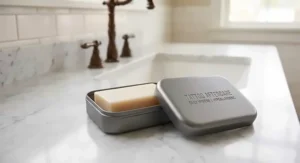
This comparison trips up more people than any other decision in the aftercare aisle. Antibacterial liquid soap has long been the default recommendation, largely out of habit rather than evidence. In 2016, the FDA issued a final rule removing 19 active ingredients, including triclosan and triclocarban, from over-the-counter antibacterial soaps and body washes after manufacturers failed to demonstrate the ingredients were both safe for long-term use and more effective than plain soap and water at preventing infection. That ruling directly undercuts the assumption that “antibacterial” automatically means “better for a healing wound.” In practice, plain, gentle cleansing does the job of removing bacteria, plasma, and debris without the drying, irritating side effects that antibacterial formulas can bring — which is a bigger risk to compromised skin than the marginal bacteria reduction is worth.
Antibacterial ointment occupies a different, complementary role rather than competing directly with soap. Ointment isn’t meant to clean the tattoo — it’s meant to seal in moisture and provide a physical barrier against airborne contaminants after washing. Many artists actually recommend against heavy antibacterial ointment use beyond the first few days, since over-application can suffocate healing skin and trap bacteria under an occlusive layer. The practical takeaway: wash with a hypoallergenic bar soap, pat dry, then apply a thin layer of whatever ointment or fragrance-free moisturizer your artist recommended — soap and ointment aren’t substitutes for each other, they’re sequential steps.
| Approach | Function | Best Practice |
|---|---|---|
| Hypoallergenic bar soap | Cleans without stripping the skin barrier | Use 2-3x daily during active healing |
| Antibacterial liquid soap | Marketed as germ-killing, evidence is weak | Skip for daily healing use per FDA findings |
| Antibacterial ointment | Seals moisture, protects from contaminants | Thin layer only, after washing, not before |
The data here points in one clear direction: gentle cleansing plus a thin moisturizing layer consistently outperforms an aggressive antibacterial routine, both in comfort and in actual healing outcomes.
💬 Skip the antibacterial hype — your healing tattoo just wants gentle and consistent care.
Bar Soap for Sensitive-Skin and Allergy-Prone Tattoo Clients
If you already know your skin reacts to things — eczema history, fragrance allergies, a drawer full of “sensitive skin” products at home — treat that history as your primary filter, not an afterthought. Start with the shortest possible ingredient list: Dr. Bronner’s Pure-Castile Bar Soap and Ground Soap Afterglow Organic Bar both lean minimal, which reduces the number of potential trigger ingredients by default. If you’ve reacted specifically to essential oils in the past, double-check any “organic” or “natural” bar carefully, since natural doesn’t automatically mean hypoallergenic — plenty of plant extracts are common allergens in their own right. A patch test on unaffected skin 24-48 hours before your appointment isn’t overkill; it’s a fifteen-minute habit that can save you from discovering a reaction on your actual healing tattoo. For anyone managing a known skin condition, it’s also worth looping in a dermatologist before your appointment, since some conditions affect how well tattoos heal independent of soap choice entirely.
Long-Term Cost & Maintenance: Is Tattoo-Specific Soap Worth It
Running the numbers honestly: a bar like Dr. Bronner’s Pure-Castile Bar Soap costs under $8 and, thanks to its dense formulation, typically lasts through an entire healing cycle with room to spare for general use afterward. A tattoo-specific bar like Banger Tattoo Care Day 1 Bar, priced in the $12-$18 range, costs more per bar but is formulated to need less lather per wash, which narrows the real-world cost gap more than the sticker price suggests. For someone getting one or two tattoos ever, the drugstore route is the financially rational choice — there’s no meaningful long-term value calculation to run. For someone building a sleeve or a full back piece over several years, the math shifts: a purpose-built bar used consistently across a dozen healing cycles adds up to a modest total investment relative to what you’ve already spent on the tattoos themselves, and the reduced irritation risk protects that investment. Total cost of ownership here isn’t really about the soap price at all — it’s about avoiding the cost of a touch-up session caused by preventable irritation or scarring, which can easily run past what a year’s supply of premium soap would have cost.
Features That Actually Matter (And Those That Don’t)
Marketing copy on tattoo aftercare products loves to lean on buzzwords, so here’s an honest filter. Features that matter: a genuinely fragrance-free formula (verified in the ingredient list, not just the front label), a moisturizing base ingredient like glycerin or shea butter, and a bar dense enough to hold up through repeated daily washing without dissolving into mush. Features that mostly don’t matter: “exfoliating” claims on a bar meant for fresh tattoos — exfoliation is actively counterproductive on open or scabbing skin and belongs in post-healing maintenance, not active aftercare; elaborate scent-adjacent “spa” branding, since even botanical scent compounds can irritate; and claims of killing “99.9% of bacteria,” which circles back to the same FDA findings covered above. If a product’s marketing leads with antibacterial percentages rather than ingredient gentleness, that’s usually a signal it’s built for the drugstore shelf appeal rather than actual healing skin.
Safety, Regulations & When to See a Doctor
Tattoo aftercare advice varies more than most people realize, largely because regulation is inconsistent. Research published via the National Institutes of Health notes that only a handful of U.S. states require standardized, health-department-approved aftercare instructions, while most states leave the specifics up to individual studios. That’s part of why soap recommendations vary so widely between artists and why doing your own research, as you’re doing right now, genuinely matters. Regardless of which soap you choose, watch for the actual warning signs of infection rather than normal healing: spreading redness that extends beyond the tattoo’s edges, yellow or green discharge, a fever, or pain that worsens instead of gradually improving after the first few days. Mild redness, warmth, and clear fluid in the first 48-72 hours are expected parts of healing, not red flags. If you notice genuine infection signs, stop relying on soap and moisturizer alone and contact a healthcare provider — soap choice is preventive care, not treatment for an active infection.
What Tattoo Artists Actually Recommend
Talk to enough working artists and a pattern emerges pretty quickly: most steer clients toward “boring” over “trendy.” Tattoo artist recommendations consistently favor fragrance-free, dye-free basics over elaborate tattoo-branded product lines, largely because artists have watched enough healing cycles to know that irritation almost always traces back to an unnecessary ingredient, not a lack of specialized formula. Several studios specifically stock or recommend bars like Saniderm Tattoo Bar Soap at checkout precisely because it removes the guesswork for clients who’d otherwise grab whatever’s cheapest or most heavily marketed. That said, individual artist opinions vary, and the single best source for your specific tattoo is the artist who did the work — they can see the actual skin, ink saturation, and placement in a way no article can. Treat this guide as the research to bring into that conversation, not a replacement for it.
Frequently Asked Questions
❓ Can I use regular bar soap on a new tattoo?
❓ How often should I wash a new tattoo with bar soap?
❓ Is antibacterial soap better than regular hypoallergenic soap for tattoos?
❓ When can I switch from bar soap to a regular body wash?
❓ What are signs my tattoo soap is causing a reaction instead of helping?
Conclusion
The soap sitting in your shower for the next two weeks matters more than most tattoo aftercare advice gives it credit for. It’s not about finding the single “best” product — it’s about matching a genuinely fragrance-free, non-stripping bar to where your tattoo actually is in the healing process, whether that’s day one and oozing or day ten and flaking. Budget picks like Dove Sensitive Skin Beauty Bar and Dr. Bronner’s Pure-Castile Bar Soap cover the fundamentals well enough for most people, while purpose-built options like Saniderm Tattoo Bar Soap, VI Tattoo Soap Shea Butter Bar, and Banger Tattoo Care Day 1 Bar earn their higher price tags for anyone healing frequently or dealing with more reactive skin. Whichever bar you land on, the real principle underneath all of this is simple: gentle, consistent, fragrance-free cleansing beats aggressive or antibacterial washing every single time healing skin is involved. Your artist put real skill into that design — the least the aftercare routine can do is not undo it.
✨ Ready to Protect Your New Ink?
🔍 Browse the hypoallergenic bar soaps above and pick the one that matches your skin and your healing stage. A few extra dollars on the right soap now is a lot cheaper than a touch-up appointment later.
Recommended for You
- 7 Best Gentle Bar Soap for Eczema Picks That Won’t Backfire (2026)
- Hypoallergenic Bar Soap for Newborns and Infants: 7 Best Picks (2026)
- 7 Best Dermatologist-Recommended Bar Soap Picks for 2026
Disclaimer: This article contains affiliate links. As an Amazon Associate, I earn from qualifying purchases. If you purchase products through these links, we may earn a small commission at no additional cost to you.
✨ Found this helpful? Share it with your friends! 💬🤗
