
In This Article
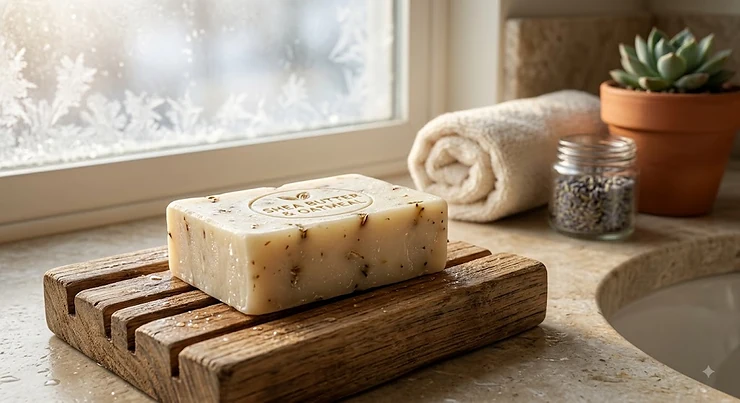
Somewhere around late November, your skin files a formal complaint. Elbows go crocodile. Shins start looking like a chalk drawing. And no matter how much lotion you slather on after a shower, by lunchtime your hands feel like they’ve been through a car wash with no wax cycle. If you’re here searching for shea butter bar soap for dry winter skin, you already know the culprit isn’t just the cold outside — it’s the furnace running nonstop indoors, stripping humidity out of every room you live in.
Here’s the short version of what actually helps: a bar soap that leans heavily on unrefined or raw shea butter (not just a fragrance-friendly dusting of it) cacleanse without stripping your skin’s natural oils the way a detergent-heavy bar does. Shea butter is rich in oleic and stearic acid, the same fatty acids your skin’s outer layer already relies on, so it works with your skin instead of against it. That’s the whole pitch, and it’s backed by actual formulation science, not just marketing copy.
This guide breaks down seven real, currently available shea butter bar soaps — budget, mid-range, and genuinely premium — with honest analysis of who each one is actually built for. We’ll also dig into winter skincare bar soap habits that make any bar work harder, what raw shea butter soap really means on an ingredient label, why your central heating dry skin problem might be bigger than your soap choice, whether humidifiers deserve a spot in your routine, and how African shea butter sourcing affects both quality and ethics. No fluff, no invented reviews — just what the research and the aggregated customer feedback actually show.
Quick Comparison: Shea Butter Bar Soap for Dry Winter Skin
| Product | Shea Butter Level | Scent | Price Range | Best For |
|---|---|---|---|---|
| SheaMoisture Raw Shea Butter Bar | High (raw, unrefined) | Frankincense & Myrrh | $6-$10 (3-pack) | Everyday dry skin, budget-conscious buyers |
| Nubian Heritage Raw Shea Butter Bar | High (raw, unrefined) | Soy Milk, Frankincense & Myrrh | $5-$9 | Sensitive, easily irritated skin |
| Alaffia EveryDay Shea Soap Bar | High (Fair Trade, unrefined) | Lavender | $10-$15 (4-pack) | Ethical shoppers, ergonomic grip preference |
| SheaMoisture African Black Soap Bar | Moderate, blended | Charcoal, Tea Tree | $6-$10 | Combination skin, occasional breakouts |
| Dove Purely Pampering Shea Butter Beauty Bar | Low-moderate (syndet base) | Vanilla | $6-$12 (8-pack) | Mild daily cleansing, families |
| South Of France Triple Milled Shea Bar | Moderate | Coconut & Citrus | $4-$8 | Bathroom aesthetics + moderate hydration |
| Pre de Provence Artisanal Shea Soap Bar | Moderate-high, quad-milled | Olive Oil & Lavender | $8-$14 | Gift-giving, long-lasting luxury bars |
Looking at the spread above, the winter-dry-skin winner really comes down to how “raw” the shea butter is versus how much of the bar is filler surfactant. SheaMoisture Raw Shea Butter Bar and Nubian Heritage Raw Shea Butter Bar lean hardest into unrefined shea, which is why dermatology-adjacent reviewers keep circling back to them for genuinely flaky, tight-feeling skin. Dove Purely Pampering Shea Butter Beauty Bar, on the other hand, is a syndet (synthetic detergent) bar with shea butter blended in for feel — gentler than old-school soap, but not the same intensity of moisture delivery. If you want the plush, long-lasting bathroom-shelf experience, the French-milled options earn their keep on texture and scent, even if their raw shea content is lower on paper.
💬 Found one you like already? Tap through and check today’s price before it changes.
Top 7 Shea Butter Bar Soaps: Expert Analysis
1. SheaMoisture Raw Shea Butter Bar — highest raw shea concentration in this lineup
The standout here is right in the name: this bar is built around Fair Trade raw shea butter rather than treating it as an afterthought ingredient. That distinction actually matters in cold months, because unrefined shea retains more of its natural vitamin E and fatty acid content than the deodorized, bleached versions used in mass-market bars.
Each bar blends raw shea with frankincense and myrrh, and the formula is sulfate-free — meaning it skips the harsh foaming agents (like sodium lauryl sulfate) that are notorious for stripping the skin’s lipid barrier. In practice, that translates to a bar that lathers less aggressively than a drugstore soap but leaves noticeably less of that tight, squeaky feeling after rinsing. Based on the ingredient list, this is a soap built for people whose skin reacts badly to conventional bar soap, not just people who like the smell of shea butter.
This is a strong pick for anyone dealing with genuinely dry, flaky skin who wants a fragrance they’d actually enjoy daily, and it’s approachable enough for first-timers who’ve never used a shea-forward soap before. Reviewers consistently report that the bar softens rough patches on elbows and knees within a couple of weeks of regular use, and a recurring theme in aggregated feedback is that the scent is “warm” rather than overpowering, which matters since myrrh-based fragrances can skew heavy in lesser formulations.
Pros:
- ✅ High raw shea concentration for real moisture delivery
- ✅ Sulfate-free formula reduces stripping during winter washing
- ✅ Comes in a 3-pack, which lowers cost per bar
Cons:
- ❌ Fragrance may be too earthy for people who prefer clean or floral scents
- ❌ Softens faster than French-milled bars if left sitting in water
Expect to pay somewhere in the $6-$10 range for a 3-pack at the time of research, which puts the per-bar cost lower than most of the artisanal options on this list. For the raw shea content you’re getting, that’s a strong value verdict — this is the bar to start with if you’re not sure shea soap is even for you yet.
2. Nubian Heritage Raw Shea Butter Bar — gentlest formula for reactive, sensitive skin
The soy milk addition is what sets this one apart on paper, and it’s not just a marketing flourish — soy milk contains isoflavones and proteins that can help soothe and soften skin alongside the shea itself.
This bar pairs raw, unrefined shea butter with soy milk, vitamin E, frankincense, and myrrh, all built into a base without parabens or phthalates. What that means in practice: you’re getting a moisture-forward bar with a slightly creamier lather than straight shea-only formulas, since soy milk contributes its own emollient quality on top of the shea. Based on the spec comparison with SheaMoisture’s raw bar, Nubian Heritage’s version tends to feel a touch richer, likely due to the added soy milk and vitamin E working alongside the shea butter itself.
This is best suited to people with sensitive or easily irritated skin — think eczema-adjacent dryness, or skin that reacts to fragrance-heavy products — since the formula avoids common irritants while still delivering fragrance through essential oils rather than synthetic parfum blends alone. A common theme in aggregated review sentiment is that this bar performs especially well on hands that get washed repeatedly throughout the day, which is exactly the kind of repetitive-water-exposure damage that worsens central heating dry skin in winter.
Pros:
- ✅ Soy milk adds a creamier, extra-soothing lather
- ✅ Free from parabens and phthalates
- ✅ Gentle enough for daily hand washing without over-drying
Cons:
- ❌ Smaller 5 oz bar size means it wears down faster than 8 oz options
- ❌ Frankincense and myrrh scent isn’t for everyone
Priced in the $5-$9 range depending on pack size at the time of research, this bar delivers strong value if you’re specifically shopping for sensitivity-friendly winter skincare bar soap rather than a general all-purpose bar.
3. Alaffia EveryDay Shea Soap Bar — most ethically transparent sourcing story
What most buyers overlook about this brand is that its supply chain isn’t just a footnote — Alaffia was co-founded by someone from Togo specifically to route fair wages back to the West African cooperatives producing the shea itself.
This bar is built on unrefined Fair Trade shea butter combined with coconut oil and aromatic plant extracts, in an ergonomic shape designed to sit comfortably in the hand (a small but appreciated detail once your hands are already dry and a slippery bar becomes annoying rather than relaxing). The lavender scent option leans calming rather than sweet, which suits an evening shower routine well. Because the shea butter is sourced directly through women-led cooperatives rather than through a generic supply chain, the traceability here is more concrete than most competitors can claim, and that transparency is a meaningful factor if African shea butter sourcing ethics matter to your purchasing decision.
This bar is a great fit for shoppers who want their purchase to have a documented, traceable impact, and it also works well for anyone who prefers a slightly firmer, longer-lasting bar over a softer one that dissolves quickly in a wet soap dish. Reviewers consistently report that the bars hold their shape well through repeated use, a detail that matters more than it sounds once you’ve dealt with a soap that turns to mush by week two.
Pros:
- ✅ Fair Trade shea sourced through women-led cooperatives in Togo
- ✅ Ergonomic bar shape reduces slipping in the shower
- ✅ Long-lasting formula holds up well over multiple weeks
Cons:
- ❌ Lavender scent runs stronger than some fragrance-sensitive users prefer
- ❌ Limited scent variety compared to mass-market shea soap lines
At around $10-$15 for a pack of four bars at the time of research, this sits in the mid-range and rewards buyers who value sourcing transparency as much as raw performance.
4. SheaMoisture African Black Soap Bar — best for combination or occasionally blemish-prone skin
The standout feature here is the blend itself: shea butter paired with traditional African black soap ingredients, which historically have been used to address oilier or troubled patches of skin, not just dryness.
This bar combines shea butter with charcoal-adjacent African black soap components, giving it a slightly more clarifying quality than the purely moisturizing bars on this list. What that means in practice: if your winter skin issue isn’t uniformly dry — say, dry cheeks but an oilier T-zone, or occasional breakouts alongside flaky patches — this bar can address both without requiring two separate products. The shea butter still buffers the cleansing agents so you’re not left stripped, but the formula skews slightly more balancing than deeply occlusive.
This is the pick for combination-skin winter sufferers, people who break out when they switch to heavier moisturizing soaps, or anyone managing mild eczema flare-ups that come with occasional irritation rather than pure dryness. A recurring theme in aggregated customer feedback is that users with combination skin appreciate not feeling greasy after use, even though the bar still moisturizes noticeably better than a plain glycerin bar.
Pros:
- ✅ Balances moisture and mild clarifying action
- ✅ Works well on combination or blemish-prone skin types
- ✅ Doesn’t leave a heavy or greasy residue
Cons:
- ❌ Less intensely moisturizing than the raw shea-only bars on this list
- ❌ Charcoal tint can occasionally stain lighter-colored washcloths
Expect to pay roughly $6-$10 at the time of research for an 8 oz bar, making this a smart pick if your winter skin complaints are mixed rather than uniformly dry.
5. Dove Purely Pampering Shea Butter Beauty Bar — most accessible, drugstore-everywhere option
Dove’s Beauty Bar earns its standout tag honestly: it’s the most widely available option here, sitting on nearly every grocery store shelf in the country, and it’s formulated as a syndet (synthetic detergent) bar rather than true soap, which is part of why it’s gentler than old-fashioned bar soap.
The formula includes one-quarter moisturizing cream blended with shea butter, built on a pH-balanced base that skips traditional soap’s harsher saponified structure. What that means in practice: Dove’s bar won’t deliver the same concentrated raw shea payload as SheaMoisture or Nubian Heritage, but its syndet base is inherently less likely to disrupt your skin’s pH than true soap, which is a meaningful factor since normal skin pH sits around 4.5-5.5 and traditional soap tends to run more alkaline.
This is the pick for households that want one bar everyone can use — kids, partners with different skin sensitivities, anyone who doesn’t want to shop online for skincare — and for people whose dry winter skin is mild rather than severe. Reviewers consistently note that it doesn’t produce the tight, dry feeling associated with old bar soap, though it’s worth being honest that it’s marketed and formulated more as a gentle everyday cleanser than as a targeted dry-skin treatment.
Pros:
- ✅ Widely available in nearly any grocery or drugstore
- ✅ Syndet base is gentler on skin pH than true soap
- ✅ Family-friendly, affordable multi-pack pricing
Cons:
- ❌ Lower raw shea concentration than dedicated shea-brand bars
- ❌ May not be sufficient for severe or eczema-level dryness alone
At around $6-$12 for an 8-count pack at the time of research, this is the most budget-accessible option on the list, and a genuinely reasonable choice if your dry skin concerns are mild-to-moderate.
6. South Of France Triple Milled Shea Bar — best bathroom aesthetic and lasting lather
The triple-milling process is the real standout here — it’s a French soapmaking technique that compresses the bar multiple times, resulting in a denser soap that lasts significantly longer in a wet shower than a standard poured bar.
This bar blends organic shea butter with coconut oil and sustainable palm oil, milled repeatedly to create a dense, long-wearing bar with a creamy, citrus-leaning lather. Based on the spec comparison with the single-milled bars on this list, triple milling means the bar resists turning to mush, which is a genuinely underrated quality once you’ve dealt with a soap that dissolves into a puddle within two weeks. The organic shea butter content is respectable, though it’s positioned more as a supporting ingredient in a well-rounded formula than as the entire point of the bar.
This is a great fit for people who care about the sensory shower experience — scent, texture, how long a bar lasts — as much as raw moisturizing power, and it’s a popular gift or guest-bathroom choice for exactly that reason. A common theme in aggregated feedback is that buyers appreciate the bar’s longevity compared to cheaper soaps that dissolve quickly, even when the winter-dryness performance is described as solid rather than dramatic.
Pros:
- ✅ Triple-milled formula lasts noticeably longer per bar
- ✅ Pleasant citrus-shea scent works well as a gift item
- ✅ Vegan and non-GMO certified formulation
Cons:
- ❌ Shea content is more supporting player than headline ingredient
- ❌ Less intensive for severe dryness compared to raw shea-forward bars
Priced around $4-$8 per bar at the time of research, this is a reasonable mid-range pick if longevity and bathroom presentation matter alongside moisture.
7. Pre de Provence Artisanal Soap Bar with Organic Shea Butter — most premium, longest-lasting bar in this lineup
Quad-milling is the headline feature, and it’s a genuine step up from triple-milling — each additional milling pass compresses the soap further, producing an even denser bar that resists cracking, softening, and wasting away in a wet dish.
This bar combines organic shea butter with an olive oil and lavender profile, using traditional French artisanal soapmaking methods that have been refined for well over a century. What that density means in practice: this bar can genuinely outlast two or three bars of a softer, single-milled competitor, which changes the actual cost-per-use math even though the sticker price looks higher upfront. The lavender and olive oil combination also brings its own mild emollient properties on top of the shea, rounding out a formula that reads more like a spa product than a drugstore soap.
This is the pick for anyone who wants a genuinely luxurious daily ritual, gift-givers looking for something that doesn’t feel like a throwaway stocking stuffer, and buyers who’ve grown tired of replacing soft, fast-dissolving bars every couple of weeks. Reviewers consistently highlight the bar’s density and slow wear as the standout quality, more so than raw moisturizing intensity, which tracks with its formulation as a premium artisanal bar rather than a dermatology-focused one.
Pros:
- ✅ Quad-milled density means significantly longer bar life
- ✅ Elevated scent profile suited for gifting
- ✅ Organic shea butter plus olive oil for added emollience
Cons:
- ❌ Higher upfront price than mass-market alternatives
- ❌ Not formulated specifically for severe or clinical-level dryness
At roughly $8-$14 per bar at the time of research, the value verdict actually holds up well once you factor in how much longer this bar lasts compared to softer, cheaper competitors — the cost-per-wash ends up more competitive than the sticker price suggests.
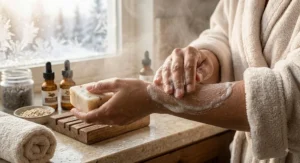
Practical Usage Guide: Getting the Most Out of Shea Butter Bar Soap This Winter
Buying the right bar is only half the equation — how you use it in winter changes the results dramatically. First, skip hot showers. It sounds counterintuitive when it’s freezing outside, but hot water breaks down the skin’s lipid barrier faster than lukewarm water, undoing a good chunk of what your shea soap is trying to accomplish. Aim for water that’s warm, not scalding, and keep showers under ten minutes if you can manage it.
Second, apply moisturizer within three minutes of stepping out of the shower, while skin is still slightly damp. This “damp skin” window is when moisturizer traps existing water against the skin rather than just adding a layer on top of already-dry skin. Third, store your bar on a well-draining soap dish or ridged tray rather than a flat surface — sitting in standing water breaks down shea-forward bars faster and can encourage a mushy texture within days rather than weeks.
A common first-30-days mistake: switching soaps and expecting instant results, then giving up after a week when skin still feels tight. Shea butter’s barrier-repair effects build cumulatively; most aggregated reviews describe meaningful improvement after two to three weeks of consistent use, not two to three days. Finally, resist the urge to over-lather. A thin, even layer of lather cleans just as effectively as a thick one and leaves more of the bar’s natural oils on your skin rather than rinsing them all away.
Real-World Scenarios: Which Shea Butter Soap Fits Your Winter
Consider a college student living in a dorm with radiator heat cranked to summer-camp levels, showering daily, and working with a tight budget. The SheaMoisture Raw Shea Butter Bar fits well here — it’s inexpensive per bar, widely available at any drugstore near campus, and delivers real raw shea concentration without requiring an online order or a big upfront spend.
Now picture a parent in a northern climate managing a household where one kid has eczema-prone skin and everyone else just wants a normal shower bar. The Dove Purely Pampering Shea Butter Beauty Bar solves the “one bar for everyone” problem, while the parent can keep a Nubian Heritage Raw Shea Butter Bar in their own shower for a more intensive, sensitivity-focused option on the days their own hands feel raw from dishwashing and hand sanitizer.
Finally, imagine someone shopping for a housewarming gift for a friend who just moved somewhere cold and dry for the first time. The Pre de Provence Artisanal Soap Bar or South Of France Triple Milled Shea Bar both make sense here — they photograph well, last a long time, and don’t read as an afterthought gift the way a plain drugstore bar might.
✨ Ready to Upgrade Your Winter Skincare Routine?
🔍 Pick the bar that matches your skin type and budget above, then click through to check today’s availability and pricing. A small swap in your shower routine can make a real difference by the time the coldest months hit.
How to Choose Shea Butter Bar Soap for Dry Winter Skin
- Check where shea butter sits on the ingredient list. Ingredients are listed by concentration, so a bar with shea butter near the top of the list is delivering meaningfully more than one where it’s buried near the bottom behind a dozen other compounds.
- Look for “unrefined” or “raw” on the label. Refined shea butter loses much of its natural vitamin E and some of its beneficial unsaponifiables during processing, so raw versions tend to perform better for genuinely dry, compromised skin.
- Consider your skin’s sensitivity level. If you react to fragrance or essential oils, prioritize simpler formulas with fewer added scent compounds rather than the most heavily perfumed option.
- Factor in bar density and milling. Triple- or quad-milled bars last considerably longer than single-poured soap, which affects your real cost-per-use even if the upfront price looks higher.
- Match the formula to your specific skin type. Combination or blemish-prone skin often does better with a black-soap blend, while uniformly dry, flaky skin usually benefits most from a raw, shea-forward bar.
- Verify sourcing claims if ethics matter to your decision. Brands that name specific cooperatives or partner directly with Fair Trade-certified suppliers, like those working with the Global Shea Alliance, tend to offer more transparency than vague “ethically sourced” claims.
- Read aggregated review themes, not star ratings alone. A 4.5-star average tells you less than recurring comments about texture change after two weeks — look for patterns in what real buyers report over time.
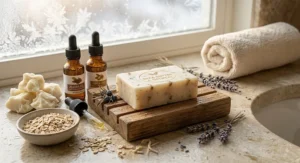
Raw Shea Butter Soap vs Regular Moisturizing Bar Soap
The difference between raw shea butter soap and a standard “moisturizing” bar soap comes down to both concentration and processing. Regular moisturizing bars often contain a small percentage of glycerin or a generic moisturizing agent blended into a mostly detergent-based formula — enough to claim “moisturizing” on the label, but not necessarily enough to meaningfully change how your skin feels afterward. Raw shea butter soap, by contrast, is typically built around a genuinely higher concentration of unrefined shea, sometimes as the primary fat source in the saponification process itself.
In terms of real-world performance, this shows up most clearly in how skin feels several hours after washing rather than immediately in the shower. A standard bar might feel fine in the moment but leave skin tight by evening, while a raw shea-forward bar tends to hold moisture longer because the fatty acid profile more closely mirrors the skin’s own lipids. The tradeoff is usually price and lather — raw shea bars often produce a creamier, less bubbly lather than detergent-heavy bars, which some people initially read as “not working” when it’s actually just a different cleansing mechanism. If lather volume matters to you psychologically, that’s worth knowing going in so you’re not disappointed by a bar that’s actually doing its job well.
Central Heating Dry Skin: Why Your Home Might Be the Real Problem
It’s tempting to blame dry winter skin entirely on the weather outside, but indoor heating is often the bigger culprit. Forced-air furnaces and radiators pull moisture out of indoor air, sometimes dropping relative humidity inside a heated home well below what your skin is comfortable with, even on a day when it’s not particularly cold or windy outside. This is part of why dermatologists consistently flag winter as prime time for xerosis (medically dry skin) — the combination of low outdoor humidity and moisture-stripping indoor heat creates a one-two punch that a good soap alone can’t fully offset.
That’s not a reason to give up on your soap choice — it’s a reason to treat it as one piece of a larger routine rather than a silver bullet. Cranking the thermostat down a couple of degrees, when tolerable, reduces how aggressively your indoor air dries out. Layering a rich moisturizer over a shea-forward soap addresses both the cleansing and the sealing steps of the equation, which matters more in a heated apartment than it would in a naturally humid climate.
Do Humidifiers Actually Help With Dry Winter Skin?
Yes, and the mechanism is straightforward: a humidifier adds moisture back into the air your skin is exposed to all day, which reduces how much water evaporates out of your skin through a process called transepidermal water loss. Health organizations frequently recommend keeping indoor humidity in a moderate range during winter, since air that’s too dry accelerates moisture loss from skin, while air that’s too humid can encourage mold growth — so the goal is balance, not maximum humidity.
Running a humidifier in your bedroom overnight is one of the higher-impact, lowest-effort changes you can make alongside switching to a shea-forward soap. The two approaches work on different mechanisms — the soap protects and moisturizes at the point of contact, while a humidifier reduces how much moisture your skin loses to the air in the first place — so pairing them tends to outperform either strategy alone, especially for people living in older homes with forced-air heating that runs particularly dry.
Common Mistakes When Buying Shea Butter Bar Soap
One frequent misstep is assuming any product with “shea butter” on the front label delivers meaningful moisturizing benefit, when in reality some mass-market bars include just enough shea to legally list it as an ingredient without it doing much heavy lifting. Always flip the bar over and check where it sits in the ingredient order rather than trusting front-of-package marketing alone.
Another common mistake is buying based purely on star rating without reading what reviewers are actually describing. A bar with thousands of five-star reviews for scent and lather might still underperform for someone specifically dealing with cracked, flaking winter skin, since most reviewers aren’t rating the product against that specific use case. Finally, some buyers assume a higher price automatically means better moisturizing performance, when in many cases premium pricing reflects milling technique, scent complexity, or packaging rather than a meaningfully higher concentration of active shea butter.
African Shea Butter Sourcing: Why It Matters for Quality and Ethics
Most of the world’s shea butter originates in the shea belt stretching across West and Central Africa, where an estimated 16 million women across roughly 21 countries depend on shea tree harvesting and processing for household income, according to the Global Shea Alliance, an industry nonprofit founded in 2011 to support the sector. This matters for two reasons: quality and ethics tend to move together in this particular supply chain.
On the quality side, shea butter processed through traditional or well-managed cooperative methods, with proper storage and lower acidity levels, generally produces a more stable, better-performing butter than shea processed under rushed or inconsistent conditions. On the ethics side, brands that can name a specific cooperative or certification — rather than a vague “ethically sourced” label — tend to be more directly connected to fair wages reaching the women who actually harvest and process the shea nuts. When comparing raw shea butter soap options, checking whether a brand discloses its sourcing relationship is a reasonable proxy for both product integrity and supply chain accountability.
What to Expect: Real-World Winter Performance
On paper, shea butter’s fatty acid profile looks impressive — oleic and stearic acid content that closely mirrors the skin’s own lipid structure, according to published analytical chemistry research on shea butter’s effects on skin barrier function, which recorded meaningful reductions in water loss and increases in hydration within 24 hours of application in controlled testing conditions. Translating that into everyday shower use: most people notice their skin feels less immediately tight after rinsing off compared to conventional soap, with the more substantial texture and flakiness improvements building over two to three weeks of consistent use rather than appearing overnight.
What the spec sheet won’t tell you, but aggregated user reports suggest, is that results vary meaningfully based on how severe your baseline dryness is and how aggressively your specific climate and heating setup dries out your skin. Someone with mild seasonal dryness in a humid coastal city will likely see noticeable improvement within a week or two, while someone managing eczema-adjacent dryness in a dry, high-heat apartment may need to pair the soap with a dedicated moisturizer and possibly a humidifier to see comparable results.

Shea Butter Bar Soap for Different Winter Skin Concerns
If your primary complaint is generalized dry, flaky skin across your body, a raw shea-forward bar like SheaMoisture Raw Shea Butter Bar or Nubian Heritage Raw Shea Butter Bar should be your first stop, since these formulas prioritize concentration of unrefined shea over other formulation goals. If you’re dealing with combination skin — dry patches alongside oilier or breakout-prone areas — SheaMoisture African Black Soap Bar offers a more balanced approach that won’t feel heavy on the areas that don’t need intense moisture.
For sensitive or reactive skin, particularly if you’ve had negative reactions to synthetic fragrance in the past, look toward bars with simpler ingredient lists and essential-oil-based scent, like the Nubian Heritage or Alaffia options, both of which skip common irritants like parabens and phthalates. And if your winter skin concerns are mild and your priority is just an everyday gentle cleanser the whole household can use, Dove Purely Pampering Shea Butter Beauty Bar covers that base without requiring separate products for separate people.
Long-Term Cost and Value: Is Shea Butter Soap Worth the Upgrade?
Comparing cost per use rather than sticker price reveals a more interesting picture than the initial price tags suggest. A triple- or quad-milled bar like the Pre de Provence Artisanal Soap Bar may cost two to three times more upfront than a mass-market bar, but because it lasts substantially longer per bar due to its denser milling process, the actual cost per shower can end up comparable to or even lower than cheaper, faster-dissolving alternatives.
There’s also a secondary cost consideration: if a shea-forward soap genuinely reduces how much additional lotion or intensive treatment you need to apply afterward, that offsets part of its price against what you’d otherwise spend on separate moisturizing products. This won’t eliminate your need for moisturizer entirely — soap and lotion serve different functions even with the best shea bar — but reviewers managing chronic winter dryness consistently report needing less “rescue” moisturizer on hands and elbows once they switch to a genuinely shea-forward bar, which is a real, if modest, offset to factor into the value equation.
Safety and Formulation Considerations
Shea butter itself is generally well tolerated, but people with tree nut allergies should note that shea nuts come from the Vitellaria paradoxa tree, and while true allergic reactions to shea butter are considered rare in clinical literature, anyone with a known tree nut allergy should patch-test a new shea product on a small area of skin before full use and consult a healthcare provider if they have specific concerns. Beyond that, dermatologists broadly recommend fragrance-free or lightly fragranced products for anyone managing eczema, rosacea, or highly reactive skin, since added fragrance compounds — even from natural sources like essential oils — are a common irritant trigger, a point echoed in guidance from the American Academy of Dermatology on managing dry, sensitive skin through the colder months.
It’s also worth noting that “natural” and “unrefined” don’t automatically mean risk-free for every skin type. Raw, unrefined shea butter retains more of its natural compounds than refined versions, which is generally a benefit for moisture delivery but can occasionally be more likely to trigger sensitivity in people with already reactive skin. If you’re unsure how your skin will respond, introduce a new bar gradually — using it every other day for the first week or two rather than switching cold turkey — before making it your daily driver.
Buyer’s Decision Framework
If your skin is severely dry, flaky, and cracking, choose a raw, unrefined shea-forward bar like SheaMoisture Raw Shea Butter Bar because it maximizes active moisturizing content without added complexity. If your skin is combination or occasionally blemish-prone, choose SheaMoisture African Black Soap Bar because it balances cleansing and moisture rather than over-delivering richness to areas that don’t need it. If you’re shopping for sensitive, reaction-prone skin, choose Nubian Heritage Raw Shea Butter Bar or Alaffia EveryDay Shea Soap Bar because both minimize common irritants while still using genuinely raw shea.
If your priority is budget and household-wide usability, choose Dove Purely Pampering Shea Butter Beauty Bar because it’s the most accessible, gentlest option for varied skin types under one roof. And if you’re buying for gifting or want a long-lasting, elevated bathroom experience, choose the Pre de Provence Artisanal Soap Bar or South Of France Triple Milled Shea Bar, since their milling process extends usable life well beyond a standard bar.
Frequently Asked Questions
❓ Does shea butter soap really help with winter dry skin?
❓ What's the difference between raw and refined shea butter soap?
❓ Can shea butter bar soap cause breakouts?
❓ How long does a shea butter bar soap actually last?
❓ Is shea butter soap safe for sensitive or eczema-prone skin?
Conclusion
Winter skin problems rarely come from one single cause, and the solution follows the same pattern — no single bar of soap is going to fully undo what a heated, dry indoor environment does to your skin over four straight months. That said, swapping a stripping, detergent-heavy bar for a genuinely shea-forward one is one of the easiest, lowest-effort upgrades you can make, and the fatty acid science behind why it works holds up under real scrutiny.
Whether you land on the budget-friendly SheaMoisture Raw Shea Butter Bar, the sensitivity-focused Nubian Heritage Raw Shea Butter Bar, or a longer-lasting, more premium pick like Pre de Provence Artisanal Soap Bar, the underlying principle stays the same: check where shea sits on the ingredient list, match the formula to your specific skin concern, and pair it with the basics — lukewarm showers, prompt moisturizing, and a humidifier if your indoor air runs especially dry. Do that consistently, and your skin has a real shot at making it through winter without the crocodile-elbow phase.
Recommended for You
- 7 Best Hypoallergenic Bar Soap for Tattoo Aftercare Picks (2026)
- 7 Best Gentle Bar Soap for Eczema Picks That Won’t Backfire (2026)
- Hypoallergenic Bar Soap for Newborns and Infants: 7 Best Picks (2026)
Disclaimer: This article contains affiliate links. As an Amazon Associate, I earn from qualifying purchases. If you purchase products through these links, we may earn a small commission at no additional cost to you.
✨ Found this helpful? Share it with your friends! 💬🤗
