
In This Article
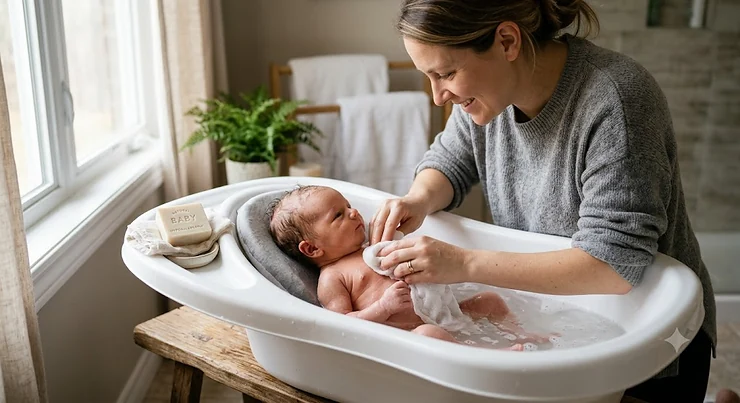
Somewhere between the third 2 a.m. feeding and the fifth onesie change of the day, you will find yourself standing in the soap aisle, squinting at ingredient lists like they’re written in a foreign language. That’s a normal place to land. Newborn skin is thinner than yours, loses moisture faster, and hasn’t finished developing its natural acid mantle — the thin, slightly acidic film that keeps irritants out and hydration in. So the soap you grab matters more here than it ever will again.
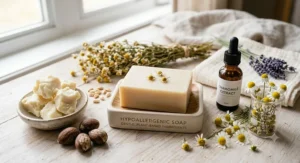
So, what is hypoallergenic bar soap for newborns and infants? It’s a solid cleansing bar formulated without common irritants — synthetic fragrance, harsh sulfates, parabens, and dyes — and pH-balanced to protect a baby’s developing skin barrier while minimizing the risk of allergic reaction or irritation. The word “hypoallergenic” isn’t an FDA-regulated term, but reputable brands back it up with dermatology testing rather than just a label.
We spent hours cross-referencing ingredient panels, pediatric dermatology guidance, and aggregated user feedback to land on seven real, purchasable bars that actually earn the claim. You’ll see budget drugstore options next to premium European imports, and a lot of honest talk about which ones are worth the extra couple of dollars per bar. Newborn skin care doesn’t have to be complicated, but it does deserve a little more scrutiny than a bar that just smells like a baby shower. As the American Academy of Pediatrics notes, over-bathing and harsh cleansers are two of the fastest ways to dry out delicate newborn skin — which is exactly why the bar you choose carries more weight than it seems.
Whether you’re shopping for tear-free baby soap bars for bath time meltdown prevention, hunting for a pediatrician-approved baby soap ahead of a first pediatric dermatology visit, or just trying to keep a stubborn patch of baby eczema calm, this guide walks through what actually works — and why.
Quick Comparison Table
| Bar Soap | Best For | Price Range |
|---|---|---|
| Vanicream Cleansing Bar | Eczema-prone & ultra-sensitive skin | $5–$8 per bar |
| Sebamed Baby Cleansing Bar | pH-balanced, tear-free daily use | $6–$9 per bar |
| Cetaphil Gentle Cleansing Bar | Pediatrician-trusted all-rounder | $4–$6 per bar |
| Dove Baby Bar Rich Moisture | Budget-friendly everyday washing | $2–$4 per bar |
| Burt’s Bees Baby Buttermilk Soap | Natural-origin ingredient shoppers | $4–$6 per bar |
| Himalaya Moisturizing Baby Bar | Best-value multi-pack | $3–$5 per bar |
| Weleda Baby Calendula Soap Bar | Premium botanical, plant-based | $7–$10 per bar |
Looking at the table, the split lands roughly where you’d expect: Dove Baby Bar Rich Moisture and Himalaya Moisturizing Baby Bar anchor the budget end, Cetaphil Gentle Cleansing Bar and Burt’s Bees Baby Buttermilk Soap sit comfortably in the middle, and Vanicream Cleansing Bar, Sebamed Baby Cleansing Bar, and Weleda Baby Calendula Soap Bar justify their premium price tags with either dermatology credentials or biodynamic ingredient sourcing. If your baby has diagnosed eczema or a family history of it, the extra few dollars for Vanicream Cleansing Bar or Sebamed Baby Cleansing Bar tends to pay off faster than you’d think, since fewer flare-ups mean fewer trips to buy medicated creams later. Prices fluctuate on Amazon, so always check current pricing before you buy — treat these ranges as a starting point, not a quote.
💬 Which bar matches your baby’s skin type? Scroll down for the full breakdown before you add anything to cart.
Top 7 Hypoallergenic Bar Soaps for Newborns and Infants: Expert Analysis
We’re covering budget, mid-range, and premium picks below, plus a few variants worth knowing about. Every product here is real, currently sold, and cross-checked against its published ingredient list — nothing here is a guess.
1. Vanicream Cleansing Bar — dermatologist’s top pick for eczema-prone skin
If baby skin care had a “boring but brilliant” award, the Vanicream Cleansing Bar would win it every year. It skips botanicals and essential oils entirely, which sounds like a downgrade until you realize that’s precisely why it works so well on reactive skin. The 3.9 oz bar is built around Vanicream’s proprietary cream base, is free of dyes, fragrance, masking fragrance, lanolin, parabens, and formaldehyde-releasers, and lathers reliably in both hard and soft water — a small but real convenience if your home has mineral-heavy tap water that leaves other bars gummy. In practice, that ingredient-minimalist approach means there’s almost nothing left in the formula that could realistically trigger a reaction, which is exactly the point for a newborn whose immune system hasn’t finished calibrating what counts as a threat.
Dermatologists lean on this bar constantly, and it carries the National Eczema Association’s Seal of Acceptance — a credential the bar earned rather than bought outright, since NEA reviews formulations against a strict irritant checklist. Based on the ingredient comparison against the rest of this list, this is the bar to reach for if your baby already has a diagnosed skin condition, a strong family history of eczema, or skin that reacts to seemingly everything.
Aggregated reviews across retailers consistently describe the lather as “rich” for a fragrance-free bar, and parents managing infant eczema often report it as one of the few products that doesn’t provoke a flare. A recurring complaint is that the bar softens faster than more heavily processed soaps, so it needs a well-drained dish between uses.
Pros:
- ✅ National Eczema Association Seal of Acceptance
- ✅ Zero fragrance, dyes, lanolin, or parabens
- ✅ Lathers well even in hard water
Cons:
- ❌ Softens quickly without a draining soap dish
- ❌ Premium price versus drugstore bars
Vanicream Cleansing Bar typically runs $5–$8 per bar depending on pack size, and for eczema-prone newborns, it’s worth every cent — check current price before ordering since multi-packs shift the per-bar cost meaningfully.
2. Sebamed Baby Cleansing Bar — best pH-matched, true no-tears formula
Here’s something most parents never think to check: a newborn’s skin starts life at a neutral pH around 7 and doesn’t settle into its protective, slightly acidic 4.5–5.5 range for two to three months. Most bar soap, because it’s genuinely alkaline soap, sits well above that target and can disrupt the process. Sebamed Baby Cleansing Bar sidesteps the issue entirely by being soap-free and alkali-free, formulated at a fixed pH of 5.5 to match — not fight — that developing acid mantle.
The bar leans on a moisture complex built from wheat germ oil, panthenol (pro-vitamin B5), and chamomile extract, which sounds like a spa menu but functions practically: panthenol supports skin regeneration while the wheat germ component helps offset the drying effect any cleanser has, even a mild one. What most buyers overlook about this bar is that “soap-free” isn’t marketing fluff here — it genuinely changes how the bar interacts with skin barrier lipids compared to a true soap bar like Dove or Burt’s Bees.
Reviewers and pediatric skincare retailers frequently cite it as one of the gentlest tear-free baby soap bars on the market, with aggregated feedback pointing to noticeably less redness after bathing compared to standard drugstore bars, particularly for babies already showing early eczema-prone patches.
Pros:
- ✅ pH 5.5 matches newborn skin exactly
- ✅ 100% soap- and alkali-free formula
- ✅ Panthenol and chamomile support skin barrier
Cons:
- ❌ Smaller 3.5 oz bar means more frequent reorders
- ❌ Costs more per ounce than domestic drugstore bars
Expect to pay in the $6–$9 range for a single Sebamed Baby Cleansing Bar, with multi-packs bringing the per-bar cost down — a solid value pick for pH-sensitive newborn skin once you account for fewer irritation-related product returns.
3. Cetaphil Gentle Cleansing Bar — the pediatrician-approved baby soap classic
Cetaphil has been the name pediatricians reach for by reflex for decades, and the Gentle Cleansing Bar earns that reputation the old-fashioned way — through decades of dermatological testing rather than a rebrand with a cuter label. It’s a non-comedogenic, paraben-free, fragrance-free bar built for dry to normal sensitive skin, and it’s sold in multi-packs that make it one of the more practical options if you’re stocking a full bathroom for a growing family.
What the spec sheet won’t tell you, but pediatric nurses often mention anecdotally, is that this bar’s mildness makes it a reasonable dual-purpose option — usable on a newborn’s body and, later, on a toddler’s eczema-prone patches without needing to switch products. That kind of household simplicity matters more than it sounds like when you’re already juggling formula, diaper cream, and a dozen other purchases.
Based on the ingredient comparison, Cetaphil’s one trade-off versus Vanicream is the inclusion of cetearyl alcohol, a fatty alcohol that’s non-irritating for the vast majority of babies but occasionally flagged in ultra-reactive skin. Aggregated review sentiment across major retailers routinely praises the bar’s mild, non-stripping feel and its long track record, with occasional notes from parents of extremely eczema-prone infants that they eventually stepped up to a more minimalist formula like Vanicream Cleansing Bar.
Pros:
- ✅ Decades-long pediatrician recommendation history
- ✅ Non-comedogenic and paraben-free
- ✅ Multi-packs lower long-term cost
Cons:
- ❌ Contains cetearyl alcohol, a rare irritant for hyper-reactive skin
- ❌ Less “clean beauty” ingredient profile than botanical bars
Cetaphil Gentle Cleansing Bar generally runs $4–$6 per bar in multi-packs, landing it firmly in the mid-range tier — a dependable, pediatrician-approved baby soap that rarely disappoints.
4. Dove Baby Bar Rich Moisture — the budget-friendly everyday pick
Dove’s baby bar exists because the adult Sensitive Skin Beauty Bar already built a loyal following among dermatologists — Dove markets itself as the most dermatologist-recommended bar soap brand in the U.S. — and the baby version applies the same quarter-moisturizing-cream formula at a size and price point built for daily newborn washing. The bar produces a genuinely creamy lather rather than the thin, watery foam some sensitive-skin bars generate, which practically translates to less scrubbing and less friction on delicate skin.
Here’s the honest caveat: not every SKU in the Dove Baby lineup is fragrance-free — check the label before buying, since some variants include a mild fragrance component. If you’re specifically hunting for the tear-free baby soap bars category, confirm you’re grabbing the version explicitly labeled hypoallergenic and fragrance-free, since Dove sells several near-identical baby bars.
Reviewers consistently note that the bar doesn’t leave the chalky, tight-skin feeling associated with cheaper soaps, and it remains one of the most widely repurchased baby bars simply because it’s sold everywhere from the corner pharmacy to the grocery store. A common complaint in aggregated reviews is that the bar dissolves faster than premium alternatives, meaning the per-bath cost creeps up if you’re not buying in bulk.
Pros:
- ✅ Widely available at any drugstore or grocery store
- ✅ Quarter moisturizing cream cushions dryness
- ✅ Lowest price point on this list
Cons:
- ❌ Not every SKU is fragrance-free — check labeling
- ❌ Dissolves faster than premium bars, raising cost-per-bath
At around $2–$4 per bar, Dove Baby Bar Rich Moisture is the easiest entry point for parents who want a reliable, budget-conscious daily bar without hunting down a specialty retailer.
5. Burt’s Bees Baby Buttermilk Soap — best natural-origin ingredient list
For parents who read ingredient labels the way other people read restaurant menus, Burt’s Bees Baby Buttermilk Soap is the bar built for you. It’s formulated with 100% natural-origin ingredients and leans on buttermilk — which naturally contains lactic acid, a mild alpha-hydroxy compound — to support gentle exfoliation and moisture retention without synthetic exfoliants that could be too aggressive for infant skin.
Here’s what most buyers overlook: “natural” and “hypoallergenic” aren’t synonyms, and Burt’s Bees is refreshingly upfront that this bar is formulated without phthalates, parabens, or petrolatum rather than leaning purely on the word “natural” to do the marketing work. On paper, this means the ingredient deck is shorter and more recognizable than most bars on this list — useful if you’re trying to explain a rash to a pediatrician and want to be able to actually pronounce every ingredient involved.
Aggregated customer sentiment frequently highlights the soft, non-drying finish and the mild honey-and-buttermilk scent, which is subtle rather than the more perfume-forward “baby powder” smell found in some competing brands. A recurring theme in reviews is a slightly smaller, quicker-dissolving bar than synthetic-surfactant competitors — a fair trade-off for the plant-based formulation, but worth budgeting for if your family goes through soap quickly.
Pros:
- ✅ 100% natural-origin ingredient list
- ✅ Buttermilk supports gentle moisture retention
- ✅ Free of phthalates, parabens, and petrolatum
Cons:
- ❌ Plant extracts can still trigger rare sensitivities
- ❌ Smaller bar dissolves faster than synthetic bars
Priced around $4–$6 per bar, Burt’s Bees Baby Buttermilk Soap sits squarely in the mid-range, appealing most to parents prioritizing a shorter, plant-derived ingredient list over pure dermatology testing credentials.
6. Himalaya Moisturizing Baby Bar — best-value multi-pack
Himalaya built its baby care line around herbal formulations, and the Moisturizing Baby Bar follows that playbook with a chamomile-forward formula sold in economical multi-packs — a 3-pack of 4.41 oz bars that quietly undercuts most of this list on a per-ounce basis. The brand markets the formula as clinically studied for post-bath skin hydration, and chamomile’s mild anti-inflammatory reputation makes it a sensible, well-established choice for baby skincare formulations broadly.
What the spec sheet won’t tell you is that Himalaya’s herbal-forward approach means the ingredient panel includes a fragrance component, which puts it a notch behind fully fragrance-free bars like Vanicream Cleansing Bar or Sebamed Baby Cleansing Bar if your priority is a zero-fragrance formula specifically. It’s a reasonable trade-off for budget-conscious families whose babies haven’t shown any sensitivity to mild scent, but it’s worth patch-testing before committing to the full multi-pack.
Reviewers frequently point to the bar’s multi-pack value and its gentle, non-stripping cleanse as the standout features, with occasional notes that the herbal scent, while mild, is noticeable enough that fragrance-averse households may prefer a different pick. It also carries less brand recognition among U.S. pediatricians compared to Cetaphil or Vanicream, simply because Himalaya’s stronger market presence sits internationally.
Pros:
- ✅ Budget multi-pack lowers cost per bath significantly
- ✅ Chamomile-forward herbal formulation
- ✅ Marketed as clinically studied for hydration
Cons:
- ❌ Contains a mild fragrance component
- ❌ Less U.S. pediatrician brand recognition
Running about $3–$5 per bar in multi-packs, the Himalaya Moisturizing Baby Bar is a smart pick for families prioritizing value without sacrificing a genuinely mild formulation.
7. Weleda Baby Calendula Soap Bar — premium biodynamic botanical pick
Weleda has been formulating skincare from plant sources since 1921, and the Baby Calendula Soap Bar is the brand’s flagship infant cleanser — a vegetable-oil-based bar built from coconut, palm, and olive oils and blended with biodynamically grown calendula and organic chamomile flower extracts. Calendula in particular has a long history in European pediatric skincare for its soothing reputation, and the bar’s iris root extract is included specifically to help balance moisture retention on delicate skin.
Based on the spec comparison, this is the most “farm to bar” product on this list — Weleda is NaTrue-certified as a natural cosmetic, dermatologically tested, and free of synthetic fragrances, colorants, preservatives, and mineral-oil derivatives. That’s meaningfully different from a bar that simply adds a botanical extract to an otherwise conventional surfactant base. The trade-off is that the bar still carries a light natural fragrance from essential oils rather than being fully unscented, so it’s not the right pick if your baby needs a strictly fragrance-free formula.
Aggregated reviews consistently describe the bar as long-lasting relative to its size and gentle enough for daily use on sensitive skin, with several parents specifically noting it didn’t dry out skin the way conventional soap bars did. The subtle floral scent draws mixed reactions — some parents love it, others specifically avoid it for scent-sensitive infants.
Pros:
- ✅ Biodynamic, organic calendula and chamomile extracts
- ✅ NaTrue-certified natural cosmetic
- ✅ Long-lasting, dermatologically tested formula
Cons:
- ❌ Contains natural essential oil fragrance components
- ❌ Highest price point on this list
Expect to pay $7–$10 per bar for Weleda Baby Calendula Soap Bar — a premium pick best suited to parents who want plant-based purity and don’t need a zero-fragrance formula.
Your First 30 Days: A Practical Bar-Soap Routine for Newborn Skin
The American Academy of Pediatrics recommends bathing newborns roughly three times a week rather than daily, since more frequent washing strips the skin’s natural oils faster than a baby’s barrier can replenish them. When you do bathe, wet the bar first rather than rubbing it directly on skin — working up a small amount of lather in your hands and applying that gives you more control than dragging a full bar across delicate folds.
Pay extra attention to neck folds, armpits, and diaper-adjacent skin creases, where trapped moisture and residue cause more irritation than exposure to the soap itself. Rinse thoroughly; leftover residue from any bar, even a genuinely hypoallergenic one, can cause dryness if it sits on skin. A common first-30-days mistake is storing a wet bar flat in a puddle between baths — that softens the bar prematurely and creates a breeding ground for bacteria, so a slotted, self-draining soap dish is a worthwhile two-dollar purchase.
Another frequent misstep: using the same bar on a baby’s face and scalp as the body. Facial skin is thinner still, so many pediatric dermatologists suggest reserving a separate, smaller portion of bar (or a second bar entirely) exclusively for the face to reduce cross-contamination and over-scrubbing around delicate eye areas.
Which Bar Matches Your Baby? 3 Real-World Scenarios
The eczema-watchful newborn: If either parent has a history of eczema, asthma, or allergies, pediatric dermatologists often flag the baby as higher-risk for atopic dermatitis. For this family, Vanicream Cleansing Bar or Sebamed Baby Cleansing Bar make the most sense from day one — both minimize the ingredient list and match skin pH rather than waiting for a reaction to justify the switch.
The budget-stretched household with older siblings: When bath time means washing a newborn and two toddlers back-to-back, cost-per-bath and availability matter as much as formulation. Dove Baby Bar Rich Moisture or the multi-pack Himalaya Moisturizing Baby Bar keep the whole family in gentle soap without a specialty-retailer price tag.
The ingredient-label household: Parents who already buy organic baby food and avoid synthetic fragrance in laundry detergent tend to gravitate toward Burt’s Bees Baby Buttermilk Soap or Weleda Baby Calendula Soap Bar — both deliver a shorter, plant-forward ingredient deck without sacrificing dermatological testing.
5 Common Baby Skin Problems Bar Soap Can (and Can’t) Fix
Not every rash responds to a soap swap, and knowing the difference saves you money and worry.
Baby eczema: Switching to a fragrance-free, pH-balanced syndet bar like Vanicream Cleansing Bar can meaningfully reduce flare frequency, but existing flares usually still need a pediatrician-recommended moisturizer or, in more persistent cases, a prescribed treatment.
Cradle cap: This scaly, yellowish scalp condition is a form of seborrheic dermatitis, not classic eczema, and it isn’t caused by soap choice at all — it’s linked to overactive oil glands and a naturally occurring skin yeast. A mild bar can help during scalp washing, but the dermatologist-recommended fix is a soft brush and slightly more frequent hair washing, not a specific soap ingredient.
Post-bath dryness: Often a sign of over-bathing rather than the wrong bar — cutting back to the AAP’s recommended three-times-weekly schedule usually resolves it faster than switching products again.
Diaper-area redness spreading upward: This calls for gentler, less frequent cleansing in that specific zone plus a barrier cream, rather than a stronger soap.
Tear-stinging during hair washing: True tear-free formulas like Sebamed Baby Cleansing Bar are pH-matched to the eye’s natural tolerance specifically to prevent this — if stinging persists with a labeled tear-free bar, it’s worth a quick pediatrician check rather than assuming the product is at fault.
✨ Don’t Miss These Gentle Picks for Sensitive Skin!
🔍 Give your baby’s skin the mild, pediatrician-approved care it deserves. Check current pricing on any bar above and stock your bathroom shelf with a hypoallergenic soap your whole family can trust. 🧼👶
How to Choose Hypoallergenic Bar Soap for Newborns and Infants
Picking the right bar comes down to seven checkable factors:
- Check for a soap-free or syndet base. True soap sits at a higher, more alkaline pH than skin prefers; syndet (synthetic detergent) bars like Sebamed Baby Cleansing Bar are formulated closer to skin-neutral.
- Confirm “fragrance-free,” not just “unscented.” Unscented products sometimes contain masking fragrance to neutralize base-ingredient smells — fragrance-free means nothing was added at all.
- Scan for the big four irritants. Sulfates (specifically SLS), parabens, phthalates, and synthetic dyes are the most common newborn-skin triggers worth excluding outright.
- Look for third-party endorsement, not just marketing claims. A National Eczema Association Seal or a documented dermatologist-testing history, like Vanicream’s or Cetaphil’s, carries more weight than an unverified “hypoallergenic” label alone.
- Test the tear-free claim cautiously. Genuine tear-free formulas are pH-matched to eye tolerance, but as the American Academy of Pediatrics and general newborn bathing guidance from Mayo Clinic both note, gentle handling still matters more than any formula claim.
- Match bar size to your bathing frequency. A smaller, premium bar like Sebamed’s 3.5 oz size works fine for three baths a week, but a busier household may prefer a larger multi-pack.
- Do the price-per-bath math, not just the sticker price. A cheaper bar that dissolves in three weeks can cost more over a year than a premium bar that lasts twice as long.
Common Mistakes When Buying Baby Soap Bars
The most frequent mistake is assuming “natural” automatically means “hypoallergenic” — plant extracts and essential oils can and do sensitize a small percentage of babies, sometimes more readily than a well-tested synthetic formula. The second-most-common misstep is skipping the pH question entirely; a bar can be fragrance-free and still sit at a pH that’s rougher on skin than a properly formulated syndet bar.
Parents also frequently grab whatever “baby-scented” bar smells the most like a baby shower gift bag, mistaking pleasant fragrance for gentleness — the two have nothing to do with each other. Another overlooked pitfall is buying an adult “sensitive skin” bar and assuming it’s interchangeable with an infant formula; many adult sensitive-skin bars, including some general Dove sensitive lines, aren’t specifically pH-adjusted for a newborn’s still-developing acid mantle the way baby-specific formulas are. Finally, storing bars improperly — leaving them to sit in standing water — degrades even the best formulation faster than the product itself would suggest, quietly inflating your real cost per bath.
Bar Soap vs Liquid Baby Wash: Which Is Actually Better for Newborn Skin?
| Factor | Bar Soap | Liquid Baby Wash |
|---|---|---|
| pH control | Often tightly formulated (e.g. Sebamed Baby Cleansing Bar) | Varies widely by brand |
| Cross-contamination risk | Slightly higher in shared households | Lower — pump dispensing |
| Cost per use | Generally lower | Generally higher |
| Packaging waste | Minimal, often plastic-free | Higher plastic bottle usage |
| Application control for squirmy babies | Requires lathering first | Easier one-handed dispensing |
The honest answer is that neither format is universally better — it depends on your household. Bar soap tends to win on cost-per-use and environmental packaging, and premium bars like Vanicream Cleansing Bar rival or beat liquid formulas on ingredient minimalism. Liquid washes edge ahead on hygiene in larger households where multiple people might handle a shared bar, and they’re easier to dispense one-handed while holding a wriggling newborn with the other arm. If you’re bathing a single baby and want the best price-to-mildness ratio, bar soap usually wins; if you’re managing multiple kids’ bath time solo, the one-pump convenience of liquid wash may be worth the higher per-ounce cost.
Hypoallergenic Soap for Babies With Eczema-Prone Skin
Baby eczema, clinically known as atopic dermatitis, shows up as dry, red, sometimes cracked patches, most often on the cheeks, scalp, and skin folds in infants. It isn’t caused by soap alone, but the wrong cleanser can meaningfully worsen flares by stripping the skin barrier further — which is exactly why ingredient choice matters more here than almost anywhere else in baby care.
Reviewers consistently note that switching to a true syndet, fragrance-free bar noticeably reduces flare frequency compared to conventional soap, and that pattern lines up with why Vanicream Cleansing Bar carries the National Eczema Association’s Seal of Acceptance in the first place — the seal specifically evaluates formulations against known irritant profiles rather than accepting brand claims at face value. Sebamed Baby Cleansing Bar takes a complementary approach, targeting the pH mismatch that a true soap bar creates rather than just removing fragrance.
Based on the ingredient comparison across this list, eczema-prone babies generally do best avoiding true soap bars with high pH and fragrance additives altogether, favoring the two dermatology-credentialed options above. If flares persist despite a formula switch, that’s a signal worth bringing to a pediatrician rather than continuing to experiment with different bars on your own.
Pediatric Dermatology Guidance: Cradle Cap, Sensitive Skin & When to Call the Doctor
Cradle cap and eczema get confused constantly, but pediatric dermatology treats them as distinct conditions with different playbooks. Cradle cap, medically seborrheic dermatitis, typically appears as greasy, yellowish scalp scales in the first few months of life and is neither itchy nor caused by poor hygiene — it generally resolves on its own within weeks to months. The American Academy of Dermatology recommends washing the scalp more frequently with a mild shampoo and gently loosening scales with a soft brush, rather than switching to an aggressively medicated product first.
Eczema, by contrast, tends to be itchy, can appear anywhere on the body, and responds more directly to ingredient choice in daily cleansers — which is where a bar like Vanicream Cleansing Bar or Sebamed Baby Cleansing Bar earns its keep. As a general rule of thumb, mild redness that resolves with gentler products and a bathing-frequency adjustment rarely needs specialist attention. Persistent, spreading, or oozing rashes, however, or scalp scaling that doesn’t improve after several weeks of gentle care, are reasonable triggers to ask your pediatrician for a referral to pediatric dermatology — a step that’s more about ruling out other conditions than assuming the worst.
Long-Term Cost & Maintenance: Is Bar Soap Actually Cheaper Than Liquid Baby Wash?
| Tier | Example | Price Range | Estimated Cost per Bath* |
|---|---|---|---|
| Budget | Dove Baby Bar Rich Moisture | $2–$4 per bar | Under $0.15 |
| Mid-range | Cetaphil Gentle Cleansing Bar | $4–$6 per bar | $0.15–$0.25 |
| Premium | Vanicream Cleansing Bar | $5–$8 per bar | $0.20–$0.35 |
*Estimates based on roughly 20–25 baths per standard bar; actual mileage varies by bathing frequency and bar size.
Even the premium tier here lands under 35 cents per bath, which puts the entire hypoallergenic bar soap category well below most liquid baby wash options on a strict cost-per-use basis. The real long-term value calculation isn’t just the price tag, though — it’s flare-ups avoided. A single pediatrician visit or a tube of prescription eczema cream easily costs more than a year’s supply of the right bar, which is the strongest argument for spending a little more upfront if your baby has reactive skin.
Frequently Asked Questions
❓ Is bar soap safe for a newborn's face?
❓ How often should I bathe my baby with soap?
❓ What ingredients should I avoid in baby soap bars?
❓ Can hypoallergenic bar soap help with cradle cap?
❓ Is 'tear-free' the same as 'hypoallergenic'?
Conclusion
There’s no single “best” hypoallergenic bar soap for newborns and infants — there’s the best one for your baby’s specific skin, your household budget, and how often you’re realistically bathing a small, wriggly human. If you’re managing eczema-prone or reactive skin, Vanicream Cleansing Bar and Sebamed Baby Cleansing Bar are worth the extra few dollars for their dermatology-backed formulations and NEA-recognized ingredient discipline. If you want a dependable, pediatrician-approved baby soap without a specialty price tag, Cetaphil Gentle Cleansing Bar remains the reasonable middle ground it’s been for decades. Budget-conscious families do perfectly well with Dove Baby Bar Rich Moisture or the Himalaya Moisturizing Baby Bar multi-pack, and parents chasing the shortest, most recognizable ingredient list will find real satisfaction in Burt’s Bees Baby Buttermilk Soap or the biodynamic Weleda Baby Calendula Soap Bar.
Whichever bar ends up on your bathtub ledge, the fundamentals matter more than the brand: bathe a few times a week rather than daily, rinse thoroughly, keep the bar drained between uses, and watch your baby’s skin — not the marketing copy — for the real verdict. Newborn skin changes fast in those first few months, and the right soap is one small, manageable piece of making that transition a little softer for both of you.
Recommended for You
- 7 Best Dermatologist-Recommended Bar Soap Picks for 2026
- 7 Best Sensitive Skin Bar Soap Picks for 2026
- Bar Soap for Camping All Purpose: 7 Best Picks 2026
Disclaimer: This article contains affiliate links. As an Amazon Associate, I earn from qualifying purchases. If you purchase products through these links, we may earn a small commission at no additional cost to you.
✨ Found this helpful? Share it with your friends! 💬
