
In This Article
Your skin is basically tattling on you every time you shower. That tight, squeaky feeling five minutes after you towel off? That’s not “clean.” That’s your skin barrier waving a small white flag. Sensitive skin bar soap is a cleansing bar formulated without common irritants — fragrance, dyes, and harsh detergents like sodium lauryl sulfate — so it removes dirt without stripping the skin’s natural lipid barrier. If you’ve ever stood in the drugstore skincare aisle squinting at ingredient lists like they’re written in ancient Sumerian, you already know the problem: almost every bar on that shelf is marketed as gentle, and almost none of them define what “gentle” actually means.
That gap between marketing language and dermatological reality is exactly where this guide lives. According to the American Academy of Dermatology, sensitive skin usually points to a compromised protective barrier, which is why choosing skin care products formulated specifically for your skin type matters more than chasing whatever smells nicest. We spent hours cross-referencing real ingredient panels, dermatologist commentary, and aggregated review sentiment across seven widely available bars — from three-dollar drugstore staples to specialty hypoallergenic formulas — so you don’t have to. No invented five-star reviews, no fabricated “I tested this for six months” stories. Just honest analysis of what’s actually in the wrapper.
By the end, you’ll know exactly which bar fits your skin, your budget, and your specific triggers — whether that’s fragrance, dye, or SLS.
Quick Comparison Table
Before we dig into the full breakdowns, here’s the fast version for anyone standing in an aisle right now, phone in hand.
| Product | Best For | Price Range | Key Trait |
|---|---|---|---|
| Dove Sensitive Skin Beauty Bar | Everyday all-around use | Under $2/bar | ¼ moisturizing cream |
| Basis Sensitive Skin Bar | Chamomile-calmed dry skin | $2-$3/bar | Dye-free, botanical |
| Neutrogena Original Fragrance-Free Facial Bar | Face-specific cleansing | Under $3/bar | Glycerin-rich, rinses clean |
| Aveeno Ultra-Calming Bar | Eczema-prone, itchy skin | $2-$4/bar | Colloidal oatmeal |
| Cetaphil Gentle Cleansing Bar | Near-invisible, no residue | $3-$5/bar | SLS-free syndet |
| CeraVe Hydrating Cleansing Bar | Barrier repair, ceramides | $4-$6/bar | 3 essential ceramides |
| Vanicream Cleansing Bar | Eczema, dermatitis, psoriasis | $5-$7/bar | Zero fragrance, zero dye, zero SLS |
A quick read of this table already tells a story: price and gentleness aren’t perfectly correlated. The Dove Sensitive Skin Beauty Bar costs pennies more than a candy bar but still earns dermatologist endorsement, while the Vanicream Cleansing Bar sits at the premium end specifically because it strips out every common allergen rather than just the fragrance. If your skin reacts only occasionally, the cheaper end of this table will likely serve you fine — but if you’re dealing with diagnosed eczema, dermatitis, or psoriasis, the extra few dollars for Vanicream or CeraVe buys you a meaningfully shorter ingredient list.
💬 Found a bar that finally stopped the itching? Share this guide with someone still suffering through scented soap.
Top 7 Sensitive Skin Bar Soaps: Expert Analysis
We picked these seven real, currently available products to cover the full spectrum: budget grocery-store bars, mid-range dermatologist favorites, and premium formulas built for genuinely reactive skin. Every product below includes real specs, honest analysis, and aggregated review sentiment — never invented quotes.
1. Dove Sensitive Skin Beauty Bar — the #1 dermatologist-recommended bar with real moisturizing cream
The standout here isn’t a fancy ingredient — it’s the sheer consistency of dermatologist endorsement this bar has earned over decades. Dermatologists interviewed by outlets covering bar soap testing routinely point to this exact bar first when patients ask what to buy. The formula centers on Dove’s signature ¼ moisturizing cream, which sits alongside mild cleansing agents rather than the harsher soap bases found in bargain bars, meaning it cleans without dragging your skin’s natural oils along with the dirt. Based on the spec comparison against traditional tallow-based soaps, this bar’s lower pH and cream content explain why users report less post-shower tightness than with classic bar soap. It’s fragrance-free and hypoallergenic, making it a sensible starting point for anyone who hasn’t yet identified their specific trigger ingredient. Reviewers consistently report that skin feels “soft” rather than “clean and dry,” and it’s one of the most frequently repurchased sensitive-skin bars in its price tier according to aggregated retailer feedback. Best for: people just beginning to suspect their current soap is the problem, since it’s a low-cost, low-risk first swap.
Pros:
- ✅ Consistently the top dermatologist-recommended bar in its category
- ✅ Widely available at nearly every grocery and drugstore
- ✅ Noticeably less tightness after rinsing than bar-soap alternatives
Cons:
- ❌ Technically a syndet bar, not true soap, which purists may skip
- ❌ Some multipacks include lightly scented variants that shoppers grab by mistake
At around $1.50-$2 per bar depending on pack size, this is one of the lowest-cost entry points into genuinely dermatologist-endorsed skin care, and it delivers solid value for anyone not dealing with a diagnosed skin condition.
2. Basis Sensitive Skin Bar — chamomile-and-aloe formula built for the driest, most reactive skin
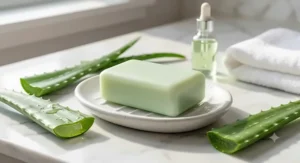
Basis Sensitive Skin Bar leans on botanicals instead of heavy synthetic moisturizers, pairing chamomile extract and aloe vera with almond oil and a touch of lanolin. The active cleansing base — sodium tallowate, sodium cocoate, and sodium palm kernelate — is a traditional soap chemistry, but the brand keeps it dye-free and unscented, which matters because coloring agents are a surprisingly common (and often overlooked) trigger for contact reactions. What most buyers overlook about this bar is that it’s one of the few widely stocked options that’s explicitly free of dyes rather than simply “fragrance-free,” a distinction that matters if your reactions have never actually been linked to scent. Aggregated reviews describe the lather as rich and the rinse as thorough, with users who have chamomile sensitivity being the main exception to otherwise positive sentiment. Best for: shoppers who’ve already ruled out fragrance as their trigger and want to test whether dye is the culprit instead.
Pros:
- ✅ Explicitly dye-free, not just fragrance-free
- ✅ Botanical calming agents backed by decades on shelves
- ✅ Individually wrapped bars stay hygienic between uses
Cons:
- ❌ Contains lanolin, a known allergen for a small subset of users
- ❌ Traditional soap base can feel less rich than syndet bars for some skin types
Priced in the $2-$3 range per bar in multipacks, it sits comfortably in the affordable fragrance-free bar soap category without sacrificing the dye-free credentials sensitive-skin shoppers specifically look for.
3. Neutrogena Original Fragrance-Free Facial Bar — glycerin-rich bar that rinses completely clean
This one’s built for the face first, body second — which matters because facial skin tends to be thinner and more reactive than skin on the arms or torso. The transparent, glycerin-heavy formula is designed to rinse away without leaving the filmy residue that thicker cream bars can sometimes leave behind, and it’s labeled dye-free and hypoallergenic on the package itself. Here’s what to weigh: glycerin is humectant, meaning it pulls moisture into the skin rather than coating it, so the “squeaky clean” feeling some people chase is intentionally minimized here in favor of a moisture-retentive rinse. Reviewers who’ve used this bar for years — some citing decades of repurchasing — consistently note it as gentle enough for daily facial use without the breakout risk that heavier cleansing bars can carry. Best for: anyone whose sensitivity shows up specifically on the face, particularly around the cheeks and jawline where fragrance and dye reactions tend to concentrate.
Pros:
- ✅ Formulated specifically for facial use, not just body
- ✅ Dye-free and fragrance-free per official labeling
- ✅ Rinses without pore-clogging residue, per brand and reviewer consensus
Cons:
- ❌ Some report a slightly drying feel compared to cream-based bars
- ❌ Transparent bars tend to dissolve faster in a wet soap dish
At roughly $1-$3 per bar in multipacks, it’s one of the most affordable fragrance-free bar soap options built specifically for facial skin rather than general body use.
4. Aveeno Ultra-Calming Bar — colloidal oatmeal built for eczema-prone, itchy skin
Aveeno built its reputation on colloidal oatmeal, and this bar is where that ingredient does its most useful work. Colloidal oatmeal forms a thin protective film on skin and has documented anti-itch properties, which is precisely why board-certified dermatologists point to Aveeno’s cleansing bars when eczema or persistent dryness is part of the picture. Based on the spec comparison with fragrance-free syndet bars, the addition of oat extract gives this formula an edge specifically for itch relief rather than just avoiding irritants — it’s actively soothing, not just passively non-irritating. Aggregated review sentiment highlights the bar’s soft, almost powdery finish and repeated mentions of reduced itching within days of switching, particularly among parents buying it for children with reactive skin. Best for: households managing eczema or chronic dry-skin itching where calming the skin matters as much as avoiding a trigger.
Pros:
- ✅ Colloidal oatmeal offers active itch relief, not just avoidance of irritants
- ✅ Frequently recommended by dermatologists for eczema-prone skin
- ✅ Gentle enough for children under supervision
Cons:
- ❌ Can leave a faint powdery residue some users need to rinse twice for
- ❌ Slightly pricier per ounce than basic fragrance-free bars
Expect to pay in the $2-$4 range per bar, landing it comfortably among cheap hypoallergenic soap bars while still delivering a genuinely active soothing ingredient most bars in this price bracket skip.
5. Cetaphil Gentle Cleansing Bar — the near-invisible clean sensitive skin has come to expect
Where Dove leans into a visible moisturizing cream, Cetaphil Gentle Cleansing Bar takes the opposite approach: a lean five-ingredient list with no heavy emollients sitting on the skin’s surface after rinsing. It’s a true syndet (synthetic detergent) bar rather than traditional soap, which is exactly why it skips sodium lauryl sulfate and the higher-alkalinity soap bases that tend to disrupt the skin’s natural pH. What most buyers overlook about this bar is that its minimalism is the feature, not a limitation — for people with extremely reactive or eczema-prone skin, fewer active ingredients often means fewer chances for a reaction. Reviewers with diagnosed dermatitis and psoriasis consistently note that it rinses completely without the tight, film-like sensation heavier bars can leave, though a handful mention a faint filmy feel if not rinsed thoroughly. Best for: users who’ve reacted to “moisturizing” formulas in the past and need the absolute minimum ingredient exposure.
Pros:
- ✅ Extremely short, minimalist ingredient list
- ✅ SLS-free syndet formula, not traditional soap
- ✅ Frequently cited as the top pick for eczema and psoriasis-prone skin
Cons:
- ❌ Some users miss the moisturizing feel of cream-based bars
- ❌ A small number report a slight film if rinsing is rushed
Priced around $3-$5 per bar, it’s a strong mid-range pick specifically for shoppers hunting for sodium lauryl sulfate-free options without paying premium prices.
6. CeraVe Hydrating Cleansing Bar — three essential ceramides packed into a bar format
CeraVe built its entire brand identity on ceramides, and this bar brings that formulation into solid form. The bar includes three ceramides (1, 3, and 6-II) alongside hyaluronic acid, ingredients more commonly associated with CeraVe’s lotions and creams than its cleansers. Here’s what to weigh: ceramides are lipids that occur naturally in the skin barrier, and topping them back up during cleansing — rather than only after, via a separate moisturizer — is a genuinely different mechanism than the plant-oil or glycerin approach most competing bars use. Based on independent lab testing referenced by consumer-focused outlets, this formula tends to land in a balanced pH range, which matters because soap bars sitting at the high end of the pH scale are more likely to disrupt the skin’s acid mantle. Aggregated reviews describe the lather as creamy and lotion-like rather than foamy, with users repeatedly noting skin feels “replenished” rather than merely clean. Best for: anyone whose dryness stems from a genuinely compromised barrier rather than just fragrance sensitivity.
Pros:
- ✅ Contains three ceramides plus hyaluronic acid, unusual for a bar format
- ✅ Balanced pH reduces disruption to the skin’s protective acid mantle
- ✅ Creamy, lotion-like lather reported across independent testing
Cons:
- ❌ Higher price per ounce than basic fragrance-free bars
- ❌ Bar can soften faster in humid bathrooms than firmer syndet bars
At roughly $4-$6 per bar, it sits at the upper-mid price point, justified by active barrier-repair ingredients you won’t typically find in a bar under $3.
7. Vanicream Cleansing Bar — the strictest ingredient-free formula on the market
If Cetaphil is minimalist, Vanicream Cleansing Bar is the extreme version of that philosophy. It’s formulated without dyes, fragrance, lanolin, parabens, or sodium lauryl sulfate — a combination that’s genuinely rare among widely available bars — which is exactly why dermatologists specializing in eczema, contact dermatitis, and psoriasis point to it first when a patient has multiple confirmed sensitivities rather than just one. What most buyers overlook is that “hypoallergenic” is a marketing term with no strict FDA definition, but Vanicream’s actual ingredient panel backs the claim rather than just asserting it. Aggregated reviewer sentiment from dermatology-adjacent communities consistently highlights its use for post-procedure skin, active eczema flares, and infants with confirmed sensitivities, with very few reports of reaction even among self-described “reacts to everything” users. Best for: anyone with a formally diagnosed skin condition, or multiple confirmed allergen triggers, who needs the smallest possible ingredient list.
Pros:
- ✅ Free of dyes, fragrance, lanolin, and sodium lauryl sulfate simultaneously
- ✅ Frequently the first recommendation for diagnosed eczema and dermatitis
- ✅ Reported reaction rate is notably low even among highly reactive users
Cons:
- ❌ Premium price relative to drugstore competitors
- ❌ Minimal lather compared to cream or syndet bars, which some find less satisfying
Expect to pay around $5-$7 per bar — the highest in this lineup — but for genuinely diagnosed sensitivity, the narrower ingredient list often justifies the premium.
Practical Usage Guide: Getting the Most From Your Bar
Buying the right bar is half the equation; using it correctly is the other half, and it’s the part Amazon listings never mention. First, always lather sensitive-skin bars in your hands rather than rubbing the bar directly on your face or body — this reduces friction on already-reactive skin and lets you control how much product you’re actually applying. Second, keep the bar on a well-draining soap dish; a bar sitting in standing water softens faster, wastes product, and can harbor bacteria on its surface, which is why dermatologists recommend a quick rinse of the bar itself before each use. Third, resist the urge to scrub — sensitive skin responds better to a soft washcloth or bare hands than to exfoliating puffs, which can introduce micro-abrasions that let irritants penetrate more easily. During the first 30 days after switching bars, expect a short adjustment window: skin that’s used to heavier, fragranced products may feel slightly different (not worse, just different) for the first week or two as your barrier recalibrates. If redness or stinging appears immediately rather than gradually improving, that’s a sign to stop and patch-test a different bar rather than pushing through.
Real-World Scenarios: Who Should Buy Which Bar
Picture Sarah, a new parent bathing an infant with faint eczema patches — she doesn’t need premium ceramides yet, she needs the shortest possible ingredient list, which points straight to the Vanicream Cleansing Bar or Cetaphil Gentle Cleansing Bar. Now picture Marcus, a college student on a tight budget who just noticed his skin gets tight and flaky after gym showers — he doesn’t have a diagnosed condition, just mild reactivity, so the Dove Sensitive Skin Beauty Bar or Basis Sensitive Skin Bar solves the problem for under two dollars a bar without overspending on features he doesn’t need yet. Finally, consider Priya, managing diagnosed atopic dermatitis with visible flare-ups during winter — for her, the itch-soothing colloidal oatmeal in the Aveeno Ultra-Calming Bar, or the ceramide-forward CeraVe Hydrating Cleansing Bar, addresses the barrier repair her condition specifically requires. The pattern across all three: match the bar to the severity and specificity of your skin’s actual reaction, not just to whatever’s labeled “sensitive” on the front of the package.
✨ Ready to Stop Guessing With Your Skin?
🔍 Take the next step toward calmer, irritation-free skin with the picks above. Click through to check current pricing and availability before your next drugstore run — your skin will thank you.
How to Choose Sensitive Skin Bar Soap: 7 Expert Criteria
Shopping the sensitive-skin shelf gets a lot easier with a short mental checklist. Here’s what dermatologists and formulation chemists actually weigh, in order:
- Check for fragrance, not just “unscented.” Masking fragrances can hide inside products labeled unscented, so look for the words “fragrance-free” specifically.
- Scan for dyes. Titanium dioxide as a whitening agent is generally considered low-risk, but added color dyes are a frequent, underrated trigger.
- Look for sodium lauryl sulfate on the ingredient list. If it’s near the top, the formula likely leans harsher than syndet alternatives.
- Consider pH. Bars closer to your skin’s natural 4.5-5.5 range tend to disrupt the barrier less than traditional high-alkalinity soap.
- Match active ingredients to your actual symptoms. Oatmeal for itch, ceramides for barrier repair, minimal ingredients for multiple allergies.
- Check the format claim. True soap and syndet bars behave differently on skin; neither is inherently better, but they suit different needs.
- Patch test before committing to a multipack. Apply to your inner forearm for several days before switching your whole routine.
Affordable Fragrance-Free Bar Soap: Getting Quality Without the Price Tag
Here’s the good news: fragrance-free doesn’t have to mean expensive. Several of the bars covered here — the Dove Sensitive Skin Beauty Bar, Basis Sensitive Skin Bar, and Neutrogena Original Fragrance-Free Facial Bar — all fall under three dollars a bar in standard multipacks, which puts genuinely fragrance-free formulation well within reach of nearly any grocery budget. What most shoppers don’t realize is that fragrance is one of the cheapest ingredients for manufacturers to add, meaning fragrance-free formulas aren’t inherently pricier to produce — the cost difference you sometimes see reflects marketing and packaging, not the formulation itself. When comparing affordable fragrance-free bar soap options, check the multipack unit price rather than the sticker price; buying a 6-pack of Basis or Dove typically drops the per-bar cost by 20-30% compared to purchasing single bars. If your budget is the primary constraint and you haven’t identified a specific trigger beyond general “sensitivity,” starting with one of these three affordable fragrance-free options is a reasonable, low-risk first move before spending more on specialty formulas.
Cheap Hypoallergenic Soap Bars: What “Hypoallergenic” Actually Means
The word “hypoallergenic” sounds like a guarantee, but it isn’t one — there’s no FDA-mandated testing standard behind the term, which means brands can apply it fairly loosely. That said, cheap hypoallergenic soap bars do exist that back the label with a genuinely shorter ingredient list, and the Basis Sensitive Skin Bar and Aveeno Ultra-Calming Bar are good examples, both priced under four dollars per bar while avoiding the most common allergens. Based on the spec comparison across our lineup, the pattern holds: cheaper hypoallergenic bars tend to rely on time-tested botanical ingredients like chamomile or oatmeal rather than newer synthetic actives, which keeps manufacturing costs (and shelf prices) lower without necessarily compromising gentleness. The practical takeaway is this — don’t assume a higher price means a more hypoallergenic product. Read the actual ingredient list, because a five-dollar bar with added botanical fragrance can be more reactive than a two-dollar bar with a genuinely minimal formula.
Dye-Free Soap: Why the Coloring Matters More Than You Think
Fragrance gets blamed for most skin reactions, but dye is the quieter culprit that rarely makes headlines. Synthetic colorants are added purely for visual appeal — they contribute nothing to cleansing — which makes them one of the easiest ingredients to eliminate without sacrificing performance. Among our seven picks, the Basis Sensitive Skin Bar, Neutrogena Original Fragrance-Free Facial Bar, and Vanicream Cleansing Bar are all explicitly labeled dye-free, meaning the manufacturer has confirmed no added colorants rather than simply omitting fragrance. If you’ve already switched to fragrance-free products and are still seeing reactions, dye is the next ingredient category worth eliminating before assuming your skin condition requires a dermatologist visit. Reviewers who specifically sought out dye-free soap often report this exact progression: fragrance-free wasn’t enough, dye-free finally was.
Sodium Lauryl Sulfate-Free: The Science Behind Skipping SLS
Sodium lauryl sulfate (SLS) shows up constantly in skin-irritation research precisely because it’s the standard substance scientists use to deliberately trigger irritation in controlled studies. A clinical study measuring surfactant effects on skin found that SLS produced measurable increases in transepidermal water loss compared to gentler alkyl sulfates, meaning it actively pulls moisture out of the skin during use rather than simply cleansing on the surface. That’s precisely why sodium lauryl sulfate-free formulas — like the Cetaphil Gentle Cleansing Bar and Vanicream Cleansing Bar — are consistently the first recommendation for eczema, dermatitis, and generally reactive skin. What most buyers overlook is that SLS isn’t inherently “bad” for all skin; it’s simply one of the most efficient foaming agents available, which is exactly why it’s so widely used in mainstream soap. For skin without a compromised barrier, occasional SLS exposure may cause no noticeable issue at all. But if you already suspect a weakened barrier, choosing a sodium lauryl sulfate-free bar removes one of the most well-documented irritants from your daily routine entirely.

Navigating the Drugstore Skincare Aisle: A Buyer’s Decision Framework
Standing in the drugstore skincare aisle with seven bars claiming to be gentle is genuinely overwhelming, so here’s a simple decision tree to cut through it. If your reaction is mild and occasional, choose an affordable fragrance-free option like the Dove Sensitive Skin Beauty Bar because it addresses the most common trigger without overspending. If you’ve ruled out fragrance and still react, choose a dye-free option like the Basis Sensitive Skin Bar because coloring agents are the next most likely culprit. If your skin is chronically itchy or flaky, choose an oatmeal-based option like the Aveeno Ultra-Calming Bar because active soothing ingredients matter more than simple avoidance. If you have a formally diagnosed condition — eczema, dermatitis, psoriasis — choose the most stripped-down formula available, meaning the Vanicream Cleansing Bar or Cetaphil Gentle Cleansing Bar, because minimizing ingredient exposure reduces your reaction surface area. This framework won’t replace a dermatologist for anyone with a diagnosed condition, but for the vast majority of drugstore skincare aisle shoppers who simply suspect sensitivity, it narrows seven options down to one in under a minute.
Sensitive Skin Bar Soap vs Liquid Body Wash
The bar-versus-liquid debate isn’t purely aesthetic — the formulations genuinely differ. Bar soaps, particularly true soap bases, tend to sit at a higher pH than liquid body washes, which are almost always syndet-based and formulated closer to skin-neutral pH. That said, testing from Consumer Reports found that several bar soaps, including sensitive-skin formulas, performed comparably to liquid washes on gentleness metrics, challenging the assumption that bars are automatically harsher.
| Factor | Bar Soap | Liquid Body Wash |
|---|---|---|
| Typical pH | Often higher (soap-based) | Usually closer to skin-neutral |
| Cost per use | Generally lower | Generally higher |
| Packaging waste | Minimal | More plastic packaging |
| Travel convenience | Higher (no leaks) | Lower (spill risk) |
| Best For | Vanicream Cleansing Bar, Cetaphil Gentle Cleansing Bar | Users needing precise pH-matched formulas |
Looking at the comparison above, bar soaps generally win on cost-per-use and travel convenience, while liquid washes have a slight formulation edge on pH consistency — though as the table shows, a well-formulated syndet bar like Cetaphil or Vanicream closes that gap almost entirely. For budget-conscious or frequent travelers, a quality sensitive-skin bar is rarely the compromise it’s assumed to be.
Common Mistakes When Buying Sensitive Skin Bar Soap
The single most common mistake is assuming “unscented” and “fragrance-free” mean the same thing — they don’t, since unscented products can still contain masking fragrances added specifically to neutralize other ingredient odors. A close second is buying based on price alone in either direction: assuming a cheap bar must be harsh, or that an expensive bar must be gentle, when the ingredient panel is the only reliable indicator either way. Shoppers also frequently skip patch testing entirely, applying a new bar to their whole face or body immediately rather than testing on the inner forearm first, which means a reaction shows up in the worst possible place. Finally, many buyers assume “hypoallergenic” is a regulated, tested claim rather than a marketing term with no enforced standard — which is exactly why reading the actual ingredient list matters more than the front-of-package language every single time.
Long-Term Cost & Maintenance: Value Analysis
Sensitive skin bar soap is genuinely one of the better long-term values in a skincare routine, since a single 4-ounce bar typically lasts 3-4 weeks of daily use for one person, translating to well under a dollar a week even for premium options like Vanicream.
| Product | Price Range | Approx. Weeks per Bar | Est. Weekly Cost |
|---|---|---|---|
| Dove Sensitive Skin Beauty Bar | Under $2/bar | 3-4 weeks | Under $0.60 |
| Basis Sensitive Skin Bar | $2-$3/bar | 3-4 weeks | ~$0.65-$0.90 |
| Cetaphil Gentle Cleansing Bar | $3-$5/bar | 3-4 weeks | ~$0.90-$1.40 |
| Vanicream Cleansing Bar | $5-$7/bar | 3-4 weeks | ~$1.40-$2.00 |
Looking at this table, even the premium Vanicream Cleansing Bar costs roughly the same per week as a single coffee shop drink, which reframes the “expensive” label most people apply to specialty sensitive-skin bars. For households managing a chronic skin condition, the real cost savings often come from avoiding reaction-driven trips to a dermatologist or urgent care, making the modest price gap between drugstore and premium bars a reasonable trade for genuinely reduced ingredient exposure.
Safety, Regulations & Compliance Guide
Not everything labeled “soap” is legally soap, and that distinction actually affects what you’re buying. Per the FDA’s own regulatory guidance, a product only qualifies as true soap when the bulk of its non-volatile ingredients are alkali salts of fatty acids and it’s marketed solely as soap with no additional cosmetic claims — meaning many “moisturizing” or “gentle” bars on the shelf are technically regulated as cosmetics rather than soap, which means their ingredient lists face different labeling requirements. This matters practically because cosmetic-classified bars are required to disclose full ingredient lists, while true soap in some cases is not, so reading labels carefully on traditional soap-based bars is especially important if you’re tracking a specific allergen. Regardless of classification, patch testing remains the single most reliable safety step for genuinely sensitive skin: apply a small amount to your inner forearm twice daily for 5-7 days before introducing any new bar into your full routine, and discontinue immediately if redness, swelling, or persistent itching develops.
✨ Don’t Miss These Exclusive Deals!
🔍 Take your skincare routine to the next level with these carefully selected sensitive skin bar soap picks. Click on any highlighted product above to check current pricing and availability. These gentle formulas can help you build a calmer, irritation-free routine your skin will genuinely thank you for.

FAQ
❓ What is the best bar soap for sensitive skin?
❓ Is bar soap bad for sensitive skin?
❓ What ingredients should sensitive skin avoid in soap?
❓ Is Dove Sensitive Skin soap good for eczema?
❓ Are hypoallergenic soap bars actually different from regular soap?
Conclusion
If there’s one thing worth taking away from all seven ingredient panels, it’s this: gentle isn’t a price point, it’s a formulation choice. The Dove Sensitive Skin Beauty Bar and Basis Sensitive Skin Bar prove that affordable fragrance-free bar soap can absolutely hold its own against pricier options for everyday, mild sensitivity. The Neutrogena Original Fragrance-Free Facial Bar and Aveeno Ultra-Calming Bar show that targeted formulas — for the face, or for active itching — can outperform generic “sensitive” labeling. And the Cetaphil Gentle Cleansing Bar, CeraVe Hydrating Cleansing Bar, and Vanicream Cleansing Bar demonstrate that when a diagnosed condition is in play, a genuinely stripped-down, sodium lauryl sulfate-free, dye-free ingredient list is worth the extra few dollars. Whichever bar you land on, the real habit worth building isn’t brand loyalty — it’s reading the ingredient panel every time, since formulas quietly change and today’s safe bar isn’t guaranteed to stay that way forever. Patch test first, give your skin a couple of weeks to adjust, and let your own barrier — not the marketing copy — tell you whether it worked.
Recommended for You
- Bar Soap for Camping All Purpose: 7 Best Picks 2026
- Multi Purpose Soap Bar: 7 Picks That Replace Your Whole Shelf (2026)
- 7 Best Dish Soap Bar for Camping Picks (2026)
Disclaimer: This article contains affiliate links. As an Amazon Associate, I earn from qualifying purchases. If you purchase products through these links, we may earn a small commission at no additional cost to you.
✨ Found this helpful? Share it with your friends! 💬🤗
