
In This Article
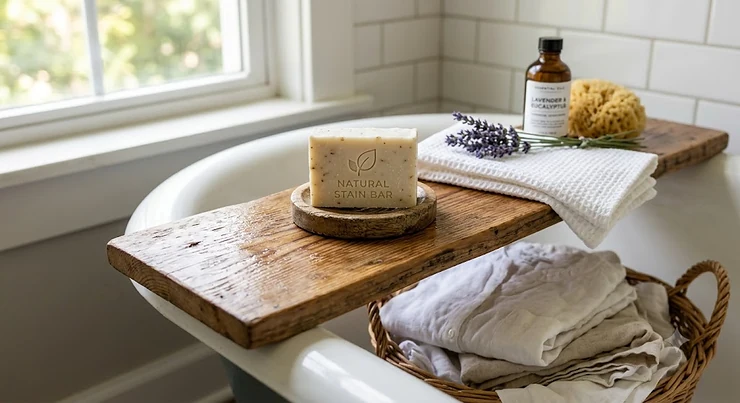
Somewhere between the third load of laundry and the fourth attempt at scrubbing out a ketchup blowout, most people discover the same secret: a stain remover bar quietly outperforms half the sprays under the sink. It’s not flashy. It doesn’t come in a spray bottle with a triggered mist and a brand mascot. It’s just a solid brick of soap you rub directly onto the mess, and somehow that’s the whole trick. A stain remover bar is a solid, concentrated soap — usually built from tallow or plant-based fatty acids plus surfactants — designed to be rubbed wet directly onto fabric so it can lift oils, proteins, and pigments before they set.
We spent time digging through real product specs, ingredient lists, and aggregated customer feedback across seven genuinely available bars — from the century-old workhorse Fels-Naptha to newer eco-conscious entrants like Kind Laundry. This isn’t a rewritten ingredient panel. It’s a comparison built to help you figure out which bar actually deserves a spot by your washing machine, whether you’re dealing with a toddler’s grass-stained knees, a barbecue-grease disaster, or a wine glass that tipped at the worst possible moment.
By the end, you’ll know which stain remover bar soap fits your specific laundry chaos, how the budget options stack up against the natural and imported ones, and what reviewers consistently say works (and doesn’t). Let’s get into it.
Quick Comparison: Stain Remover Bars at a Glance
| Bar | Best For | Price Range | Origin |
|---|---|---|---|
| Fels-Naptha | Grease & collar stains on a budget | Under $5 (2-pack) | USA |
| Zote | Biggest bar, lowest cost-per-wash | $2–$4 per bar | Mexico |
| Sard Wonder Soap | Tough, set-in stains | $8–$12 range | Australia |
| Buncha Farmers | Natural formula, grass & blood | $5–$8 range | Canada |
| Kind Laundry | Travel-friendly, vegan | $6–$8 range | Canada |
Looking at this table, the pattern is clear: the cheapest bars (Fels-Naptha and Zote) win on raw value, while the natural picks like Buncha Farmers and Kind Laundry cost more per ounce but skip tallow and synthetic fragrance. If tough, baked-in stains are your main problem, Sard Wonder Soap shows up again and again in review threads as the one people reach for after everything else fails.
💬 Just one click — help others make better buying decisions too!😊
Top 7 Stain Remover Bars: Expert Analysis
1. Fels-Naptha — best all-around grease fighter under $5
The century-old reputation isn’t hype — Fels-Naptha has been cutting through greasy stains and ring-around-the-collar since long before “pretreat” was a marketing term. Each bar runs 5.0 ounces and is built from a blend of sodium tallowate, sodium cocoate, and palm-derived fatty acids, which is a fancier way of saying it’s a genuinely alkaline, grease-cutting soap rather than a detergent with fragrance bolted on. That alkalinity is exactly why it handles oil-based stains — engine grease, cooking oil, sweat rings — better than most liquid pretreatments, which are formulated to be gentler and therefore less aggressive on lipids.
Based on the spec comparison with other bars on this list, Fels-Naptha sits at the budget end but punches well above it on grease and collar soil specifically. It’s best for households doing manual labor, mechanics’ uniforms, or anyone who’s tired of yellowing shirt collars. Reviewers consistently report it works best when the bar is wetted first and rubbed directly into a damp stain, then left to sit for a few minutes before washing — skipping that soak step is the most common complaint in aggregated feedback.
Pros:
- ✅ Extremely effective on grease and oil-based stains
- ✅ Long-lasting bar for the price
- ✅ Works well as a laundry booster, not just a spot treatment
Cons:
- ❌ Noticeable fragrance that some find too strong
- ❌ Can dry out hands with repeated bare-handed use
Priced under $5 for a two-pack at the time of research, Fels-Naptha remains one of the best value-per-wash stain remover bars on the market — check current price before buying, since packaging and bar counts vary.
2. Zote — biggest bar, lowest cost per wash
At 14.1 ounces per bar, Zote dwarfs most competitors on this list, and that size is the whole pitch: one bar realistically outlasts several bottles of liquid pretreatment. The soap is made primarily from sodium tallowate and sodium cocoate, and the pink variant includes an optical brightener while the white variant skips it — a distinction that matters more than it sounds, since brighteners can leave a faint residue on very dark fabrics over time.
What most buyers overlook about Zote is that its size makes it genuinely economical for large families or anyone doing frequent hand-washing of delicates, not just spot treatment. It’s a favorite among people who make their own powdered or liquid detergent, since a grated bar dissolves easily into a DIY batch. Reviewers consistently note it handles turmeric, wine, and tomato-based stains impressively well for something this inexpensive, with several longtime users specifically calling out its performance on stubborn kitchen stains that other products failed to touch.
Pros:
- ✅ Massive bar size means exceptional cost-per-use value
- ✅ Doubles as a base for homemade laundry detergent
- ✅ Effective on food dyes like turmeric and berry stains
Cons:
- ❌ Dissolves faster than smaller, denser bars
- ❌ Scent is polarizing — some love it, others find it overpowering
At around $2–$4 per bar depending on pack size, Zote is arguably the best value stain remover bar soap on this entire list, and it’s easy to see why it has such a loyal following.
3. Sard Wonder Soap — best for tough, set-in stains
Imported and manufactured under Colgate-Palmolive, Sard Wonder Soap has built a reputation — largely through word of mouth rather than advertising — as the bar people reach for after cheaper options fail. Its formula includes sodium tallowate, eucalyptus oil, and sodium dodecyl benzene sulfonate, a combination that performs unusually well in hard water, which is a real limitation for many soap-based stain removers that lose effectiveness when mineral content is high.
Here’s what to weigh: Sard Wonder Soap costs meaningfully more than the domestic budget bars, but the aggregated review sentiment is remarkably consistent — people specifically call out success on carpet stains, old set-in marks, and stains that had already been through a full wash cycle without lifting. That’s a different use case than fresh-stain pretreatment, and it’s the strongest argument for keeping this bar on hand even if you already own something cheaper for everyday laundry.
Pros:
- ✅ Performs well even in hard water conditions
- ✅ Reviewers report success on old, previously-washed-in stains
- ✅ Works on carpet and upholstery, not just fabric
Cons:
- ❌ Requires more manual scrubbing than spray alternatives
- ❌ Higher price point since it’s an imported product
In the $8–$12 range at the time of research, Sard Wonder Soap earns its higher price tag specifically for stains that have already resisted a first attempt at removal.
4. Sunlight Bar Soap — the classic pure-soap deep clean
Sunlight Bar Soap carries over a century of heritage as a straightforward, no-frills pure soap, and that simplicity is precisely its selling point. Sold in multi-bar packs (commonly around 250g–500g total), the imported formula leans on saponified oils without the added enzymes or synthetic surfactants found in modern liquid stain removers. On paper this means it’s a gentler, more traditional cleaning chemistry — which explains why it’s often recommended for hand-washing delicates as much as for stain pretreatment.
What the spec sheet won’t tell you, but user reports suggest, is that Sunlight Bar Soap shines particularly on grease and grass stains on kids’ clothing, a detail that shows up repeatedly across independent review threads and social posts from parents. It’s a strong pick for anyone who wants a multi-purpose bar — hands, dishes, and laundry — rather than a single-use stain stick, though buyers should expect to do the scrubbing themselves rather than relying on enzymes to do the work.
Pros:
- ✅ Multi-purpose: works for hands, dishes, and laundry alike
- ✅ Strong reputation for grease and grass stain removal
- ✅ Comes in bulk multi-packs for long-term value
Cons:
- ❌ Imported, so shipping cost can add to the total
- ❌ Less effective on protein-based stains like blood without pretreatment
At roughly $10–$15 for a multi-pack import, Sunlight Bar Soap is best suited to households that want one bar doing double duty across the whole home.
5. Buncha Farmers All Natural Stain Remover Bar — plant-based grease buster
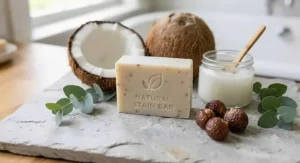
Made in Canada from saponified coconut, canola, and vegetable oils with added litsea cubeba and lemon essential oils, Buncha Farmers was built specifically to avoid the harsh detergent chemicals found in many spray stain removers. The borax addition helps soften water and boost cleaning power, which matters in practice because plant-oil soaps can otherwise struggle in hard-water regions the way tallow-based bars do less often.
Based on the spec comparison, this bar’s real strength is versatility across surface types — reviewers report success on grass, red wine, ketchup, blood, and underarm sweat stains, and several specifically mention using it on carpets, car seats, and even leather without discoloration. That breadth is unusual for a natural formula, since plant-based cleaners often trade some grease-cutting power for gentler ingredients; Buncha Farmers appears to have found a workable middle ground based on the volume of repeat-purchase reviews.
Pros:
- ✅ All-natural, biodegradable ingredients with no artificial dyes
- ✅ Versatile across fabric, carpet, and upholstery
- ✅ Strong reviewer consensus on grass and wine stain removal
Cons:
- ❌ Smaller stick size means it doesn’t last as long as Zote
- ❌ May need reapplication on deeply set or baked-in stains
Priced in the $5–$8 range, Buncha Farmers is a smart pick for anyone who wants natural ingredients without giving up real stain-fighting performance.
6. Meliora Soap Stick Stain Remover — best for sensitive skin and zero-waste laundry
Manufactured by a Chicago-based, MADE SAFE-certified B Corp, the Meliora Soap Stick is about as simple as stain removers get: vegetable soap made from sodium cocoate, glycerin, organic coconut oil, and water — nothing else. No added fragrance, no dye, no preservatives. That minimalism is the whole point for buyers with sensitive skin or babies in the house, since there’s essentially nothing in the ingredient list capable of triggering a reaction.
What most buyers overlook about Meliora is that its plastic-free paper packaging and small size make it deceptively long-lasting; because it’s ultra-concentrated, a little goes a long way compared to bulkier bars. Aggregated review sentiment is strongly positive on baby-related messes specifically — parents report success on formula stains, mildew on shower curtains, and stubborn toddler laundry that had already failed a normal wash cycle.
Pros:
- ✅ Fragrance-free and MADE SAFE certified for sensitive skin
- ✅ Zero-waste, plastic-free packaging
- ✅ Reviewers report strong results on baby and toddler stains
Cons:
- ❌ Smaller size than budget bars, so cost-per-use is higher
- ❌ No handle or applicator, which some find messier to use
In the $8–$10 range, the Meliora Soap Stick is a premium pick for households prioritizing clean ingredients over sheer bulk value.
7. Kind Laundry Vegan Stain Remover Bar — most travel-friendly vegan option
Made in Ontario from sodium cocoate, sodium palmate, sodium palm kernelate, and glycerine — deliberately excluding tallow, a common animal-derived ingredient in traditional stain bars — the Kind Laundry bar targets buyers who want an entirely plant-based formula without sacrificing convenience. At around 90 grams with a travel-size version also available, it’s compact enough to toss into a dopp kit or gym bag, something none of the bulkier bars on this list can claim.
The spec sheet suggests it lasts up to 100 washes because it dissolves slowly rather than crumbling, and reviewer feedback backs that up — multiple long-term users specifically mention the bar outlasting expectations relative to its size. What stands out in aggregated feedback is repeated success on grass, coffee, wine, and spaghetti sauce, the exact combination of stains that hits households with active kids the hardest.
Pros:
- ✅ Fully vegan, phosphate-free, no animal by-products
- ✅ Compact and travel-friendly, ideal for trips or dorms
- ✅ Long-lasting despite its small size, per multiple reviewers
Cons:
- ❌ Some reviewers note it’s pricier per gram than bulk bars
- ❌ Unscented formula may feel less “fresh” to buyers used to fragranced soap
At roughly $6–$8 for a full-size bar (less for the travel version), Kind Laundry is the strongest choice for anyone who wants a vegan stain remover bar soap that fits in a suitcase.
Practical Usage Guide: Getting the Most Out of Your Stain Remover Bar
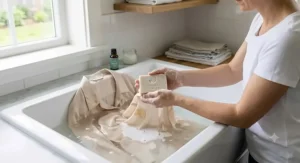
The technique matters almost as much as the bar you choose. First, always treat a stain while it’s still fresh — protein-based stains like blood and sweat set permanently once they’ve been through a hot dryer cycle, so speed matters more than product choice in those cases. Wet the stained area with cool water before applying the bar; hot water can actually set certain stains, particularly blood and egg, by cooking the proteins into the fibers.
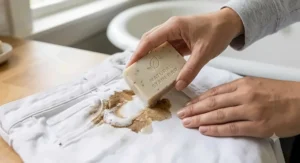
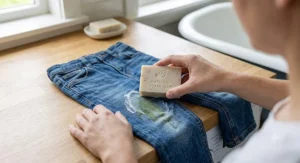
Rub the wet bar directly onto the stain until a light lather forms, then use your fingers or a soft brush to work it into the fabric for 30–60 seconds. Let it sit for 5–10 minutes before washing as usual — this dwell time is the step reviewers most often skip, and skipping it is the single biggest reason stain remover bars get blamed for “not working.” For a stain remover bar soap you plan to keep in regular rotation, store it in a ventilated soap dish rather than a sealed container, since trapped moisture causes bars to soften and dissolve faster than necessary. A common first-30-days mistake is over-scrubbing delicate fabrics; treat wool, silk, and synthetics with lighter pressure than you’d use on cotton denim.
Problem → Solution: A Stain-by-Stain Bar Soap Guide
Different stains respond to different techniques, even when you’re using the same bar. Here’s how the most common household stains break down.
Bar Soap for Grass Stains
Grass stains are pigment-based, not oily, which means they respond well to direct scrubbing rather than a long soak. Wet the area, work a bar like Buncha Farmers or Kind Laundry directly into the stain, and rinse before washing in the warmest water safe for the fabric — cold water alone often isn’t aggressive enough to fully lift chlorophyll pigment.
Bar Soap for Blood Stains
Blood is a protein stain, and the golden rule is cold water only — heat sets it permanently. Rub a bar soap for blood stains, such as Sard Wonder Soap or Fels-Naptha, into the dampened stain and let it sit before a cold rinse. Repeat if any shadow remains before the item goes into the dryer.
Bar Soap for Grease Stains on Clothes
Grease is where alkaline, tallow-based bars genuinely outperform gentler natural formulas. A bar soap for grease stains on clothes needs a decent dwell time — rub in Fels-Naptha or Sunlight Bar Soap, let it sit 10 minutes, then wash in the hottest water the fabric allows.
Bar Soap for Sweat Stains
Underarm and collar sweat stains often combine oil, salt, and sometimes antiperspirant residue. A bar soap for sweat stains works best when applied to a slightly stretched, damp fabric so the bar can reach into the weave; Zote and Fels-Naptha both perform well here per aggregated reviews.
Bar Soap for Wine Stains
Wine stains need speed. Blot (don’t rub) excess liquid first, then work a bar soap for wine stains, like Zote or Buncha Farmers, into the stain from the back of the fabric so you’re pushing the pigment out rather than deeper in.
Buyer’s Decision Framework: Which Stain Remover Bar Should You Choose?
If you’re mostly dealing with grease, work clothes, or collar stains, choose a tallow-based bar like Fels-Naptha because its alkaline formula is specifically built for lipid-based soil. If cost-per-wash matters most and you do a high laundry volume, choose Zote because its oversized bar dramatically lowers the price per use. If you’re facing old, already-washed-in stains that other products failed to remove, choose Sard Wonder Soap because it’s specifically favored for stubborn, set-in marks. If you have a baby, sensitive skin, or want zero-waste packaging, choose Meliora because its four-ingredient formula avoids common irritants entirely. And if you travel often or want a fully vegan option, choose Kind Laundry because its compact size and animal-free formula were designed with exactly that use case in mind.
How to Choose a Stain Remover Bar
What is a stain remover bar, really, when it comes to picking one for your household? It’s a decision that comes down to five practical factors:
- Stain type you fight most — grease and collar soil favor tallow-based bars; pigment stains like wine or grass respond well to almost any bar with proper technique.
- Water hardness in your home — hard water reduces lather and effectiveness in some plant-based soaps, so imported bars like Sard Wonder Soap may perform more consistently.
- Skin sensitivity — households with babies or eczema should prioritize fragrance-free, minimal-ingredient bars like Meliora.
- Bar size versus frequency of use — occasional spot-treaters can go small; families doing daily laundry benefit from a bulk bar like Zote.
- Ingredient priorities — if avoiding tallow or synthetic fragrance matters to you, vegan and natural picks like Kind Laundry and Buncha Farmers narrow the field quickly.
Each of these criteria pulls in a slightly different direction, which is exactly why this list includes seven distinct bars rather than a single “best” pick.
Common Mistakes When Buying a Stain Remover Bar
The most common mistake is assuming all bars are interchangeable — a grease-focused bar like Fels-Naptha and a delicate, fragrance-free bar like Meliora are built for genuinely different jobs, and using one where the other excels leads to disappointing results. A second mistake is buying based on size alone; a giant bar like Zote looks like the obvious value pick, but it dissolves faster in humid bathrooms, which can offset the savings if it’s not stored properly. Buyers also frequently skip reading the ingredient list, only to discover later that a “natural” bar still contains tallow, which matters for vegan households. Finally, many people buy a stain remover bar expecting instant results without the dwell time — a five-to-ten-minute wait after application is often the difference between a bar that “doesn’t work” and one that performs exactly as advertised.
Stain Remover Bar vs Liquid & Spray Stain Removers
| Factor | Bar Soap | Liquid/Spray |
|---|---|---|
| Precision | High — direct contact with stain | Moderate — can drip or over-spray |
| Cost per use | Generally lower | Generally higher |
| Grease performance | Excellent (tallow-based bars) | Good, varies by enzyme formula |
| Travel-friendly | Yes (no leaks) | Limited, TSA liquid rules apply |
| Best For | Fels-Naptha, Kind Laundry | Enzyme-heavy set-in stains |
The table makes the trade-off clear: bar soap wins on precision and cost, since you’re applying concentrated product exactly where it’s needed rather than spraying a wider area. Liquid enzyme sprays can edge ahead on certain protein-based stains that have already dried, since enzymes actively break down proteins rather than relying on surfactant action alone. For travelers, though, a compact bar like Kind Laundry avoids liquid restrictions entirely, which is a meaningful practical advantage a spray bottle simply can’t match.
Long-Term Cost & Maintenance
Cost-per-wash is where stain remover bars quietly win against almost every liquid alternative. A single Zote bar, priced in the $2–$4 range, can realistically handle dozens of spot treatments before it’s used up, working out to just pennies per application — compare that to a $6–$8 spray bottle that empties after roughly 20–30 uses. Storage matters for longevity: keeping a bar in a ventilated dish rather than a sealed bag can meaningfully extend its usable life, since constant moisture exposure is the main thing that causes premature dissolving. For households using a natural bar like Buncha Farmers or Meliora, letting the bar air-dry fully between uses also helps preserve its shape and reduces waste from crumbling.
Features That Actually Matter (And Those That Don’t)
Ingredient composition and dwell-time performance matter far more than scent or bar shape, despite how much marketing leans on fragrance. What genuinely separates one stain remover bar from another is its base chemistry — tallow-based bars like Fels-Naptha cut grease aggressively, while plant-oil bars like Buncha Farmers trade a bit of that power for gentler, more skin-friendly ingredients. Bar size, by contrast, is often oversold as a value signal; a smaller, denser bar like the Meliora Soap Stick can outlast a crumbly, oversized one if it dissolves more slowly per use. Packaging claims like “eco-friendly” are worth scrutinizing too — genuine zero-waste packaging, as seen with Meliora‘s paper wrapping, is meaningfully different from a plastic-wrapped bar simply labeled “natural.”
Fabric Safety & Care Guide
Always check a garment’s care label before applying any stain remover bar, since some delicate fibers — silk, wool, and certain synthetics — can be damaged by vigorous scrubbing even when the soap itself is gentle. It’s worth testing any bar on an inside seam first if you’re treating a new or unfamiliar fabric, a step university extension guidance on washable fabric stain removal consistently recommends before tackling a visible area. Bar soaps formulated without dyes or synthetic fragrance, like Meliora, are generally the safer starting point for anyone with skin sensitivities, and products carrying the EPA’s Safer Choice certification have been independently screened for ingredient safety, which is a useful reference point even for bars that aren’t formally certified. For households layering a soap bar with bleach or another treatment, never combine ammonia-based products with chlorine bleach, since the reaction produces genuinely hazardous fumes.
✨ Don’t Miss These Exclusive Deals!
🔍 Take your laundry routine to the next level with these carefully selected stain remover bars. Click on any highlighted item to check current pricing and availability. These tools will help you tackle even the toughest household stains your family will love!
FAQ
❓ Does a stain remover bar soap work on stains that already went through the dryer?
❓ Is Fels-Naptha soap bar safe for colored clothes?
❓ How long does a typical stain remover bar last?
❓ Can you use a stain remover bar soap on carpet or upholstery?
❓ Where can you buy a pretreat stain bar soap?
Conclusion
There’s something almost old-fashioned about reaching for a bar of soap instead of a spray bottle, but the aggregated reviews and ingredient breakdowns above make a pretty strong case that the old-fashioned approach still works. Whether you land on the budget-friendly reliability of Fels-Naptha, the sheer value of Zote, the stubborn-stain reputation of Sard Wonder Soap, or one of the natural and vegan picks like Buncha Farmers, Meliora, or Kind Laundry, the right choice really does come down to your specific laundry problems rather than any single “best” answer.
If you take one thing from this guide, let it be the dwell-time rule: wet, rub, wait five to ten minutes, then wash. That single step separates disappointed reviewers from the loyal, repeat-buying fans you’ll find across every product discussed here. Stains are stubborn, but as it turns out, a good bar of soap can be just as stubborn right back.
Recommended for You
- Shaving Soap and Bowl Set: 7 Picks That Fix Bad Lathers (2026)
- Shaving Bar Soap for Women: 7 Picks That Actually Work (2026)
- 7 Best Shaving Bar Soap for Men Picks in 2026
Disclaimer: This article contains affiliate links. As an Amazon Associate, I earn from qualifying purchases. If you purchase products through these links, we may earn a small commission at no additional cost to you.
✨ Found this helpful? Share it with your friends! 💬🤗
