
In This Article
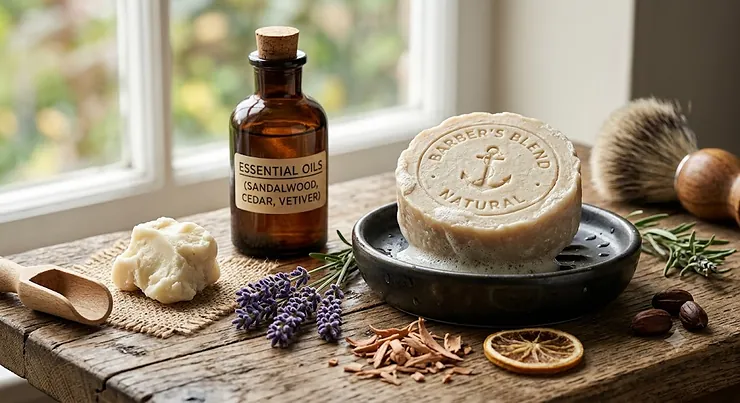
Somewhere between your grandfather’s barbershop and the drugstore aisle, shaving bar soap for men quietly fell out of fashion — replaced by pressurized cans that hiss out foam in three seconds flat. But if your jawline still stings by lunchtime, or you’re tired of tossing empty aerosol cans every few weeks, it’s worth asking whether that convenience is actually costing you a better shave. A shaving bar soap for men is a solid, brush-activated soap — usually built from tallow, glycerin, or plant oils — that you work into a dense lather instead of squeezing from a can. It typically outlasts a can of foam three-to-one and skips the propellants entirely.
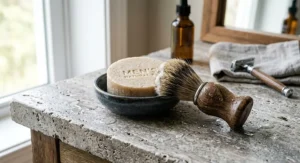
Shaving soap itself has a surprisingly long, well-documented manufacturing history stretching back well over a century, and that heritage is part of why so many barbershop-standard formulas still perform the way they do today. This guide breaks down seven real, currently available mens shaving soap bar options, from budget glycerin pucks to lanolin-rich premium imports, and explains — in plain terms — why the specs on the label actually matter to your face. Think of it as a mens grooming shaving bar shortlist you can actually trust, built entirely from real products rather than guesswork. We’ll cover tallow versus glycerin formulas, how to handle a beard prone to razor bumps, and where a pre-shave prep soap bar and an alum block post-shave bar routine fit into the picture. Whether you’re grabbing your first puck or upgrading a shelf full of half-used tubs, the goal here is simple: help you pick the traditional wet shaving soap bar that actually earns a permanent spot by your sink.
Quick Comparison Table
| Soap | Base Type | Price Range | Best For |
|---|---|---|---|
| Proraso Green | Glycerin/coconut | Under $15 | Beginners, oily/normal skin |
| Col. Conk Amber | Glycerin | Under $10 | Budget hard puck fans |
| Cella Milano Almond | Tallow | $12-$18 | Classic Italian barbershop feel |
| Taylor of Old Bond Street Sandalwood | Tallow/vegetable blend | $20-$35 | Sandalwood scent lovers |
| Captain’s Choice Bay Rum | Glycerin | $15-$22 | Bay rum fans, tub lathering |
| Stirling Soap Co. Barbershop | Tallow | $12-$16 | Razor-bump-prone, sensitive skin |
| Mitchell’s Wool Fat | Tallow/lanolin | $18-$28 | Dry skin, coarse beards |
Looking at the table, the split comes down to base ingredient more than price. The three tallow-and-lanolin options — Cella Milano Almond, Stirling Soap Co. Barbershop, and Mitchell’s Wool Fat — consistently deliver denser, more cushioning lather because animal fats and lanolin carry more fatty acid content than plant-glycerin blends. Meanwhile, Proraso Green and Col. Conk Amber trade some of that cushion for speed and beginner-friendliness, since glycerin soaps typically bloom into lather faster with less brush technique required. If you’re new to wet shaving, start with a glycerin bar; if you already know your way around a brush, the tallow options reward the extra minute of work.
💬 Just one click — help others make better buying decisions too!😊
Top 7 Shaving Bar Soaps for Men: Expert Analysis
We selected these seven mens shaving soap bar products to cover every price tier and skin need — from a $9 glycerin puck to a $28 lanolin-rich import — based on real specs, ingredient lists, and aggregated review sentiment gathered from retailer and community sources during research.
1. Proraso Green — fastest-lathering glycerin bar for beginners
The standout here is speed: Proraso Green activates into lather in under a minute, even for shavers who’ve never touched a brush before. Made in Italy since 1948 using a “hot soap” process, the formula blends stearic acid, coconut oil, and glycerin with eucalyptus oil and menthol, and the maker’s own materials describe it as created for men with all skin and beard types, using menthol to refresh and revitalize the skin alongside eucalyptus oil for a toning effect. In practice, that menthol delivers a genuinely cooling, barbershop-style tingle without the harshness of synthetic cooling agents found in some drugstore gels. This is one of the more forgiving glycerin shaving bar men can buy, since the soft, semi-solid puck loads easily even with a cheap synthetic brush — no soaking or blooming required. Reviewers consistently report that it lathers quickly and produces a refreshing, non-drying finish, and note the fragrance leans more “clean menthol” than heavy cologne, which suits guys who find traditional Italian scents overpowering. It’s best suited to normal-to-oily skin and coarser stubble; if you run sensitive or easily reddened, Proraso’s own “White” sensitive-skin formula is the safer starting point instead.
Pros:
- ✅ Builds lather in under a minute, even for first-timers
- ✅ Cooling eucalyptus-menthol finish feels genuinely refreshing
- ✅ 5.2 oz tub typically lasts 4-6 months of daily use
Cons:
- ❌ Menthol can be too intense for reactive or easily irritated skin
- ❌ Softer puck format means less “hard puck” durability than tallow pucks
Priced under $15, Proraso Green is arguably the best value entry point into wet shaving, and the low buy-in makes it an easy first experiment before investing in pricier tallow soaps.
2. Col. Ichabod Conk Amber — most affordable hard glycerin puck
Col. Ichabod Conk Amber stands out as a genuinely hard shaving soap puck at a price that barely registers on a grocery run. Formulated with glycerin, avocado oil, and vitamin E rather than tallow, the 2.25-3.75 oz round bar measures roughly 2.5 inches across and is a 2¼ oz bar of glycerin rich soap infused with avocado oil and Vitamin E. What that composition means in practice: this is a vegetable-based glycerin puck, so it’s suitable for shavers avoiding animal-derived ingredients, though it lathers slightly thinner than tallow-based rivals. Reviewers frequently describe it as a dependable “daily driver” with minimal irritation, though some note it takes an extra minute of brush work compared to creamier tallow soaps to reach full slickness. The amber fragrance is famously restrained — some fans even use it purely as a pre-shave face wash rather than a primary lathering soap, since the scent is subtle enough not to clash with a stronger aftershave. For guys hunting a no-frills, hard shaving soap puck under $10 that won’t dry out sitting in a bathroom cabinet for months, this is hard to beat.
Pros:
- ✅ Genuinely hard puck format resists melting in humid bathrooms
- ✅ Vegetable glycerin base, no animal-derived tallow
- ✅ Extremely low cost per shave over its lifespan
Cons:
- ❌ Requires more brush-loading time than creamier tallow soaps
- ❌ Lather feels noticeably thinner than premium options
At under $10 for a puck that can last months, Col. Ichabod Conk Amber delivers outstanding value for anyone testing whether traditional soap-and-brush shaving is worth sticking with.
3. Cella Milano Classic Almond — the barbershop-standard tallow soap
Cella Milano Classic Almond has been the reference point Italian barbers compare everything else against since 1899. The tallow-and-coconut-oil base is described by the maker as delivering a rich, compact lather that softens the beard, protects the skin, and delivers an exceptionally smooth shave, and in real-world terms, that translates to a lather that’s noticeably denser and more cushioning than glycerin-only soaps — useful if you’re shaving a beard area with tougher, wirier growth. This is a genuinely traditional wet shaving soap bar: the soft-soap texture sits between a cream and a hard puck, so it loads fast but still delivers tallow-grade slickness. Aggregated reviewer sentiment is remarkably consistent across retail sites — buyers repeatedly call it a “gold standard” and note it out-performs soaps costing three times as much, with only the sweet almond-marzipan scent as a mild point of contention for anyone expecting something woodier. Skin feel afterward is soft and non-tight, a hallmark of well-formulated tallow soaps. Beginners should note the soft-soap format benefits from a slightly damp (not soaking) brush loaded for a solid 20-30 seconds.
Pros:
- ✅ Tallow base creates noticeably denser, more cushioning lather
- ✅ 125+ years of barbershop-proven formula consistency
- ✅ Excellent lather yield — a little goes a long way
Cons:
- ❌ Sweet almond scent isn’t for guys who want a woodsy fragrance
- ❌ Soft-soap texture is messier to load than a firm puck
In the $12-$18 range for a 150g tub, Cella Milano remains one of the strongest value-for-performance picks in traditional wet shaving.
4. Taylor of Old Bond Street Sandalwood — the classic sandalwood scent bar
If sandalwood is the scent you’re after, Taylor of Old Bond Street Sandalwood is the benchmark. Established in 1854, the brand’s sandalwood shaving soap bar men have relied on for generations produces what retailers consistently describe as a very dense and moist lather, ideal for softening the toughest beards. That density matters practically: a thicker, moisture-rich lather sits on the skin longer during multi-pass shaves, which reduces the friction that causes razor burn on tougher beard areas. Sold as a hard soap refill or nested in its own wooden bowl, this is a genuinely traditional format — you’re meant to keep reusing the same bowl for years, refilling the puck as it wears down. Reviewer sentiment splits mildly on the fragrance itself; some call the warm, woody sandalwood scent a signature “gentleman” aroma, while others find it a touch more soapy than an incense-style sandalwood they expected. Performance-wise, the consensus is strong: consistent, dense lather that holds up across long, careful multi-pass shaves, which is exactly what buyers prone to irritation or razor bumps need from a lather that stays slick.
Pros:
- ✅ Dense, moisture-rich lather excels on coarse or tough beards
- ✅ Iconic warm sandalwood scent with 170+ years of brand heritage
- ✅ Reusable wooden bowl format designed for years of refills
Cons:
- ❌ Premium pricing compared to Italian and American alternatives
- ❌ Sandalwood scent reads more “soapy” than “incense” to some noses
Running $20-$35 depending on format, Taylor of Old Bond Street sits at the upper-mid tier — a fair ask for a 170-year-old formula that still performs.
5. Captain’s Choice Bay Rum — the spice-forward bay rum specialist
For guys chasing that classic Caribbean barbershop scent, Captain’s Choice Bay Rum is a dedicated bay rum shaving soap bar built to match the brand’s popular aftershave. Handcrafted in the USA and packaged in an oversized 8-ounce tub for its 5 ounces of soap, the maker notes it delivers dependable cushioning and a lather that lasts and lasts with a rich, spicy aroma pulled from the same concentrate used in their aftershave line. What that scent-matching means practically: layering this soap with the matching aftershave creates a single, cohesive fragrance instead of two competing scents fighting for attention on your neck. Reviewer sentiment is mixed but leans positive — some found the bay rum scent “milder” or more synthetic-smelling than expected, while others praised the effortless lathering and noted it needs no water-soaking bloom before use, unlike firmer tallow pucks. This is a glycerin-and-vegetable-oil soap rather than tallow, so the lather runs a touch lighter than Cella or Stirling, but it’s genuinely low-effort — a real plus for guys who want tub-lathering without a learning curve.
Pros:
- ✅ Matches the brand’s Bay Rum aftershave for a cohesive scent
- ✅ No bloom or soak time needed before lathering
- ✅ Oversized tub prevents lather from splashing over the sides
Cons:
- ❌ Bay rum scent reads milder/more synthetic to some reviewers
- ❌ Lighter lather density than tallow-based competitors
At roughly $15-$22 for 5 ounces, Captain’s Choice Bay Rum is a solid mid-tier pick for anyone building a themed bay-rum grooming routine.
5.5 A Quick Note on Formula Families
Before moving to the final two picks, it’s worth flagging that the next two soaps both lean into whisker-softening tallow bases — but for very different reasons, one for sensitive-skin prevention and one for outright moisture. Keep that distinction in mind as you read on, because it’s the single biggest factor separating a soap that merely cleans from a shaving bar soap for beard area upkeep that actually protects skin.

6. Stirling Soap Co. Barbershop — best tallow bar for razor-bump-prone skin
Stirling Soap Co. Barbershop earns its spot as a genuine shaving bar for razor bumps men with coarse or curly facial hair often struggle to manage. Built from beef tallow, shea butter, coconut milk, and lanolin, the brand’s own materials describe the base as designed to create a thick, slick lather perfect for wet shaving using no artificial fillers. In practice, that tallow-lanolin-shea combination matters because it cushions the blade’s path across the skin, reducing the friction and tug that aggravates ingrown hairs and pseudofolliculitis barbae — the clinical term for razor bumps. Stirling also sells an unscented, beeswax-based variant specifically formulated for lanolin-sensitive users, which is worth knowing if lanolin itself triggers your skin. Aggregated reviewer sentiment consistently praises the slickness-to-price ratio, calling it “exceptional” for a soap that typically runs $12-$16 for a generous 5.8-ounce puck. Some lanolin-sensitive users do report irritation, which is exactly why the unscented beeswax version exists as an alternative within the same lineup. For anyone whose beard area gets angry red bumps a day after shaving, swapping to a tallow-and-lanolin soap like this — paired with proper technique — is one of the cheapest changes worth testing.
Pros:
- ✅ Tallow-lanolin-shea blend reduces blade friction on sensitive necks
- ✅ Unscented lanolin-free variant available for reactive skin
- ✅ Generous 5.8 oz puck at a genuinely affordable price
Cons:
- ❌ Lanolin can itself irritate a small subset of sensitive users
- ❌ Scent selection (70+ options) can overwhelm first-time buyers
At $12-$16, Stirling Soap Co. consistently ranks among the best value-per-ounce artisan soaps on the market today.
7. Mitchell’s Wool Fat — the premium pick for dry skin and coarse beards
Mitchell’s Wool Fat, often shortened to “MWF” by wet-shaving enthusiasts, is the soap most frequently recommended for genuinely dry or mature skin. Made in England from tallow and lanolin — literally “wool fat” from sheep’s wool — its defining trait is post-shave moisturization, and a 2021 ingredient analysis published in the International Journal of Cosmetic Science found that lanolin’s fatty acid profile closely mirrors the skin’s natural lipid composition, which explains why it feels so compatible with skin that’s already prone to dryness or flaking. This is genuinely one of the more demanding hard shaving soap puck options to learn — it requires a longer bloom (soaking the puck briefly before loading) and a properly damp brush to unlock its full lather, and rushing that process is the single most common complaint from first-time buyers. Once mastered, though, it’s widely regarded as offering some of the best post-shave skin feel of any tallow shaving soap bar men can buy, with a single puck often lasting six to twelve months of regular use, making the per-shave cost genuinely low despite the higher upfront price.
Pros:
- ✅ Lanolin content closely mirrors skin’s natural lipid barrier
- ✅ A single puck routinely lasts 6-12 months of daily shaving
- ✅ Renowned post-shave moisturization for dry or mature skin
Cons:
- ❌ Steep learning curve — needs technique to lather properly
- ❌ Lanolin content unsuitable for lanolin-allergic users
Priced around $18-$28, Mitchell’s Wool Fat rewards patience with arguably the best cold-weather, dry-skin performance in this entire lineup.
Quick-Reference: All 7 Soaps Compared
| Soap | Base | Best Skin Type | Learning Curve | Price Range |
|---|---|---|---|---|
| Proraso Green | Glycerin | Normal/oily | Easy | Under $15 |
| Col. Conk Amber | Glycerin | All types | Easy | Under $10 |
| Cella Milano Almond | Tallow | All types | Easy-Moderate | $12-$18 |
| Taylor of Old Bond Street Sandalwood | Tallow blend | Coarse beards | Moderate | $20-$35 |
| Captain’s Choice Bay Rum | Glycerin | Normal | Easy | $15-$22 |
| Stirling Soap Co. Barbershop | Tallow/lanolin | Razor-bump-prone | Easy-Moderate | $12-$16 |
| Mitchell’s Wool Fat | Tallow/lanolin | Dry/mature | Advanced | $18-$28 |
The table makes the trade-off obvious: easier-to-lather glycerin soaps like Proraso Green and Col. Conk Amber are the safest entry point, while lanolin-rich options like Mitchell’s Wool Fat demand more technique but reward dry or mature skin with unmatched post-shave comfort. If razor bumps are your specific complaint, Stirling Soap Co. Barbershop offers the best balance of an easy learning curve and bump-reducing slickness without the premium price tag.
Practical Usage Guide: Getting the Most From Your Soap Bar
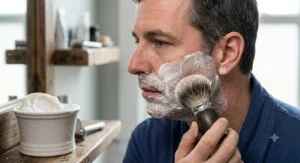
Switching from canned cream to a mens shaving soap bar takes about a week of practice, and most of that adjustment happens in your first three shaves. Start by loading a slightly damp (not dripping) brush directly on the puck for 20-30 seconds in small circles — you’re building a paste, not a bubble bath. Then transfer that paste to your face or a bowl and add water gradually, a few drops at a time, until the lather turns from thick paste to a glossy, yogurt-like consistency that holds peaks on the brush. This step is where most first-timers give up too early, assuming a thin, watery lather is normal when it’s actually under-loaded. A properly built lather also acts as a whisker softening shaving bar routine in itself — the extra 30-60 seconds of contact time lets water and fat penetrate coarse hair before the blade ever touches it.
For the first 30 days, the most common mistakes are over-wetting the brush (which drowns the lather before it builds body) and under-loading the puck (which leaves you with a thin film that offers little cushion). A simple maintenance routine helps too: after each shave, let excess water drain from the container and leave the lid cracked so the puck air-dries rather than sitting in a puddle, which prevents mushy, fast-wearing soap. Once a month, wipe down your brush handle and give the bristles a gentle rinse under warm — not hot — water to flush out any built-up soap residue, since heat can damage natural bristles over time.
Real-World Scenarios: Which Shaving Soap Fits Your Routine
Picture a college student shaving every other day on a tight budget with basic drugstore razors — Proraso Green or Col. Conk Amber make the most sense here, since both are inexpensive, forgiving of imperfect technique, and widely available. Now picture a office professional with a fuller beard area and a history of neck razor bumps who shaves daily before work — Stirling Soap Co. Barbershop, paired with a pre-shave oil and careful with-the-grain technique, addresses that irritation directly while still fitting a five-minute morning routine. Finally, consider a retiree with naturally drier, thinner skin who shaves every few days and values a leisurely ritual over speed — Mitchell’s Wool Fat is worth the learning curve here, since its lanolin-driven moisturization compounds over repeated use in exactly the way dry, mature skin benefits from most.
Problem → Solution: Fixing Common Shaving Soap Bar Mistakes
Problem: Lather feels thin and doesn’t cushion the blade. This is almost always under-loading — spend a full 30 seconds swirling the brush on the puck before moving to your face or bowl, and add water in small increments rather than all at once.
Problem: Persistent razor bumps along the jawline and neck. Switch to a shaving bar for razor bumps men with sensitive, curly facial hair specifically recommend — a tallow-lanolin blend like Stirling Soap Co. Barbershop — and always shave with the grain on the first pass rather than against it.
Problem: Soap dries out and cracks between uses. Excess water pooling in the container is the culprit; drain it after each shave and store the lid slightly ajar so trapped moisture can escape.
Problem: Scent fades faster than expected. Natural essential-oil-based soaps like Cella Milano Almond typically carry lighter, more subtle fragrance than synthetic-fragrance soaps — layer a matching aftershave rather than expecting the soap alone to last all day.
Problem: Skin feels tight and dry after shaving. This usually signals a glycerin-only formula that’s too light for your skin type; a tallow-and-lanolin bar such as Mitchell’s Wool Fat addresses this directly by replenishing the skin’s lipid barrier during the shave itself.
How to Choose a Mens Shaving Soap Bar
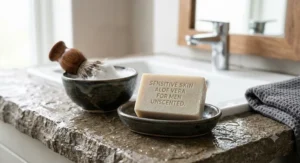
Picking the right shaving bar soap for men comes down to seven practical factors, in roughly this order of importance:
- Base ingredient first. Tallow and lanolin bars (like Stirling or Mitchell’s Wool Fat) cushion better; glycerin bars (like Proraso or Col. Conk) lather faster and suit vegans or beginners.
- Skin sensitivity. If you bruise easily or react to fragrance, start unscented or with a low-irritant option before trying bay rum or sandalwood variants.
- Format: hard puck vs. soft soap. Hard shaving soap puck options last longer per ounce but need more brush work; soft soaps (Cella, Captain’s Choice) load faster with less technique.
- Scent family. Sandalwood, bay rum, and barbershop-classic scents pair with your existing aftershave — buy soap and splash that match rather than clash.
- Container and refillability. Wooden-bowl and tub formats (TOBS, Captain’s Choice) are refillable long-term; standalone pucks are cheaper upfront but less ceremonial.
- Price per shave, not sticker price. A $28 puck lasting a year often beats a $10 puck replaced every two months.
- Beard coarseness. Coarser beard area growth benefits from denser tallow lather; finer stubble does fine with lighter glycerin formulas.
Traditional Wet Shaving Soap Bar vs Canned Shaving Cream
The core difference is preparation time versus lather quality. A traditional wet shaving soap bar requires a brush and roughly 60-90 seconds of lathering, but the resulting foam is denser, longer-lasting mid-shave, and free of the aerosol propellants found in canned foams. Canned cream wins on pure speed and convenience — no brush, no bowl, ready in seconds — but that convenience comes from whipped-in gas that dissipates within a few minutes, often leaving the last pass of a shave under-lubricated.
| Factor | Bar Soap + Brush | Canned Shaving Cream |
|---|---|---|
| Prep time | 60-90 seconds | Under 10 seconds |
| Lather longevity | Holds through multi-pass shaves | Can thin out mid-shave |
| Cost per shave | Often lower long-term | Higher, ongoing can purchases |
| Skin exfoliation | Brush adds gentle exfoliation | None |
| Best For | Multi-pass, ritual-focused shavers | Fast mornings, minimal setup |
For guys who shave daily and value speed above all, canned cream still has its place. But anyone doing a careful multi-pass safety-razor shave — or dealing with sensitive skin and razor bumps — will typically get a more comfortable, better-cushioned result from a bar and brush, and the brush itself provides a light pre-shave exfoliation that no can replicates.
Tallow Shaving Soap Bar Men Rely On vs Glycerin Shaving Bar Men Prefer
The saponification process differs meaningfully between the two, and understanding how soap-making chemistry actually works explains most of the performance gap: sodium hydroxide creates a harder soap used in pucks, while potassium hydroxide produces a softer soap that loads more easily on a brush, and tallow has historically been a popular shaving-soap ingredient still used in traditional products today. In practice, a tallow shaving soap bar men have used for generations — think Cella Milano, Stirling, or Mitchell’s Wool Fat — carries more fatty-acid content than a glycerin shaving bar men might grab as a first purchase, translating to thicker cushion and better post-shave skin feel. Glycerin bars, being humectant-driven rather than fat-driven, pull moisture toward the skin rather than depositing fat onto it — a genuinely different mechanism that lathers faster but offers less cushioning during the actual blade pass. Neither is objectively “better” — vegans and quick-lathering beginners generally prefer glycerin, while enthusiasts chasing maximum glide and post-shave comfort gravitate toward tallow.
Shaving Bar Soap for Razor Bumps Men Should Actually Consider
Razor bumps, medically termed pseudofolliculitis barbae, aren’t caused by the soap itself but by curved hair curling back into the skin after a close shave — and the American Academy of Dermatology notes that new razor bumps may keep appearing for a while after a person stops shaving as new hairs emerge, though the bumps should clear up after around three months once the underlying trigger (typically shaving too close, against the grain, or with a dull blade) is addressed. A cushioning shaving bar for razor bumps men with curly or coarse facial hair need most is one built from tallow and lanolin rather than glycerin alone, since a thicker lather reduces the blade’s direct contact pressure on the skin. Combine that soap choice with shaving in the direction of hair growth on the first pass, using a sharp blade, and applying a cooling aftershave balm — not alcohol splash — immediately after, and most mild cases improve noticeably within a few weeks. Persistent or worsening bumps that don’t respond to technique changes are worth discussing with a dermatologist rather than continuing to self-treat indefinitely.
Building the Perfect Routine: Pre-Shave Prep to Post-Shave Alum Block
A genuinely complete wet-shaving routine bookends the soap itself with two often-skipped steps. A pre-shave prep soap bar or oil — some brands sell a dedicated pre-shave bar meant purely to cleanse and soften the beard area before the actual lathering soap goes on — raises the skin’s temperature and hydration slightly, which softens keratin in the hair shaft and makes the blade’s job noticeably easier on the first pass. Skipping this step isn’t fatal, but it does mean your primary soap has to work harder to compensate for drier, stiffer stubble.
On the back end, an alum block post-shave bar routine is one of the cheapest upgrades in all of grooming. A solid block of potassium alum, rubbed damp across freshly shaved skin, acts as a mild astringent and natural antiseptic — it tightens pores, helps stop the bleeding from small nicks, and meaningfully reduces the redness that follows a close shave. The routine takes under 30 seconds: wet the block, glide it across your face and beard area, let it sit for a minute, then rinse and follow with a standard moisturizer or balm. Guys managing razor-bump-prone skin in particular tend to notice a real difference within the first week of adding this single step, and for anyone who wants a deeper clinical overview of razor bumps and their causes, dermatology reference sites cover the condition in more depth than any product page ever will.
Long-Term Cost & Maintenance
Judging a shaving bar soap for men purely by shelf price is misleading, because pucks vary wildly in how many shaves they actually deliver. A $9 glycerin puck used generously might run out in two months of daily shaving, while a $25 tallow puck used with proper (lighter) technique can stretch past a year — meaning the “expensive” option is frequently the cheaper one per shave once you do the math. As a rough guideline, a standard 4-5 ounce puck used once daily with correct loading technique typically lasts 4-8 months, so dividing the sticker price by roughly 150-200 shaves gives a realistic per-shave cost, usually landing well under 20 cents regardless of which tier you buy into. Maintenance costs stay minimal too — a basic synthetic brush under $20 and a $10-15 alum block are essentially one-time purchases that serve any soap you rotate through afterward.
Common Mistakes When Buying a Shaving Soap Bar
The single most common mistake is buying based on scent alone without checking the base ingredient — a gorgeous bay rum fragrance means nothing if the underlying glycerin formula doesn’t suit your skin type. A close second is assuming all “traditional” or “artisan” labels guarantee tallow content; several budget and vegan-friendly options marketed as premium are actually glycerin-based, which isn’t a flaw but does change lathering technique and expected cushioning. Buyers also frequently underestimate the learning curve on hard, lanolin-rich pucks like Mitchell’s Wool Fat, giving up after one disappointing lather instead of adjusting brush dampness and load time. Finally, skipping a brush entirely and trying to lather a bar soap with bare hands is a near-guaranteed way to conclude, incorrectly, that “soap doesn’t work as well as cream” — the brush is doing roughly half the job.
Shaving Bar Soap for Beginners vs. Experienced Wet Shavers
New shavers should prioritize forgiving, fast-lathering options — Proraso Green and Col. Conk Amber are both genuinely hard to mess up, since their glycerin bases bloom into usable lather even with imperfect brush technique or an overly wet brush. Experienced wet shavers chasing maximum performance, meanwhile, tend to gravitate toward tallow-and-lanolin options like Mitchell’s Wool Fat or Stirling Soap Co. Barbershop, where a slightly longer loading ritual pays off in denser cushion and better post-shave feel. There’s no shame in staying with a beginner-friendly bar indefinitely, either — plenty of long-time wet shavers still reach for Cella Milano Almond specifically because its easy-load soft-soap format never stopped performing well enough to warrant switching.
Frequently Asked Questions
❓ Is shaving bar soap better than shaving cream for men?
❓ How long does a mens shaving soap bar actually last?
❓ Can a tallow shaving soap bar men use cause allergic reactions?
❓ Does a hard shaving soap puck work without a shaving brush?
❓ What's the best shaving bar for razor bumps men with curly hair should try?
Conclusion
Choosing the right shaving bar soap for men isn’t about chasing the priciest label — it’s about matching base ingredient, scent, and format to your actual skin and beard. Beginners and budget-conscious shavers do well starting with a forgiving glycerin bar like Proraso Green or Col. Conk Amber, while anyone battling razor bumps or dry, mature skin will likely see a real difference switching to a tallow-and-lanolin option like Stirling Soap Co. Barbershop or Mitchell’s Wool Fat. Scent-focused shavers chasing sandalwood or bay rum have genuinely excellent, purpose-built options in Taylor of Old Bond Street and Captain’s Choice, and everyone in between has a comfortable middle ground in Cella Milano’s century-old barbershop formula. Whichever puck you land on, pairing it with proper brush technique, a pre-shave prep step, and a post-shave alum block routine will do more for your daily shave than any single soap upgrade alone.
✨ Don’t Miss These Exclusive Deals!
🔍 Take your grooming routine to the next level with these carefully selected shaving soap bars. Click on any highlighted item to check current pricing and availability. These picks will help you build the close, comfortable shave your face has been missing!
Recommended for You
- 7 Best Clarifying Hair Bars That Banish Buildup (2026)
- Best Shampoo Bar 2026: 7 Top Picks That Actually Work
- Best Bar Soap for Kitchen Sink: 7 Odor-Busting Picks (2026)
Disclaimer: This article contains affiliate links. As an Amazon Associate, I earn from qualifying purchases. If you purchase products through these links, we may earn a small commission at no additional cost to you.
✨ Found this helpful? Share it with your friends! 💬🤗
