
In This Article
Let’s talk about the weird, universal experience of running a hand over your own arm and thinking, “huh, when did that happen?” One day your skin is smooth. The next, it’s got this faint, sandpapery texture that makes you self-conscious in tank tops. That’s usually where the search for an exfoliating body soap bar begins — not as a luxury purchase, but as a small act of skin-related detective work.
An exfoliating body soap bar is a solid cleansing bar formulated with physical or chemical exfoliants — think sugar, coffee grounds, salt, pumice, or acids like glycolic and lactic acid — that slough away dead skin cells while you wash. Unlike a liquid body wash, the bar itself does double duty: cleanse and buff in one motion, no separate scrub required.
Here’s the thing nobody tells you upfront: not all bumpy skin is the same bumpy skin. Some of it is just seasonal dryness. Some of it is a harmless skin condition that causes small bumps to appear on your arms, legs and butt, more commonly known as keratosis pilaris, which affects a genuinely enormous chunk of the population. Choosing the right exfoliating body bar soap depends heavily on which category you’re actually dealing with, which is exactly what this guide is built to help you sort out. We researched real, currently available products — not hypothetical ones — spanning coffee scrub soap bar options, sugar scrub soap bar for body picks, salt scrub body bar soap formulas, and dedicated exfoliating soap bar for keratosis pilaris picks, so you can stop guessing and start comparing.
Quick Comparison Table
| Product | Exfoliant Type | Price Range | Best For |
|---|---|---|---|
| Kitsch Sugar Scrub Bar | Sugar + walnut shell | Under $15 | Budget-friendly all-over polish |
| Aspen Kay Coffee & Oatmeal | Coffee + oatmeal | Under $10 | Sensitive skin, gentle daily use |
| MARLOWE No. 102 | Pumice + apricot seed | $12–$16 | Rough elbows, knees, dark patches |
| One With Nature Charcoal + Salt | Dead Sea salt | Under $12 (3-pack) | Detox-focused deep exfoliation |
| VIVAS Exfoliating Bar | Apricot kernel | Under $10 | Everyday apricot kernel exfoliating body bar |
| DermaHarmony EVERCLEARNOW (7°) | Magnesium oxide + pumice | Under $10 | Keratosis pilaris, follicular hyperkeratosis |
| Dr. Squatch Pine Tar | Pine tar + oatmeal + silica | $20–$25 (3-pack) | Body polishing bar soap for active lifestyles |
Looking at the lineup, there’s a clear split between gentle, everyday sugar or coffee bars and the heavier-duty options built for genuine skin texture problems like keratosis pilaris. The budget picks (Kitsch, Aspen Kay, VIVAS) all land under $10-$15 and work fine for maintenance exfoliation, but if you’re dealing with follicular hyperkeratosis or stubborn dark knees, the medicated or pumice-forward bars are worth the modest price jump. Notice, too, that “best for” varies more by skin concern than by price — the priciest bar here isn’t automatically the right one for your specific bumps.
💬 Just one click — help others make better buying decisions too!😊
✨ Ready to find your match? Scroll down to see exactly which bar fits your skin type — and check current pricing before it changes. 😊
Top 7 Exfoliating Body Soap Bars: Expert Analysis
Every pick below is a real, currently sold product. We’re not ranking these 1-through-7 by “best overall” — we’re covering budget, mid-range, and premium options so you can match the bar to your actual skin, not a generic podium.
1. Kitsch Exfoliating Sugar Body Scrub Bar Soap — budget sugar-and-walnut polish
The standout here is simple: it’s a genuinely effective sugar scrub soap bar for body use at a price that doesn’t ask you to commit to a skincare “system.” The bar blends granulated sugar with crushed walnut shell in a coconut oil base, so you get two exfoliant textures — fine sugar crystals that dissolve slightly as you scrub, and coarser walnut particles that do the heavier lifting on rough patches like heels and elbows.
Made in the USA and priced under $15, it’s positioned as an everyday option rather than a medicated treatment, which matters — this is maintenance exfoliation, not a keratosis pilaris fix. Based on the ingredient profile, it’s best suited to people with normal-to-dry skin who want a light buff two to three times a week rather than aggressive daily scrubbing. Reviewers consistently note the sugar dissolves faster than expected, so the bar leans gentler than the “walnut shell” descriptor might suggest — a plus if you’ve been burned by harsh drugstore scrubs before.
Pros:
✅ Dissolvable sugar softens the scrub intensity
✅ Coconut oil base leaves skin feeling conditioned
✅ Budget-friendly for regular rotation use
Cons:
❌ Not medicated, so it won’t touch true KP bumps
❌ Walnut shell can feel sharp on freshly shaved skin
Priced under $15 at the time of research, this is a smart low-commitment pick if you just want smoother, less flaky everyday skin — check current price before buying, as small-batch bars fluctuate more than mass-market ones.
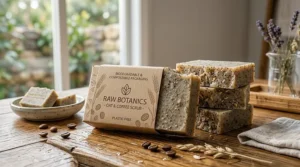
2. Aspen Kay Naturals Coffee & Oatmeal Exfoliating Soap — gentlest coffee scrub soap bar for sensitive skin
What most buyers overlook about this bar is that it’s actually formulated for sensitivity first, exfoliation second. Aspen Kay pairs finely ground organic coffee with colloidal oatmeal and organic shea butter, which is a smart combo — coffee grounds provide the scrub, oatmeal calms the skin the scrub just agitated. That’s a meaningfully different approach than bars that exfoliate hard and leave you to deal with the aftermath.
At 4.5 ounces and priced in the mid-single-digits to under $10, it’s one of the more affordable coffee scrub soap bar options on the market, and it’s handmade in Florida using a traditional cold-process method, which tends to leave more glycerin in the finished bar (translation: less stripping than mass-produced soap). This is the bar to reach for if your skin gets reactive after exfoliating — the oatmeal is doing real anti-irritation work here, not just marketing.
Pros:
✅ Oatmeal buffers coffee’s grittier edge
✅ Cold-process method retains natural glycerin
✅ Affordable for a handmade, small-batch bar
Cons:
❌ Coffee scent may linger stronger than expected
❌ Less aggressive scrub for very rough, callused skin
Reviewers have flagged it as a reliable “won’t-irritate-me” option among coffee bars, which is notable since coffee exfoliants are often marketed as intense rather than gentle. Check current price, but expect to land comfortably under $10.
3. MARLOWE No. 102 Body Scrub Soap — best exfoliating soap bar for dark knees and rough elbows
This is the bar to reach for if your specific complaint is rough, darkened patches on knees and elbows rather than all-over dry skin. MARLOWE built this one with pumice and apricot seed powder as the primary exfoliants, backed by willow bark extract and brown seaweed extract for added smoothing support — a combination that leans harder into “buff away thickened skin” than most of the softer sugar or coffee bars on this list.
The bar itself is a dense, triple-milled 7-ounce block, which practically matters more than it sounds: triple-milled soap lasts noticeably longer per bar and holds its shape instead of turning to mush in a wet dish. Based on the spec comparison with lighter cold-process bars, this is the more durable, longer-lasting option per dollar, even though the upfront price runs a bit higher. It’s marketed toward men’s grooming but the formula itself is unisex and works well anywhere skin tends to thicken and darken from friction — knees, elbows, ankles.
Pros:
✅ Pumice + apricot seed targets thickened, dark patches
✅ Triple-milled bar lasts longer per wash
✅ Willow bark adds gentle exfoliating support
Cons:
❌ Stronger scent (sage and fir) may not suit everyone
❌ Too abrasive for daily facial use
At around $12–$16 for a single 7-ounce bar (multi-packs bring the per-bar cost down), this sits mid-range but earns it through sheer bar density — check current price, since multi-packs often work out to meaningfully better value.
4. One With Nature Activated Charcoal Soap with Dead Sea Salt — salt scrub body bar soap for detox-minded routines
Here’s what the spec sheet won’t tell you outright: Dead Sea salt bars work differently than sugar or coffee bars because the salt crystals are naturally coarser and slower to dissolve, which means the exfoliation continues throughout the entire wash rather than front-loading at first contact. One With Nature pairs that Dead Sea salt with activated charcoal, which is doing pore-clearing work rather than exfoliating work — the two ingredients are solving slightly different problems in the same bar.
Sold as a 4-ounce, 3-pack, this is one of the better-value salt scrub body bar soap options simply on a cost-per-bar basis. Based on the ingredient pairing, it’s best matched to oilier skin types or anyone dealing with body acne alongside rough texture, since charcoal’s main job is oil and impurity absorption rather than smoothing. If your primary concern is dryness rather than oiliness, the salt content here can feel a touch drying without a heavier moisturizer layered on after.
Pros:
✅ Dead Sea salt provides slow-release exfoliation
✅ Activated charcoal helps with body acne and oiliness
✅ 3-pack format offers strong value per bar
Cons:
❌ Salt can be drying without a follow-up moisturizer
❌ Less suited to already-dry or sensitive skin
Priced under $12 for the full 3-pack at the time of research, this is a solid budget entry into salt-based exfoliation — check current price, as multi-packs on Amazon tend to see frequent promotional shifts.
5. VIVAS Exfoliating Bar — everyday apricot kernel exfoliating body bar
This bar earns its spot as the clearest apricot kernel exfoliating body bar pick on this list — Prunus Armeniaca (apricot) seed powder and apricot kernel oil both appear directly in the ingredient list, meaning the exfoliation and the moisturizing agent come from the same fruit, which is a neat bit of formulation efficiency. Shea butter, rosemary extract, and jojoba oil round out the bar, keeping it firmly in “daily driver” territory rather than intense-treatment territory.
What stands out on the spec comparison is how vegetable-based the base is compared to tallow-based bar soaps still common in this category — sodium palmate and sodium cocoate as the primary cleansing agents tend to rinse cleaner and leave less film than older-style bar formulations. This is a good pick for people who want consistent, gentle exfoliation without thinking too hard about it — not a targeted treatment bar, but a reliable upgrade over plain bar soap.
Pros:
✅ Apricot kernel does double duty: scrub and moisture
✅ Vegetable-based formula rinses cleanly
✅ Jojoba oil adds lightweight hydration
Cons:
❌ Milder scrub than pumice- or salt-based bars
❌ Fragrance is present and not fragrance-free
Typically priced under $10, it’s an accessible entry point if “apricot kernel exfoliating body bar” is specifically what you searched for — check current price for the latest availability.
6. DermaHarmony EVERCLEARNOW (7°) Microdermabrasion Exfoliating Deep Cleansing Soap — the exfoliating soap bar for keratosis pilaris
If your search actually started with “why do I have these tiny bumps on my arms,” this is the bar built for that exact question. It combines physical exfoliants — Magnesium Oxide and Pumice — with botanical moisturizers such as Aloe Vera, Shea Butter, Olive Oil, and Jojoba Oil, aiming for the kind of intense, microdermabrasion-style buffing that’s typically reserved for spa treatments. DermaHarmony, the brand behind it, has been around since 1997, which lends some track-record credibility in a category full of newer, less-vetted brands.
Here’s the honest framing: keratosis pilaris, medically the same condition sometimes called follicular hyperkeratosis, isn’t cured by any soap — treatment cannot cure keratosis pilaris, so you’ll need to treat your skin to keep the bumps under control, according to dermatology guidance. What a bar like this can realistically do is mechanically clear surface keratin buildup as part of an ongoing routine, not deliver a permanent fix in one shower. Reviewers consistently report noticeably smoother texture within a few weeks of twice-weekly use on arms and thighs, which lines up with how KP maintenance is generally described by dermatologists — gradual, not instant.
Pros:
✅ Magnesium oxide + pumice targets stubborn keratin buildup
✅ Established brand with a long formulation track record
✅ Aloe and shea butter offset the intensity of the scrub
Cons:
❌ Verbena-lemon scent is strong and not for everyone
❌ Best used once or twice weekly, not as a daily bar
At around $8 per 8-ounce bar, this is genuinely one of the more affordable medicated-style bars in the category — check current price, and always patch-test before your first full-body use given the intensity of the physical exfoliants.
7. Dr. Squatch Pine Tar Bar Soap — body polishing bar soap for active, outdoor lifestyles
The most dermatologically interesting bar on this list, and it earns that distinction honestly. Actual pine tar, colloidal oatmeal, activated charcoal, and mild silica exfoliation add up to a multi-functional body bar that earns its reputation for rough skin, keratosis pilaris, and bacne. Pine tar itself has a long, genuinely old-school history in skincare — it’s not a trendy new additive, it’s a legacy ingredient dermatology has referenced for decades in the context of scaly, irritated skin.
What makes this bar different from the others here is the combination of purposes packed into one product: silica for physical exfoliation, activated charcoal for oil absorption, and colloidal oatmeal for calming — essentially three category functions rolled into a single body polishing bar soap. Based on the spec comparison, this is the most “do-it-all” bar on the list, which is exactly why it commands a premium price relative to single-purpose sugar or coffee bars. The tradeoff is the scent: pine tar smells distinctly like, well, pine tar — smoky and woodsy rather than sweet.
Pros:
✅ Triple-function formula: exfoliate, absorb oil, calm skin
✅ Pine tar has long-standing use for rough, scaly skin
✅ Works well post-workout for active, sweaty routines
Cons:
❌ Strong, polarizing pine tar scent
❌ Premium price relative to single-purpose bars
Sold in a 3-pack in the $20–$25 range, this works out to a reasonable per-bar cost for a multi-function formula — check current price, since Dr. Squatch frequently rotates bundle promotions.
Practical Usage Guide: How to Use an Exfoliating Body Soap Bar Correctly
Buying the right exfoliating body bar soap is only half the equation — how you use it determines whether you get smoother skin or an angry, irritated one. Here’s the routine that actually works, based on how these bars are formulated to perform.
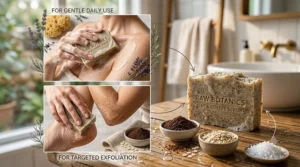
Start with wet, warm (not hot) skin — hot water strips natural oils and makes any exfoliant feel harsher than it’s designed to be. Work the bar directly against damp skin in small circular motions for roughly 15 to 20 seconds per area rather than dragging it across your whole body in one long stroke; this gives the physical particles time to actually lift dead skin cells instead of just skating over them. For chemical-forward bars containing glycolic or lactic acid, let the lather sit for a few seconds before rinsing so the acid has contact time to work.
Frequency matters more than most people expect. Two to three times per week is the general sweet spot for most exfoliating bars — daily use, especially with pumice or salt-forward formulas, is a common first-30-days mistake that leads to micro-irritation, redness, and paradoxically rougher-feeling skin. Always follow with a fragrance-light moisturizer while skin is still slightly damp; exfoliation without a moisture follow-up is the single most common reason people quit these bars, assuming the product “dried out” their skin when really the routine was missing its second half.
One maintenance note worth flagging: store the bar on a well-draining dish between uses. Bars with organic exfoliants like coffee or sugar break down faster in standing water, shortening their usable life and wasting the money you spent on them.
Real-World Scenarios: Who Should Use Which Bar
The desk-job commuter with dry, flaky shins. If you’re sitting most of the day and showering nightly in hot water, your skin barrier takes a quiet daily hit. A gentler pick like the Aspen Kay Coffee & Oatmeal bar, used two to three times weekly with a heavier lotion after, tends to fit this lifestyle better than an aggressive treatment bar.
The gym-goer dealing with body acne and rough patches. Frequent sweating, tight athletic fabric, and friction create the exact conditions where salt or charcoal-forward bars like One With Nature earn their keep — the charcoal manages oil while the salt handles texture. Post-workout showers are also a natural, already-existing moment to build the habit into.
The person quietly self-conscious about arm bumps in short sleeves. If keratosis pilaris (or follicular hyperkeratosis, its clinical cousin) is the actual issue, a targeted bar like DermaHarmony’s EVERCLEARNOW, used consistently twice weekly rather than daily, paired with a urea or lactic-acid moisturizer, is the more realistic long-game approach than any single “miracle” purchase.

Problem → Solution Guide for Common Skin Texture Complaints
Problem: Rough, sandpapery skin on arms and legs. A dead skin cell removal soap bar with a moderate physical exfoliant — sugar, coffee, or apricot kernel — used two to three times weekly, addresses this without overcorrecting into irritation.
Problem: Persistently dark, thickened knees and elbows. This is friction-driven buildup, and it responds best to firmer physical exfoliants like pumice or apricot seed powder, paired with consistent moisturizing — the MARLOWE No. 102 formula was built with exactly this in mind.
Problem: Small, stubborn bumps that never seem to smooth out. This is very likely keratosis pilaris. If the itch, dryness, or the appearance of your skin bothers you, treatment can help, and a magnesium-oxide or salicylic-acid exfoliating bar used consistently is a reasonable at-home starting point before considering a dermatologist visit.
Problem: Skin feels tight and irritated after switching to an exfoliating bar. This usually signals over-exfoliation. Drop back to twice weekly, add a richer moisturizer, and give the barrier a week to recover before resuming a normal schedule.
Problem: Body acne alongside rough texture. Look for charcoal- or salt-based bars rather than heavily oil-rich butters, since the oil-absorbing ingredients address acne while the coarser exfoliant handles texture simultaneously.
🔥 Found your problem above? The matching bar is already ranked in our Top 7 — scroll back up and grab it before your next shower. 🚿
How to Choose an Exfoliating Body Soap Bar
- Identify your actual skin concern first. General dryness, KP, and dark thickened patches each respond better to different exfoliant types — don’t buy based on scent alone.
- Match exfoliant intensity to skin sensitivity. Sugar and coffee are gentler; salt, pumice, and silica are more aggressive.
- Check the moisturizing ingredients, not just the scrub. A bar with shea butter, jojoba, or cocoa butter offsets the drying effect of exfoliation.
- Consider bar density and milling. Triple-milled bars last longer per wash, which affects real cost-per-use more than the sticker price does.
- Look for medicated options if you have diagnosed KP. Bars with pumice plus magnesium oxide or salicylic acid are formulated specifically for follicular buildup.
- Factor in frequency of use. If you plan to exfoliate daily, choose a gentler bar; save intense bars for two-to-three-times-weekly use.
- Read aggregated review themes, not star ratings alone. Recurring complaints about dryness or recurring praise for texture improvement tell you more than a number out of five.
Body Polishing Bar Soap vs Body Scrub Bar Soap vs Traditional Bar Soap
These terms get used almost interchangeably in marketing, but there are real formulation differences worth understanding before you buy. Traditional bar soap is built primarily to cleanse — remove oil, dirt, and surface grime — with little to no abrasive texture. A body scrub bar soap adds a defined physical exfoliant (sugar, salt, coffee) directly into the cleansing base, so scrubbing and cleansing happen in the same motion. A body polishing bar soap, like the Dr. Squatch pick above, typically layers in additional functional ingredients beyond just the scrub — oil absorbers, calming agents, or multiple exfoliant types — aiming for a more complete skin-texture treatment rather than simple buffing.
| Type | Primary Job | Skin Feel After Use |
|---|---|---|
| Traditional bar soap | Cleanse | Clean, sometimes tight or dry |
| Body scrub bar soap | Cleanse + exfoliate | Smoother, slightly buffed |
| Body polishing bar soap | Cleanse + exfoliate + treat | Noticeably smoother, multi-benefit |
The practical takeaway: if plain soap has started leaving your skin looking dull or bumpy over time, stepping up to a scrub bar is the logical first move, and reserving polishing bars for weekly deep-treatment sessions rather than daily use. Buyers with genuinely sensitive skin should be cautious jumping straight to a polishing bar, since the layered ingredients also mean layered potential for irritation.
Exfoliating Body Bar Soap for Keratosis Pilaris and Follicular Hyperkeratosis
This deserves its own section because it’s arguably the single biggest reason people search for an exfoliating soap bar for keratosis pilaris in the first place — and because the medical reality is more nuanced than most product pages let on. Keratosis pilaris affects approximately 40% of adults and 50-80% of adolescents, making it one of the most common — and most commonly misunderstood — reasons for persistently bumpy arm and thigh skin.
According to the American Academy of Dermatology, gentle exfoliation with a keratolytic containing alpha hydroxy acid, glycolic acid, lactic acid, a retinoid, salicylic acid, or urea is a reasonable starting approach, but the same guidance is explicit that scrubbing too hard or too often makes things worse, not better. That’s precisely why the bars on this list built for KP — DermaHarmony’s EVERCLEARNOW and, to a lesser degree, Dr. Squatch’s Pine Tar bar — lean on milder physical exfoliants like magnesium oxide and silica rather than harsh grit, paired with soothing botanicals.
What most product listings won’t tell you: bar soap alone rarely resolves KP completely on its own. It works best as one piece of a routine that also includes a urea- or lactic-acid-based moisturizer applied to damp skin immediately after washing. If you’ve been using an exfoliating bar consistently for six to eight weeks with no improvement, that’s the point at which a dermatologist consultation becomes the more useful next step than switching bars again.
Features That Actually Matter (And Those That Don’t)
Grit percentage isn’t listed on most labels, but it’s the single biggest factor in how a bar actually feels — marketing copy rarely mentions it directly, which is why aggregated review sentiment matters more than the product description here. Fragrance strength, while heavily marketed, matters far less for actual skin outcomes than whether the bar contains a genuine moisturizing agent post-scrub.
According to FDA guidance on alpha hydroxy acid ingredients, the degree of exfoliation from acid-based products depends on the type and concentration of the AHA, its pH, and other ingredients in the product — meaning two bars both listing “glycolic acid” on the label can behave very differently depending on formulation. That’s a feature worth researching past the front-of-package claims. Bar shape and color, on the other hand, genuinely don’t matter for skin outcomes, despite how much shelf space marketing gives them.
Long-Term Cost & Maintenance
A single 4-to-5-ounce exfoliating bar typically lasts three to five weeks with regular two-to-three-times-weekly use, assuming it’s stored on a draining dish between showers. Over a year, that works out to roughly 10 to 17 bars depending on frequency and bar density — triple-milled bars like MARLOWE’s land at the lower, more economical end of that range because they simply erode more slowly per wash.
Compared to jarred body scrubs, which often get used more liberally per session and don’t compress well, bars tend to offer better cost-per-use over time despite sometimes carrying a higher per-unit sticker price. The real long-term cost consideration isn’t the bar itself, though — it’s the moisturizer you’ll need alongside it, since skipping that step is what typically shortens a routine’s staying power (and, ironically, drives people back to buying replacement bars more often as they chase the “why does my skin still feel rough” problem from the wrong angle).
Safety, Regulations, and Compliance Guide
Exfoliating soap bars are regulated as cosmetics, not drugs, under FDA rules — which matters practically because it means they aren’t subject to pre-market approval the way a prescription treatment would be. Per FDA regulatory guidance on AHA-containing cosmetics, products containing alpha hydroxy acid exfoliants are expected to carry a sun-sensitivity warning, since this product may make your skin more sensitive to the sun — a real consideration if you’re using an acid-forward bar in summer months and skipping SPF afterward.
Separately, for anyone dealing with a diagnosed skin condition rather than general roughness, the Cleveland Clinic’s overview of keratosis pilaris is a useful starting reference before assuming a soap bar alone will resolve the issue — it usually doesn’t require treatment, but persistent irritation or discomfort is worth discussing with a healthcare provider rather than escalating exfoliation intensity on your own. General safety practice: patch test any new exfoliating bar on a small area for 48 hours before full-body use, especially medicated or acid-forward formulas.
📋 Want the full ingredient breakdown before you commit? Check current pricing and ingredient lists on any of our Top 7 picks above.
Frequently Asked Questions
❓ Can an exfoliating body soap bar help with keratosis pilaris?
❓ How often should I use a body scrub bar soap?
❓ What's the best exfoliating soap bar for dark knees?
❓ Is a coffee scrub soap bar good for sensitive skin?
❓ Do exfoliating soap bars expire or lose effectiveness over time?
Conclusion
If there’s one thing worth carrying away from all of this, it’s that “exfoliating body soap bar” isn’t really one product category — it’s at least three or four, quietly disguised as one search term. The right pick for a desk-job commuter with dry shins looks nothing like the right pick for someone managing genuine keratosis pilaris on their upper arms, and pretending otherwise is how people end up disappointed after their third bar in six months.
Start with an honest read on what your skin is actually doing. If it’s general dullness or flakiness, a gentler sugar or coffee bar like Kitsch or Aspen Kay will do the job without drama. If it’s thickened, darkened patches from friction, reach for the pumice-forward MARLOWE bar. And if it’s genuinely persistent bumps that have followed you around for years, the medicated-style DermaHarmony bar, used patiently and paired with the right moisturizer, is the more realistic long-term answer than chasing the next trending scrub. Whichever direction you go, give it six to eight weeks of consistent, moderate use before judging results — skin texture change is gradual, not overnight, no matter what the packaging promises.
Recommended for You
- 7 Best Moisturizing Bar Soaps for Dry Skin in 2026
- 7 Best Bar Soap for Body Picks That Actually Work in 2026
- 7 Best Exfoliating Face Bar Soaps in 2026: Honest Picks
Disclaimer: This article contains affiliate links. As an Amazon Associate, I earn from qualifying purchases. If you purchase products through these links, we may earn a small commission at no additional cost to you.
✨ Found this helpful? Share it with your friends! 💬🤗
