
In This Article
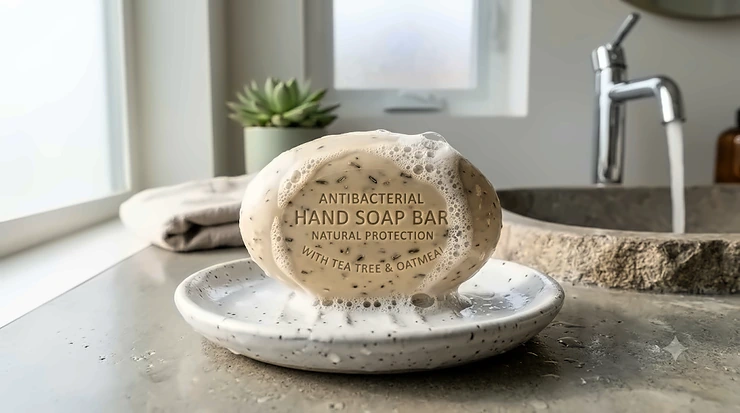
Somewhere between the pandemic-era stockpiling and today’s more relaxed hygiene habits, the humble bar of soap quietly staged a comeback. If you’ve stood in the soap aisle recently wondering whether you actually need an antibacterial hand soap bar or if a regular bar will do just fine, you’re asking the right question — and it’s more nuanced than most product pages let on.
An antibacterial hand soap bar is a solid cleansing bar formulated with an added active ingredient — commonly benzalkonium chloride, chloroxylenol (PCMX), or plant-derived antimicrobials — designed to reduce bacteria on the skin beyond what plain soap and mechanical washing already accomplish. Not every “antibacterial” claim on a wrapper means the same thing, and since the FDA’s 2016 ingredient shake-up, the category looks very different than it did a decade ago.
This guide cuts through the marketing language. We researched real products sold today, checked what active ingredients they actually use, cross-referenced aggregated customer sentiment, and dug into the regulatory history so you’re not left guessing. Whether you’re shopping for a household with young kids, a kitchen that handles raw poultry weekly, or you’re simply triclosan-averse and want something more natural, there’s a specific bar suited to your situation — and a few that sound impressive but aren’t worth the shelf space. The FDA has been direct about this: there isn’t sufficient evidence that over-the-counter antibacterial soaps prevent illness any better than washing with plain soap and water, which is exactly the kind of context that should shape how you shop this category rather than scare you away from it entirely.
By the end, you’ll know exactly how to read an ingredient label, which bar fits your specific household, and where the real research does — and doesn’t — back up the claims on the box.
Quick Comparison Table
| Bar Soap | Active Ingredient | Best For | Price Range |
|---|---|---|---|
| Dial Gold Antibacterial Bar Soap | Benzalkonium chloride | Everyday all-around use | Under $10 (multi-pack) |
| Safeguard Antibacterial Bar Soap | Micellar/plant-based cleansers | Bulk family & value | Under $15 (bulk pack) |
| Dial Antibacterial & Sensitive Bar | Benzalkonium chloride, aloe | Kids & sensitive skin | Under $10 |
| Dr. Bronner’s Pure-Castile Bar | Essential oils (peppermint/tea tree) | Triclosan-free, natural | $15-$25 range |
| HERBOGANIC Tea Tree Oil Soap Bar | Tea tree essential oil | Natural, budget-conscious | Under $15 |
| Kiss My Face Bar Soap | Benzalkonium chloride, sea salt | Lesser-known natural pick | $10-$15 range |
| Cuticura Medicated Bar Soap | Antibacterial cleansing agents | Acne-prone, blemish-prone skin | $10-$20 range |
Looking at the table, there’s a clear split between mainstream drugstore bars that lean on synthetic actives like benzalkonium chloride and the smaller natural brands betting on essential oils instead. Budget shoppers and bulk buyers land squarely on Safeguard or Dial Gold, while anyone chasing a triclosan free antibacterial soap bar with a shorter ingredient list will gravitate toward Dr. Bronner’s or HERBOGANIC. Note that “Best For” isn’t just marketing fluff here — it reflects genuine formulation differences that matter once the bar actually touches your skin.
💬 Just one click — help others make better buying decisions too!😊
Top 7 Antibacterial Hand Soap Bar Picks: Expert Analysis
Choosing the right antibacterial hand soap bar comes down to matching the active ingredient and formulation to your actual routine — a busy kitchen has different needs than a kid’s bathroom sink. Below, we break down seven real, currently available options spanning budget, mid-range, and premium natural formulas.
1. Dial Gold Antibacterial Bar Soap — the mainstream benchmark everyone compares against
Dial has built a 75-year reputation on this exact formula, and it shows in how widely it’s stocked. This bar uses benzalkonium chloride as its active antibacterial ingredient, the same class of compound the FDA still permits in OTC wash products after the 2016 rule change.
In practice, that means the bar physically lathers away surface bacteria while the active ingredient targets what mechanical washing leaves behind — Dial’s liquid sibling product has been independently tested to eliminate 99.9% of bacteria encountered in household settings, and the bar formula shares the same underlying antibacterial technology platform. Based on the spec comparison with other drugstore bars, Dial Gold sits in the middle of the pack on moisturizing power but wins on brand consistency — you know exactly what you’re getting every time you buy it.
This bar is best suited to households that want a no-surprises, dependable option for daily hand and body washing without researching ingredient chemistry every time they restock. Reviewers consistently note the classic golden scent and the fact that it doesn’t leave the tight, stripped feeling some older antibacterial formulas were known for. A common complaint in aggregated reviews is that the bar can turn mushy fast if left sitting in standing water, which is really a soap-dish problem more than a formula problem.
Pros:
- ✅ Widely available at nearly every major retailer
- ✅ Long-standing dermatologist-tested antibacterial formula
- ✅ Balanced scent that isn’t overpowering
Cons:
- ❌ Softens quickly without a draining soap dish
- ❌ Less moisturizing than premium natural bars
Priced in the under-$10 range for multi-packs, Dial Gold delivers strong everyday value — check current price, as multi-pack sizing shifts the per-bar cost significantly.

2. Safeguard Antibacterial Bar Soap — most foldable value for bulk family stockpiling
Safeguard has quietly reformulated in recent years, and it’s worth understanding what changed. What most buyers overlook about this brand is that it moved away from triclocarban — the old active ingredient banned for consumer use in 2017 — toward a Micellar Deep Cleansing formula that washes away 99% of bacteria in handwashing tests against S. marcescens, relying more on physical removal than a drug-style kill claim.
That distinction matters: this bar is technically marketed as removing bacteria rather than claiming to actively kill it the way older triclocarban formulas did, which is actually a more honest and FDA-compliant positioning post-2016. For a household that washes hands constantly — think families with toddlers, home gyms, or anyone doing yard work daily — the bulk 32-bar packs offer real value per wash. Aggregated review sentiment frequently praises the classic scent and lather but flags that the beige bar can leave a slight residue if not rinsed thoroughly in hard water.
Pros:
- ✅ Bulk packs deliver excellent per-bar cost
- ✅ Dermatologically endorsed formula history
- ✅ Reformulated away from banned triclocarban
Cons:
- ❌ Can leave residue in hard-water areas
- ❌ Fragrance is polarizing for scent-sensitive users
At around $10-$15 for a bulk multi-pack, this is one of the strongest value plays in the entire antibacterial bar soap for hands category.
3. Dial Antibacterial & Sensitive Bar Soap — best for kids and sensitive skin
If your search led you here because of small hands at the bathroom sink, this is the bar worth reading closely. Dial’s Sensitive line pairs the same benzalkonium chloride antibacterial base as its Gold formula with an aloe-infused, dye-free recipe specifically built for reactive skin.
What that means practically: you get comparable germ-fighting performance without the dyes that sometimes trigger irritation on a child’s more delicate skin barrier. This bar is hypoallergenic and dermatologist tested, which matters more for kids than adults since children’s skin has a thinner stratum corneum and loses moisture faster during frequent handwashing. It’s a smart pick for parents who want an antibacterial soap bar for kids hands without switching to a completely different, non-antibacterial children’s brand. Reviewers with sensitive-skinned kids report noticeably less post-wash tightness compared to standard antibacterial bars, though a few note the unscented-adjacent aloe fragrance is faint enough that some children find it “boring” compared to fruitier kids’ soaps.
Pros:
- ✅ Dye-free formula reduces irritation risk
- ✅ Dermatologist tested for sensitive skin
- ✅ Same antibacterial base as trusted Gold line
Cons:
- ❌ Mild scent may not appeal to younger kids
- ❌ Slightly pricier than standard Dial Gold
Expect to pay in the under-$10 range, a small premium over standard Dial Gold that’s easily justified for sensitive-skinned family members.
4. Dr. Bronner’s Pure-Castile Bar Soap — best triclosan-free natural pick
Dr. Bronner’s built its entire brand identity around transparent, simple ingredient lists, and its Pure-Castile bar is the natural-soap world’s most recognizable name. This bar skips synthetic antibacterial actives entirely, instead relying on saponified organic oils and essential oils like peppermint or tea tree for their inherent antimicrobial character.
Here’s what the spec sheet won’t tell you, but the research supports: essential oils such as tea tree contain compounds like terpinen-4-ol that have demonstrated real antimicrobial activity against common bacterial strains in laboratory settings, though this works through a different mechanism than a registered OTC drug active. For anyone specifically hunting for a triclosan free antibacterial soap bar with a genuinely short ingredient panel, this is about as clean as the mainstream market gets — it’s Regenerative Organic Certified and made without synthetic detergents. Reviewers consistently praise the intense, long-lasting scent and rich lather from just a small amount, though several note the tingling sensation from peppermint or tea tree variants can be too intense for facial use or for anyone with broken skin.
Pros:
- ✅ Certified organic, transparent ingredient list
- ✅ Genuinely triclosan-free and free of synthetic actives
- ✅ Multi-purpose — works for hair, face, and body
Cons:
- ❌ Essential oil tingle can irritate sensitive or broken skin
- ❌ Not FDA-registered as an antibacterial drug product
At roughly $15-$25 for a multi-pack, it sits at the premium end of this list, but the certified sourcing and versatility justify the price for natural-product loyalists.
5. HERBOGANIC Tea Tree Oil Soap Bar — most budget-friendly natural essential oil bar
Not everyone wants to pay Dr. Bronner’s premium for a natural formula, and that’s exactly the gap HERBOGANIC fills. This bar leans heavily on tea tree oil as its primary functional ingredient, marketed specifically around antibacterial, antiseptic, and antifungal claims.
Tea tree oil has legitimate research behind its antimicrobial reputation — controlled laboratory studies have found that tea tree essential oil concentrations of roughly 0.5% to 1.0% can eradicate persister cells of bacteria like E. coli and S. epidermidis over a 24-hour exposure period, with the compound terpinen-4-ol identified as the primary active driver of that effect. That’s meaningfully different from an anecdotal “essential oils are natural germ fighters” claim — there’s real mechanistic science here, though it’s worth noting lab persister-cell assays don’t map one-to-one onto a 20-second hand wash. This bar suits budget-conscious buyers who still want the natural antibacterial hand bar soap positioning without the premium certified-organic price tag. Aggregated reviews describe a noticeably herbaceous, medicinal scent that some find refreshing and others find overpowering for daily use.
Pros:
- ✅ Genuine tea tree oil with documented antimicrobial research
- ✅ More affordable than premium organic competitors
- ✅ Doubles as an antifungal option for athlete’s foot concerns
Cons:
- ❌ Strong medicinal scent isn’t for everyone
- ❌ Smaller brand means a thinner review history to verify
Priced under $15 for a multi-pack, it’s a smart entry point for anyone curious about natural antimicrobial essential oil bar formulas without committing to premium pricing.
6. Kiss My Face Bar Soap — best lesser-known alternative with a dual-action formula
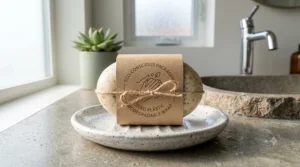
This one rarely makes mainstream “best of” lists, which is a shame, because the formulation genuinely earns a spot here. Kiss My Face combines benzalkonium chloride — the same registered active found in Dial’s bars — with sea salt and cold-pressed olive oil, giving it both a synthetic antibacterial backbone and natural exfoliating, moisturizing elements.
What most buyers overlook about this bar is that it isn’t purely “natural” marketing dressed up with no real antibacterial mechanism — it actually contains an FDA-permitted active ingredient layered on top of plant-derived skin conditioners. That combination makes it a genuine hybrid: real antibacterial performance without the synthetic fragrance load found in some mainstream bars. It’s a strong pick for anyone who wants germ killing bar soap performance but is put off by artificial dyes and heavy perfumes common in drugstore antibacterial lines. Reviewer sentiment highlights the gentle exfoliation from the sea salt as a standout, with the main hesitation being that it’s harder to find in physical stores and typically requires an online order.
Pros:
- ✅ Registered antibacterial active plus natural conditioners
- ✅ Sea salt offers gentle exfoliation as a bonus
- ✅ No heavy synthetic fragrance load
Cons:
- ❌ Limited physical retail availability
- ❌ Smaller size bars mean faster repurchase cycles
In the $10-$15 range, this is a genuinely underrated pick for buyers willing to shop slightly outside the big-name brands.
7. Cuticura Medicated Bar Soap — best for acne-prone and blemish-prone skin
Rounding out the list is a niche pick for a specific problem: recurring body and back breakouts. Cuticura’s medicated formula is built around antibacterial cleansing agents combined with aloe vera and glycerin, targeting the bacterial component of acne rather than just cleaning skin generally.
Based on the spec comparison with general-purpose antibacterial bars, Cuticura’s non-comedogenic claim is the real differentiator — it’s formulated specifically not to clog pores, which matters enormously for anyone using an antibacterial bar on acne-prone skin, since some heavier antibacterial bars can actually worsen breakouts. This bar is best suited to teens and adults dealing with body acne, mild folliculitis, or blemish-prone skin who need antibacterial action without a pore-clogging aftermath. Aggregated customer sentiment reports visible improvement in blemish frequency with consistent use, alongside a reminder that it works best combined with a broader acne skincare routine rather than as a standalone fix.
Pros:
- ✅ Non-comedogenic formula won’t clog pores
- ✅ Targets bacterial component of acne specifically
- ✅ Gentle enough for daily face-and-body use
Cons:
- ❌ Less broadly available than mainstream brands
- ❌ Not a substitute for dermatologist-prescribed acne treatment
Expect a $10-$20 price range depending on pack size, positioning it as a reasonably priced niche solution rather than a premium purchase.
How to Choose an Antibacterial Hand Soap Bar
Picking the right bar doesn’t have to involve guesswork. Follow these steps in order:
- Identify your actual need first. A germ killing bar soap for a busy kitchen has different priorities than one for a child’s bathroom — decide whether you’re optimizing for antimicrobial strength, gentleness, or scent before you compare brands.
- Read the active ingredient, not just the word “antibacterial.” Look specifically for benzalkonium chloride, chloroxylenol (PCMX), or a named essential oil — these are the compounds actually doing the work, since the FDA notes antibacterial products generally list one of these on a Drug Facts label.
- Check for triclosan or triclocarban and avoid both. These were the primary ingredients banned from consumer wash products in 2016, so a modern bar shouldn’t list either.
- Match the formulation to your skin type. Sensitive or young skin does better with dye-free, fragrance-light formulas; oily or acne-prone skin benefits from non-comedogenic labeling specifically.
- Consider your household’s wash frequency. Heavy daily use (kitchens, gyms, large families) favors bulk multi-packs over single premium bars that get used up fast.
- Decide how “natural” really matters to you. If a triclosan free antibacterial soap bar with essential oils is the priority, budget for the premium natural brands; if not, mainstream synthetic actives remain well-studied and effective.
- Set a realistic price expectation. Multi-packs of mainstream bars typically land under $15, while certified organic or niche natural bars run $15-$25 — decide your ceiling before you start comparing.
FDA Antibacterial Soap Regulations Explained
Understanding why today’s antibacterial hand soap bar looks different from what was on shelves a decade ago requires a quick regulatory history lesson — and it directly explains why some ingredient names sound unfamiliar.
In September 2016, the FDA issued a Final Rule banning nineteen active antiseptic ingredients — including triclosan — from use in over-the-counter hand and body wash products, giving manufacturers a year to reformulate before the rule took full effect in September 2017. The reasoning wasn’t purely about safety scares; it was about proof. Regulators determined these ingredients weren’t generally recognized as safe and effective for continued use in over-the-counter products, since manufacturers hadn’t submitted sufficient data proving both long-term safety and a meaningful benefit over plain soap and water. A useful deep dive on the broader public-health reasoning behind that decision is available in the peer-reviewed Florence Statement on Triclosan and Triclocarban, which lays out the epidemiological case in detail.
Crucially, this ban was narrower than many consumers assume. The final rule covers only consumer antibacterial soaps and body washes used with water — it doesn’t apply to hand sanitizers, hand wipes, or antibacterial soaps used in health-care settings like hospitals and nursing homes. It also carved out exceptions: benzalkonium chloride, benzethonium chloride, and chloroxylenol were specifically excluded from the ban and remain legal in currently marketed consumer antiseptic wash products while manufacturers continue submitting supporting data. That’s precisely why the bars on this list lean so heavily on those three compounds — they’re the surviving, FDA-permitted actives in the entire triclosan free antibacterial soap bar category.
Gram-Positive vs Gram-Negative Bacteria: What Soap Efficacy Really Means
Marketing copy loves to say a soap “kills 99.9% of bacteria,” but that number means very little without context — specifically, which bacteria, and under what test conditions. This is where gram-positive bacteria soap efficacy claims deserve a closer look before you take them at face value.
Bacteria are broadly split into two cell-wall types: gram-positive (like Staphylococcus and Streptococcus species) and gram-negative (like E. coli and Salmonella). Antimicrobial actives don’t perform identically against both groups because their cell wall structures differ significantly — a gram-negative bacterium’s outer membrane can act as an extra barrier that some antimicrobial compounds struggle to penetrate. Dial’s own liquid-soap testing claims efficacy against a broad range including gram-positive and gram-negative bacteria, fungi, and mold, which is a meaningfully more specific claim than a generic “kills germs” statement. When you’re comparing bar soap that kills bacteria claims across brands, look for language specifying both bacterial classes rather than a vague blanket statement — it’s a reasonable proxy for how rigorously the product was actually tested.
Here’s the honest caveat worth sitting with: even the most well-tested antibacterial actives are working alongside — not instead of — the mechanical action of lathering, scrubbing, and rinsing for the full recommended wash time. The active ingredient boosts what proper technique already accomplishes; it doesn’t replace it.
Bar Soap vs Hand Sanitizer: Which Wins for Hand Sanitizing?
This comparison comes up constantly, especially when soap and water aren’t immediately available.
| Feature | Antibacterial Bar Soap | Alcohol Hand Sanitizer |
|---|---|---|
| Requires water | Yes | No |
| Effective on visibly dirty hands | Yes | No |
| Effective against norovirus | Yes (mechanical removal) | Limited |
| Portability | Low | High |
| Best For | Home, workplace sinks | On-the-go, no sink access |
The data here isn’t close: plain and antibacterial soap, whatever the brand, are effective at killing bacteria as long as proper handwashing technique is followed, and soap has the added advantage of physically lifting dirt and organic material off the skin that alcohol alone can’t fully address. Hand sanitizing bar soap isn’t a literal product category — sanitizer is alcohol-based and rinse-free by design — but the practical takeaway is that a sink-side antibacterial bar should be your default whenever water is available, with sanitizer reserved as the backup for situations without access to a sink. Health care workers and food handlers are specifically advised to wash with soap and water before using hand sanitizer as a supplement, never a substitute.
✨ Don’t Miss These Exclusive Deals!
🔍 Take your hand hygiene routine to the next level with these carefully selected antibacterial bars. Click on any highlighted item to check current pricing and availability. These picks will help you build a genuinely effective, family-friendly handwashing routine!
Natural & Essential Oil Antibacterial Bars: How They Really Work
If you’ve gravitated toward the natural end of this category, it’s worth understanding the actual mechanism rather than just trusting the word “natural” on the label.
Essential oils don’t kill bacteria through the same synthetic-chemical pathway as benzalkonium chloride or chloroxylenol — most work by disrupting the bacterial cell membrane directly. A peer-reviewed study on tea tree essential oil found that its anti-persister effects against bacteria occurred through exactly this kind of membrane disruption mechanism, with the compound terpinen-4-ol responsible for most of the killing action. Lavender, lemongrass, and rosemary oils show similar antimicrobial patterns in various studies, though tea tree remains the most extensively researched for this specific purpose.
What most buyers overlook about a natural antimicrobial essential oil bar is that “natural” doesn’t automatically mean “gentler.” Concentrated essential oils can be more irritating to broken or sensitive skin than a well-formulated synthetic active at approved concentrations — this is exactly why Dr. Bronner’s and HERBOGANIC both recommend diluting or avoiding direct facial contact with their more potent variants. If genuine research-backed antimicrobial activity matters more to you than an FDA drug registration, natural essential oil bars are a legitimate choice — just don’t assume “natural” and “gentle” are interchangeable terms.
Antibacterial Soap Bars for Kids: What Parents Should Know
Kids wash their hands more often and more haphazardly than adults, which changes what actually matters in a formula.
Children’s skin has a thinner outer barrier and loses moisture faster with frequent washing, so an antibacterial soap bar for kids hands needs to balance antimicrobial performance against dryness risk more carefully than an adult formula does. Dye-free and fragrance-light options — like Dial’s Sensitive line covered above — reduce the odds of an irritation reaction that could make a child avoid handwashing altogether, which defeats the entire purpose. It’s also worth teaching technique alongside product choice: a 20-second scrub with any antibacterial bar outperforms a 3-second rinse with the “best” bar on the market. For families juggling multiple kids’ bath routines, a hypoallergenic antibacterial bar paired with a simple visual timer (a favorite short song, for instance) does more for actual hygiene outcomes than chasing a marginally “stronger” formula.
Hospital-Grade Claims: What “Hospital Grade” Actually Means for Bar Soap
This is where honesty matters more than a satisfying answer. If you searched specifically for hospital grade antibacterial bar soap, here’s the straight version: true hospital-grade hand hygiene products are almost universally liquid or foam formulas containing chlorhexidine gluconate (CHG) or higher-concentration chloroxylenol, dispensed from wall-mounted pumps — not bar soap.
There’s a practical reason for that gap. Bar soap left out in the open and touched repeatedly by multiple people allows bacteria to grow on the bar itself and spread from one person to the next, which is precisely the cross-contamination risk that makes shared bar soap a poor fit for clinical environments — a point the Minnesota Department of Health lays out clearly in its public hand-hygiene guidance. Genuine hospital antiseptic hand washes are registered drug products with active ingredients like chlorhexidine gluconate specifically because they provide persistent antimicrobial activity for hours after use — something no consumer bar soap formula claims or is tested for.
What does exist, honestly, is a tier of bulk institutional bar soaps (like the Safeguard and Dial Gold products covered above) that get stocked in workplace break rooms, gyms, and food-service back-of-house sinks precisely because they’re inexpensive and reliably antibacterial for general use — but calling that “hospital grade” oversells what it actually is. If your household genuinely needs clinical-level antisepsis (caring for an immunocompromised family member, for example), that’s a conversation for a pharmacist or physician about a registered CHG-based liquid product, not a bar soap purchase.
Food Safe Antibacterial Hand Bars for Kitchens & Food Handlers
Anyone handling raw meat, poultry, or produce regularly has a legitimate reason to think harder about hand soap than the average household.
Food handlers in restaurants, schools, delis, and grocery stores are specifically required to wash hands with soap and water before applying any hand sanitizer as a supplement — sanitizer alone isn’t a substitute for that wash step. A food safe antibacterial hand bar in this context simply means a bar that’s safe for frequent use on hands that will then contact food surfaces, which effectively describes any properly rinsed consumer antibacterial bar — the concern is thorough rinsing, not the bar formula itself being somehow food-unsafe. Commercial kitchens commonly stock exactly the bulk multi-pack bars covered in this guide (Safeguard and Dial Gold both show up regularly in food-service supply catalogs) precisely because they’re economical for high-frequency washing stations. The practical rule for any home cook: wash for a full 20 seconds, rinse completely so no soap residue transfers to food-prep surfaces, and dry hands with a clean towel rather than an apron.
Practical Usage Guide: Getting the Most Out of Your Bar
Buying the right antibacterial hand soap bar is only half the equation — how you store and use it changes both its lifespan and its effectiveness.
Setup: Use a draining soap dish, not a flat surface — standing water is the single biggest cause of a bar turning mushy prematurely, and it also creates the damp environment where bacteria can most easily linger on the bar’s surface between uses.
First 30 days: Expect a slight scent mellowing after the first week as the outer layer wears — this is normal and doesn’t indicate reduced antibacterial performance. Avoid leaving a brand-new bar submerged while you finish an old one; cut losses and switch over cleanly instead.
Maintenance: Rinse the bar itself briefly under running water before and after use if multiple household members share it — this reduces the surface residue buildup that contributes to the bacterial-spread concern mentioned earlier. Replace shared bars more frequently than a solo-use bar in the same household.
Common first-month mistake: Judging a bar’s “germ-killing power” by how much lather it produces. Lather volume is mostly a function of surfactant type and water hardness — it has little correlation with antibacterial performance, which comes from the active ingredient concentration, not the foam.
Real-World Scenarios: Matching the Bar to Your Life
The busy parent of toddlers: With constant handwashing after diaper changes and meals, Dial’s Antibacterial & Sensitive bar makes sense — dye-free, gentle, and still genuinely antibacterial, it holds up to frequent use without drying out small hands.
The home cook who preps raw chicken weekly: A bulk multi-pack like Safeguard positioned right at the kitchen sink means there’s never an excuse to skip a proper post-prep wash, and the reformulated Micellar formula handles frequent use without breaking the household budget.
The natural-products household avoiding synthetic actives: Dr. Bronner’s Pure-Castile bar delivers genuine essential-oil antimicrobial activity with a fully transparent, certified organic ingredient list — ideal for anyone who reads labels before checkout.
The acne-prone teenager sharing a bathroom with siblings: Cuticura’s non-comedogenic medicated formula targets the bacterial side of breakouts without contributing to the pore-clogging that heavier bars can cause on already reactive skin.
Common Mistakes When Buying Antibacterial Bar Soap
The most frequent misstep is assuming “antibacterial” on the label always means the same active ingredient — it doesn’t, and the differences (benzalkonium chloride versus a plant essential oil versus a now-banned ingredient still lingering on an old bar in the cabinet) genuinely change performance and skin compatibility. A second common mistake is buying based on scent preference alone and ignoring skin type entirely, which is how sensitive-skinned family members end up with a bar that leaves their hands tight and irritated within a week. Third, many buyers assume a “hospital grade” label on a bar soap product carries the same clinical weight as an actual CHG-based liquid antiseptic — as covered above, it typically doesn’t. Finally, shoppers frequently overlook expiration and storage guidance entirely; a soap bar sitting in humid storage for years can lose potency in its active ingredient well before it visibly “runs out.”
Long-Term Cost & Value: Bar Soap vs Liquid Soap
| Factor | Bar Soap | Liquid Pump Soap |
|---|---|---|
| Cost per wash | Lower | Higher |
| Packaging waste | Minimal | More (plastic pumps) |
| Shared-use hygiene concern | Higher | Lower |
| Shelf life once opened | Long | Shorter once opened |
| Best For | Cost-conscious, low-waste households | Shared/public bathrooms |
Run the numbers over a year and bar soap consistently wins on raw cost per wash, largely because you’re not paying for a pump mechanism and a mostly-water liquid formula every refill. The tradeoff is the shared-bar hygiene consideration discussed earlier — a household of one or two people rarely runs into that issue, but a family of five sharing a single bathroom sink bar sees meaningfully faster wear and more surface contamination between washes than the same household would with a pump dispenser. For most single-family households, though, the total cost of ownership still favors the antibacterial hand soap bar, especially when bought in the bulk multi-packs covered throughout this guide.
Features That Actually Matter (And Those That Don’t)
Actually matters: the specific named active ingredient (benzalkonium chloride, chloroxylenol, or a research-backed essential oil), whether it’s genuinely triclosan-free, and whether the formula is labeled non-comedogenic if you’re acne-prone.
Doesn’t really matter: lather volume, bar color, and whether the packaging says “extra strength” — none of these correlate meaningfully with actual antibacterial performance, and “extra strength” isn’t a regulated term the FDA requires any testing behind.
Matters more than people expect: how the bar is stored between uses. A genuinely excellent antibacterial formula sitting in standing water for a week loses real-world effectiveness fast, regardless of what’s printed on the wrapper.
Frequently Asked Questions
❓ Is antibacterial hand soap bar actually more effective than regular soap?
❓ What happened to triclosan in antibacterial soap bars?
❓ Can I use an antibacterial soap bar for kids hands safely?
❓ Is a food safe antibacterial hand bar different from regular bar soap?
❓ Do natural antimicrobial essential oil bar soaps really kill bacteria?
Conclusion
The antibacterial hand soap bar aisle looks confusing mostly because the marketing language hasn’t caught up to the 2016 regulatory shake-up — plenty of bars still lean on vague “kills germs” language when the real story is a specific, well-documented active ingredient doing the work. Once you know to check for benzalkonium chloride, chloroxylenol, or a research-backed essential oil, and to skip anything still quietly listing triclosan, the decision gets a lot simpler.
For most households, a mainstream option like Dial Gold or a bulk Safeguard pack covers daily needs affordably. Sensitive skin and kids do better with a dye-free formula like Dial’s Sensitive line. Anyone chasing a genuinely natural, triclosan-free option should look toward Dr. Bronner’s or HERBOGANIC, and acne-prone skin has a real ally in Cuticura’s non-comedogenic medicated bar. None of these require an FDA-registered “hospital grade” claim to be genuinely effective for everyday hand hygiene — that label belongs to a different product category entirely, and now you know exactly why.
✨ Ready to restock your bathroom and kitchen sinks? Pick the bar above that matches your household and check current pricing before you check out!
Recommended for You
- Bar Soap for Body Odor: 7 Picks That Actually Work (2026)
- Exfoliating Body Soap Bar: 7 Bumpy-Skin Fixes That Work (2026)
- 7 Best Moisturizing Bar Soaps for Dry Skin in 2026
Disclaimer: This article contains affiliate links. As an Amazon Associate, I earn from qualifying purchases. If you purchase products through these links, we may earn a small commission at no additional cost to you.
✨ Found this helpful? Share it with your friends! 💬🤗
