
In This Article
Here’s the thing about breakouts: they don’t care about your calendar. A big presentation, a first date, picture day — acne shows up whenever it feels like it, and most of us have spent way too many late nights Googling ways to fight back without wrecking our skin barrier in the process. That’s where tea tree oil soap for acne-prone skin earns its cult following. What is tea tree oil soap for acne-prone skin? It’s a bar cleanser infused with melaleuca alternifolia (tea tree) essential oil, prized for natural antibacterial and anti-inflammatory properties that target acne-causing bacteria and calm redness without the harsh drying effect of many chemical treatments.

The appeal is obvious once you dig into why: research summarized by the National Center for Complementary and Integrative Health notes that limited but real clinical evidence points to tea tree oil helping with both acne and skin irritation, while dermatology researchers keep circling back to it as a gentler alternative to benzoyl peroxide. Still, “gentler” doesn’t mean “interchangeable” — not every tea tree acne soap on the market is formulated the same way, and the difference between a bar that clears your skin and one that just smells nice can come down to concentration, carrier oils, and how the soap is actually made.
This guide breaks down seven real, currently available tea tree acne soap products — budget bars, mid-range workhorses, and a couple of premium handcrafted options — with honest analysis of what each one actually does for blemish-prone skin. You’ll get comparison tables, real-world scenarios, a buyer’s framework, and answers to the questions people actually type into Google before they buy. No fabricated reviews, no miracle claims — just the specs, the sourced science, and straight talk about which bar deserves a spot on your bathroom shelf.
Quick Comparison Table
| Product | Best For | Price Range | Key Ingredient Highlight |
|---|---|---|---|
| Dr. Bronner’s Pure-Castile Tea Tree | Sensitive, all-over body use | Under $10 | Certified organic castile oils |
| Natrulo Tea Tree Oil Soap Bar | Budget daily face & body wash | $6-$9 range | Pure tea tree oil, made in USA |
| Erbaid Tea Tree Soap | Multi-condition skin (acne + eczema) | $8-$12 range | Coconut oil + tea tree blend |
| QualiLife Tea Tree Soap (3-Pack) | Whole-family value packs | $12-$16 range | Antifungal + antibacterial dual-action |
| RX Body Care Tea Tree Bar | Targeted antiseptic spot care | $9-$13 range | High tea tree oil concentration |
| NXPPYY Tea Tree Oil Soap (5-Pack) | Bulk buyers, travel/gym bags | $10-$14 range | Multi-bar convenience pack |
| Beessential Tea Tree Oil Soap | Premium, gentle daily use | $14-$18 range | Tea tree + raw honey |
Looking at the lineup, there’s a clear split between everyday workhorse bars — the Natrulo Tea Tree Oil Soap Bar and NXPPYY Tea Tree Oil Soap — and more specialized formulas like RX Body Care Tea Tree Bar, which leans harder into the antiseptic angle for active breakouts. If you’re managing more than just facial acne (think back or chest breakouts, or overlapping conditions like mild eczema), Erbaid Tea Tree Soap and QualiLife Tea Tree Soap pull double duty in a way single-purpose bars don’t. Meanwhile, buyers who prioritize skin comfort over pure acne-fighting strength will likely land on Beessential Tea Tree Oil Soap or Dr. Bronner’s Pure-Castile Tea Tree, both of which soften the tea tree oil’s edge with additional moisturizing ingredients.
💬 Already narrowing down your favorite? Check today’s price and availability before it sells out!😊
Top 7 Tea Tree Oil Soaps for Acne-Prone Skin: Expert Analysis
1. Dr. Bronner’s Pure-Castile Bar Soap, Tea Tree — most trusted mainstream brand
There’s a reason this bar shows up in more bathroom cabinets than almost any other natural soap on this list — decades of brand trust don’t happen by accident. The 5 oz bars (sold in 2-packs) are built on a base of organic coconut, olive, and hemp oils, with tea tree essential oil doing the acne-fighting work rather than synthetic fragrance oils diluting it. That castile-soap base is genuinely gentle, which matters because a soap that fights bacteria but also strips your skin raw usually just trades one problem for another.
Based on the ingredient profile, this is a soap built for full-body, daily use rather than aggressive spot-treatment — the moisturizing oils mean it won’t over-dry the way stronger antiseptic bars can, though that also means the tea tree concentration isn’t as punchy as some competitors here. Reviewers consistently note the rich lather and versatility (it doubles as a face, hand, and body wash, and some people even use diluted versions for household cleaning), though a subset of users with very reactive skin report mild tingling from the peppermint-adjacent freshness of the essential oil blend.
Pros:
- ✅ Certified organic, vegan ingredients with minimal fillers
- ✅ Gentle enough for daily full-body use
- ✅ Versatile — works as face, hand, and body wash
Cons:
- ❌ Milder tea tree concentration than acne-specific bars
- ❌ Essential oil scent can feel strong for very sensitive noses
Priced under $10 for a 2-pack, this is one of the best value plays on the list — the cost-per-use math is hard to beat for a soap this multipurpose.

2. Natrulo Tea Tree Oil Soap Bar — best budget daily driver
Made in the USA and priced to be a no-brainer trial purchase, the Natrulo Tea Tree Oil Soap Bar is exactly what it says on the label: a straightforward, pure essential oil-infused bar built for face and body cleansing. What most buyers overlook about this model is that “simple formula” isn’t a downside here — fewer additives means fewer chances for an ingredient to clog pores or trigger a reaction, which is exactly what you want when your skin is already fighting inflammation.
The specs are unfussy: a single bar infused with tea tree oil, designed to cut through dirt and excess oil without a long ingredient list to parse. Based on the formulation, this suits beginners who are tea tree-curious but haven’t confirmed how their skin will react to stronger essential oil skincare products yet — it’s a low-risk way to test the waters. Aggregated customer sentiment on this style of bar tends to praise the fresh, clean feel post-wash and the noticeable reduction in surface oiliness within the first couple of weeks, while some users note the bar softens faster than harder-milled soaps.
Pros:
- ✅ Simple, minimal ingredient list reduces reaction risk
- ✅ Made in the USA with clear sourcing
- ✅ Budget-friendly entry point for tea tree beginners
Cons:
- ❌ Softens faster than harder-milled bars, shortening lifespan
- ❌ Less moisturizing than blends with added oils
In the $6-$9 range, this is the bar to grab if you want to test whether tea tree acne soap works for your skin before committing to a pricier option.
3. Erbaid Tea Tree Soap — best for multi-condition skin
If your skin drama isn’t limited to acne — maybe you’re also dealing with occasional eczema flare-ups or general irritation — the Erbaid Tea Tree Soap is built with that overlap in mind. It’s formulated as a natural defense bar rather than a single-purpose acne wash, combining tea tree oil with coconut oil for a cleanser that’s positioned to address acne, dryness, and general skin balance simultaneously.
That dual-purpose design matters practically: coconut oil brings hydrating fatty acids to counterbalance tea tree oil’s drying tendency, which on paper means less of the tightness some antibacterial soaps leave behind. Here’s what to weigh — a soap designed to do several jobs at once is rarely the single best option for any one of them, so if pure acne-fighting strength is your only priority, a more concentrated bar might outperform it. Reviewers consistently point to the citrus-forward scent as a pleasant surprise (tea tree soaps can smell medicinal, and this one leans fresher), along with steady, if gradual, improvement in blemish-prone areas over several weeks of use.
Pros:
- ✅ Coconut oil counterbalances tea tree’s drying effect
- ✅ Addresses multiple skin concerns beyond acne
- ✅ Pleasant citrus scent, less medicinal than competitors
Cons:
- ❌ Multi-purpose formula may dilute pure acne-fighting strength
- ❌ Results reported as gradual rather than fast
At around $8-$12, it’s a smart pick for anyone whose skin issues don’t fit neatly into one category.
4. QualiLife Tea Tree Soap (Pack of 3) — best value multi-pack
Buying in bulk usually means compromising on quality, but the QualiLife Tea Tree Soap 3-pack is marketed specifically around dual antifungal and antibacterial action — a detail that matters more than it might seem. Acne-prone skin, especially on the back and chest, sometimes deals with fungal acne (technically folliculitis) that looks like acne but doesn’t respond to standard acne treatments. A soap formulated to hit both bacterial and fungal culprits covers more real-world bases than a straightforward acne bar.
Based on the spec comparison with single-purpose bars, this positions QualiLife as the pick for people who aren’t 100% sure whether their breakouts are classic acne or something fungal-adjacent — instead of guessing, you get coverage either way. What most buyers overlook about this model is the value math: three bars for one price beats buying single bars three separate times, especially if you’re using it on both face and body. Aggregated reviews highlight the noticeable freshness and itch relief on body skin, with some users specifically mentioning improvement in back and shoulder breakouts.
Pros:
- ✅ Antifungal and antibacterial dual-action formula
- ✅ Three-bar pack offers strong cost-per-bar value
- ✅ Well-suited to body acne, not just facial breakouts
Cons:
- ❌ Stronger formula may be too intense for facial use alone
- ❌ Scent profile is more medicinal than cosmetic
At $12-$16 for the full pack, the per-bar cost undercuts most single bars on this list while giving you a three-month supply.
5. RX Body Care Tea Tree Oil Soap Bar — best for targeted antiseptic action
Marketed explicitly as an antiseptic cleanser rather than a general-purpose soap, the 4.0 oz RX Body Care Tea Tree Oil Soap Bar goes hardest on the “fight bacteria” side of the tea tree oil equation. It’s positioned against a wider range of skin concerns than most competitors — acne, odor, rash, even ringworm — which tells you this formula is built around a higher perceived tea tree concentration than blends focused more on moisturizing.
What that means in practice: this is likely your best bet during an active breakout flare, when you want maximum antibacterial contact rather than a gentle daily-maintenance wash. Here’s what to weigh — a bar this focused on antiseptic strength is also more likely to be drying with frequent use, so pairing it with a proper moisturizer isn’t optional, it’s essential. Reviewers consistently frame this bar as a “problem-solving” product rather than a pampering one — people report reaching for it specifically when breakouts flare rather than using it as their everyday cleanser, and note a noticeably fresher feel to affected skin after just a few uses.
Pros:
- ✅ Strong antiseptic positioning for active breakouts
- ✅ Addresses a wide range of skin irritations beyond acne
- ✅ Compact size is travel- and gym-bag friendly
Cons:
- ❌ Higher drying potential requires diligent moisturizing
- ❌ Not ideal as a sole everyday, all-over cleanser
In the $9-$13 range, this earns its spot as the “break glass in case of breakout” bar in your rotation.
6. NXPPYY Tea Tree Oil Soap (5-Pack) — best for bulk and on-the-go use
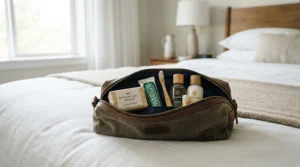
Five bars at roughly 2.29 oz each puts the NXPPYY Tea Tree Oil Soap in a different category than the rest of this list: it’s built for people who want a tea tree bar in every bag, every bathroom, and every gym locker, not just one bar sitting on the sink. The smaller bar size per unit is actually a feature here, not a downside — it’s easy to toss one in a gym bag or carry-on without dedicating a full-size bar to travel duty.
Based on the packaging logic, this is clearly aimed at active users — the product positioning leans into gym, sports, and fitness use cases, where sweat and shared equipment create more opportunities for the bacterial buildup that triggers body breakouts. What most buyers overlook is that smaller bars actually encourage more frequent replacement, which means less risk of a soggy, bacteria-harboring bar sitting in a dish for weeks. Aggregated feedback tends to highlight the convenience factor most — people mention keeping bars in multiple locations (car, gym bag, bathroom) rather than commenting extensively on acne-specific results, which tracks with a product built around portability first.
Pros:
- ✅ Five smaller bars ideal for multi-location, travel use
- ✅ Encourages more frequent bar replacement (more hygienic)
- ✅ Well-suited to active, sweat-prone lifestyles
Cons:
- ❌ Smaller individual bars mean shorter lifespan per unit
- ❌ Less concentrated formula than single-purpose antiseptic bars
At $10-$14 for the full pack, the value proposition is convenience and hygiene as much as acne-fighting strength.
7. Beessential Tea Tree Oil Soap — best premium, gentle daily option
Rounding out the list is the most indulgent option: Beessential Tea Tree Oil Soap, which pairs tea tree oil with raw honey — an ingredient with its own quietly impressive skin-supporting reputation. Honey brings natural humectant properties to the table, meaning it draws and retains moisture, which directly offsets tea tree oil’s drying tendencies in a way plain water or glycerin can’t quite match.
On paper, this makes Beessential the pick for anyone whose acne struggle comes paired with sensitivity or a compromised skin barrier — you get the antibacterial benefit without the “just washed my face with rubbing alcohol” feeling some stronger bars leave behind. What the spec sheet won’t tell you, but small-batch soap making generally implies, is a shorter shelf life and more batch-to-batch variation than mass-produced bars — a trade-off some buyers accept for a more artisanal feel. Reviewers consistently describe this bar as noticeably gentler than typical acne bars, with several mentioning it as a rare tea tree soap they could use daily without their skin feeling stripped.
Pros:
- ✅ Raw honey adds humectant, moisture-retaining benefits
- ✅ Gentler feel makes it suitable for daily use
- ✅ Small-batch formulation feels premium and considered
Cons:
- ❌ Higher price point than mass-produced alternatives
- ❌ Batch variation possible with small-batch production
At $14-$18, it’s priced like the premium product it is — but for sensitive, acne-prone skin, the honey-tea tree combo may justify the splurge.
Practical Usage Guide: Getting the Most From Your Tea Tree Acne Soap
Buying the right bar is only half the equation — how you use it determines whether you see results in two weeks or two months. Start by patch-testing on your inner forearm for 24 hours before using any new tea tree acne soap on your face; tea tree oil is potent, and reactions, while uncommon, do happen. Once you’ve confirmed it plays nice with your skin, limit facial use to once or twice daily — morning and night is plenty, and over-washing with an antibacterial soap can actually backfire by triggering your skin to overproduce oil to compensate.
A common first-30-days mistake is expecting overnight results. Realistically, give any tea tree formula four to six weeks of consistent use before judging its effectiveness — bacteria-fighting ingredients need time to work through your skin’s renewal cycle. Store your bar on a well-draining soap dish, not sitting in a puddle of water, since a soggy bar breaks down faster and can develop its own bacterial issues (ironic, given the whole point of the soap). Finally, always follow up with a lightweight, non-comedogenic moisturizer — tea tree oil’s antibacterial punch comes with a drying side effect, and skipping hydration is the single most common reason people quit a product that was actually working.
Real-World Scenarios: Who Actually Benefits Most
Picture three different people standing in the skincare aisle. First, there’s the college student pulling all-nighters, surviving on instant noodles, whose stress breakouts cluster along the jawline — for her, a budget-friendly daily driver like the Natrulo Tea Tree Oil Soap Bar makes sense: low commitment, low cost, easy to replace when a semester gets chaotic. Then there’s the gym regular dealing with back and chest acne from sweat and tight workout gear — he’s a textbook case for the NXPPYY Tea Tree Oil Soap 5-pack or the dual-action QualiLife Tea Tree Soap, since both are built around active, high-sweat lifestyles and fungal-adjacent breakouts that plain facial cleansers won’t touch.
Finally, consider someone in their 30s dealing with adult-onset hormonal acne alongside genuinely sensitive, easily irritated skin — the person for whom “natural acne remedies” isn’t a buzzword but a real necessity after chemical treatments left their skin raw. That’s exactly the profile Beessential Tea Tree Oil Soap or Dr. Bronner’s Pure-Castile Tea Tree was built for — gentler formulas that don’t sacrifice antibacterial action for comfort. None of these people need the same bar, and that’s really the whole point: matching the product to your specific skin behavior beats chasing whatever’s trending.
Problem → Solution Guide for Acne-Prone Skin
Problem: Breakouts concentrated on the back and chest. Standard facial cleansers rarely get rinsed thoroughly enough during a shower to treat body acne effectively — switch to a full bar like Erbaid Tea Tree Soap or QualiLife Tea Tree Soap, and let it sit on affected areas for 30-60 seconds before rinsing.
Problem: Skin feels tight and flaky after a few days of use. This is classic over-drying from tea tree oil’s antibacterial action. Cut back to once-daily use, and switch to a moisture-supportive option like Beessential Tea Tree Oil Soap, which offsets dryness with honey.
Problem: No visible improvement after two weeks. This is usually a patience problem, not a product problem — most tea tree formulas need four to six weeks minimum. If truly nothing’s changed by week six, the concentration may be too mild; step up to a more antiseptic-forward bar like RX Body Care Tea Tree Bar.
Problem: Mild redness or stinging after application. Discontinue immediately and patch-test a different, gentler formula — tea tree oil sensitivity varies person to person, and forcing through irritation only damages your skin barrier further.
Problem: Bar soap feels inconvenient for travel. Smaller multi-packs like NXPPYY Tea Tree Oil Soap solve this directly, letting you keep a dedicated bar in a travel bag without touching your main supply.
How to Choose Tea Tree Oil Soap for Acne-Prone Skin
- Check the tea tree oil concentration or positioning. Bars marketed as “antiseptic” or “antifungal” generally lean stronger than those marketed as gentle daily washes — match this to how active your breakouts currently are.
- Look for supporting moisturizing ingredients. Coconut oil, honey, or shea butter counterbalance tea tree oil’s drying tendency — critical if your skin is already sensitive.
- Match the format to your use case. Single large bars suit stationary bathroom use; multi-packs suit travel, gym bags, or households sharing soap.
- Consider dual-action formulas if you have overlapping conditions. Antifungal-antibacterial blends address both acne and conditions like folliculitis that mimic it.
- Read the full ingredient list, not just the front label. “Tea tree” can appear in tiny amounts alongside heavy synthetic fragrance — genuine essential oil skincare should list it prominently.
- Factor in your skin’s sensitivity history. If you’ve reacted to strong actives before, start with a gentler blend rather than the most concentrated bar on the shelf.
- Weigh cost-per-use, not just sticker price. A multi-pack that costs more upfront often works out cheaper per wash than repeatedly buying single bars.
Common Mistakes When Buying Tea Tree Oil Soap
The biggest mistake buyers make is assuming “natural” automatically means “gentle” — tea tree oil is a potent essential oil, and concentrated formulas can irritate skin just as easily as synthetic actives if overused. A second common misstep is buying based purely on scent appeal rather than ingredient substance; a soap that smells strongly of tea tree isn’t necessarily more effective, since fragrance oils can mimic the scent without delivering real antibacterial benefit. Buyers also frequently skip the patch test, assuming natural ingredients can’t cause reactions, then get blindsided by contact dermatitis. Finally, many people give up too early — expecting drugstore-speed results from a gentler, natural formula, then abandoning a product that just needed another few weeks to show its full effect.
Natural Antibacterial Soap vs Chemical Acne Treatments
The core debate here isn’t complicated: does a natural antibacterial soap actually compete with benzoyl peroxide or salicylic acid? The honest answer, grounded in the research, is “sometimes, with caveats.” A frequently cited 1990 clinical comparison published in the Medical Journal of Australia found that 5% tea tree oil gel produced meaningful acne improvement comparable to 5% benzoyl peroxide lotion — though tea tree oil took longer to show results, patients experienced noticeably fewer side effects like dryness and irritation.
That trade-off — slower onset, gentler experience — is the throughline across most tea tree research. Benzoyl peroxide and salicylic acid typically act faster and more aggressively, which suits people who want rapid results and can tolerate some dryness or peeling. Tea tree-based options suit people prioritizing skin comfort, sensitivity, or a preference for essential oil skincare over pharmaceutical actives, accepting a slower timeline in exchange. Neither approach is objectively “better” — it depends entirely on whether you’re optimizing for speed or tolerability.
What to Expect: Real-World Performance
Translating specs into lived experience: expect your skin to feel noticeably fresher and less oily within the first one to two weeks of consistent use — that’s the antibacterial and oil-balancing action kicking in early. Visible reduction in active breakouts typically takes longer, often four to six weeks, which lines up with the natural skin cell turnover cycle rather than any shortcoming in the product. Expect some initial dryness, especially with stronger antiseptic-forward bars like RX Body Care Tea Tree Bar — this is normal and manageable with a good moisturizer, not a sign to stop.
Don’t expect miracle transformations on cystic or severe acne; tea tree oil soap performs best on mild-to-moderate breakouts and general skin balance, not deep, painful cystic lesions that typically need dermatologist-level intervention. And expect the scent — genuine tea tree oil has a distinctly medicinal, herbal aroma that’s noticeably different from sweetly-fragranced commercial soaps; if you’re expecting something floral, the adjustment period is real but short.
Long-Term Cost & Maintenance
Running the numbers on total cost of ownership tells an interesting story. A single Dr. Bronner’s Pure-Castile Tea Tree 2-pack, priced under $10, typically lasts 6-8 weeks per bar with daily use — putting the effective monthly cost well under $5. Multi-packs like QualiLife Tea Tree Soap or NXPPYY Tea Tree Oil Soap front-load the cost but stretch further across a household or across months of solo use, often landing at a lower true cost-per-wash than repeatedly restocking single bars.
Compare that to prescription topical treatments or dermatologist visits, which can run into hundreds of dollars over the same period, and tea tree oil soap looks like a genuinely low-risk, low-cost first step — not a replacement for medical treatment when acne is severe, but a reasonable maintenance layer for mild-to-moderate breakouts. Maintenance-wise, the only real “cost” beyond the soap itself is a proper soap dish to extend bar life and a follow-up moisturizer to offset dryness — both minor, recurring expenses that pay for themselves in extended bar longevity.
Safety, Regulations & Melaleuca Oil Compliance Guide
Because tea tree oil soap sits in a gray zone between cosmetic and quasi-medicinal, it’s worth understanding what regulation actually covers here. In the U.S., soaps and cosmetics containing melaleuca oil (the scientific term for tea tree, derived from the Melaleuca alternifolia plant) fall under cosmetic regulations rather than drug regulations, meaning manufacturers can market general skin-benefit claims but not disease-treatment claims without additional FDA clearance. That’s part of why product listings tend to say things like “supports clearer-looking skin” rather than “cures acne.”
Safety-wise, Mayo Clinic’s clinical reference on tea tree oil notes that most people tolerate topical tea tree oil without issue, though skin irritation, allergic rash, and dryness are possible side effects — and it should never be swallowed, as oral ingestion carries serious toxicity risk. People with eczema or highly reactive skin should approach any new tea tree formula cautiously, patch-testing first rather than applying broadly. None of this makes tea tree oil soap dangerous for typical use — it just means “natural” doesn’t mean “risk-free,” and reading the full ingredient list matters as much here as with any active skincare product.
FAQ
❓ Does tea tree oil soap really work for acne?
❓ Can I use tea tree oil soap on my face every day?
❓ Is tea tree oil soap better than benzoyl peroxide?
❓ How long does it take tea tree oil soap to clear acne?
❓ Is tea tree oil soap safe for sensitive or eczema-prone skin?
Conclusion
Tea tree oil soap isn’t a miracle cure, and any article that tells you otherwise is selling something. What it is, based on real formulation differences and the clinical research behind it, is a genuinely useful, low-cost first line of defense against mild-to-moderate acne — one that trades some speed for a gentler experience than harsher chemical treatments. Whether you land on the everyday reliability of Dr. Bronner’s Pure-Castile Tea Tree, the budget-friendly simplicity of the Natrulo Tea Tree Oil Soap Bar, or the honey-softened comfort of Beessential Tea Tree Oil Soap, the right pick comes down to matching the formula’s strength to your skin’s actual sensitivity and your breakouts’ actual severity.
Give whichever bar you choose a real trial — four to six weeks, consistent use, paired with a decent moisturizer — before judging it. Skin change is rarely instant, and the products that actually work are usually the ones people give up on one week too early.
Recommended for You
- 7 Best Sulfur Soap Bar Reviews For Acne In 2026
- Acne Bar Soap: 7 Budget Picks That Actually Work In 2026
- Vitamin C Bar Soap For Mature Skin Brightening: 7 Best Picks (2026)
Disclaimer: This article contains affiliate links. As an Amazon Associate, I earn from qualifying purchases. If you purchase products through these links, we may earn a small commission at no additional cost to you.
✨ Found this helpful? Share it with your friends! 💬🤗
