
In This Article
Somewhere between the toner aisle and the bandage rack, there’s a shelf of unglamorous, unbothered little bricks doing more for your skin than half the serums stacked in your bathroom cabinet. Acne bar soap is exactly what it sounds like — a solid cleansing bar formulated with acne-fighting ingredients like benzoyl peroxide, salicylic acid, or sulfur, designed to clear pores, cut oil, and calm breakouts during your normal wash routine, without a single extra step. No pumps, no droppers, no confusing seven-step routine. Just soap.

If you’ve spent any time scrolling reviews at 1 a.m. wondering whether a $6 bar can really compete with a $40 cleanser, you’re not alone, and you’re asking the right question. The honest answer is: sometimes yes, sometimes it depends entirely on your skin type and how the bar is formulated. This guide breaks down seven real, currently available acne bar soap options — spanning true drugstore budget picks to slightly pricier dermatologist-adjacent formulas — with honest analysis grounded in real specs and aggregated review sentiment, not manufactured hype. We’ll also dig into cost per wash, the difference between marketing noise and formulas that genuinely matter, and how to actually use one of these bars without turning your face into a desert. According to the FDA’s guidance on over-the-counter acne drug products, benzoyl peroxide is recognized as a safe and effective acne-fighting active ingredient at concentrations between 2.5% and 10% — which is exactly the range you’ll see across the bars below.
Quick Comparison Table
| Acne Bar Soap | Key Active Ingredient | Price Range | Best For |
|---|---|---|---|
| PanOxyl Acne Treatment Bar | 10% Benzoyl Peroxide | $8–$11 | Stubborn, inflamed breakouts |
| Neutrogena Facial Cleansing Bar | Glycerin (non-medicated) | $4–$6 | Everyday drugstore basics |
| DermaHarmony Sulfur & Salicylic Acid Bar | Sulfur + Salicylic Acid | $10–$14 | Dual acne + dandruff/rosacea |
| Joesoef Anti-Acne Soap | Volcanic Sulfur + Salicylic Acid | $8–$12 | Oily to normal, budget import |
| Good Molecules Clarify and Cleanse Bar | Salicylic Acid + Kaolin Clay | $8–$10 | Blackheads, clogged pores |
| Cetaphil Gentle Cleansing Bar | Glycerin (non-medicated, fragrance-free) | $2–$4 per bar (6-pack) | Sensitive, acne-prone dry skin |
| Grisi Sulfur Soap | Sulfur | $3–$5 | Classic budget sulfur treatment |
Looking at the spread, the split isn’t really “cheap vs. expensive” — it’s medicated vs. non-medicated. PanOxyl Acne Treatment Bar, DermaHarmony Sulfur & Salicylic Acid Bar, Joesoef Anti-Acne Soap, Good Molecules Clarify and Cleanse Bar, and Grisi Sulfur Soap all carry an active acne ingredient and work like a wash-off treatment. Neutrogena Facial Cleansing Bar and Cetaphil Gentle Cleansing Bar skip the active ingredient entirely and instead focus on not aggravating already-irritated skin, which matters more than people expect once you’re two weeks into a benzoyl peroxide routine and your face feels like sandpaper.
💬 Which bar matches your skin type? Bookmark this page — you’ll want to compare again after trying your first pick.
Top 7 Acne Bar Soaps: Expert Analysis
1. PanOxyl Acne Treatment Bar — maximum-strength benzoyl peroxide in bar form
The standout here is simple: PanOxyl Acne Treatment Bar carries 10% benzoyl peroxide, the highest concentration the FDA allows in an over-the-counter product, packed into a 4 oz bar meant for face, chest, and back. That’s the ceiling — anything stronger requires a prescription.
Benzoyl peroxide works by oxidizing on the skin to kill acne-causing bacteria while also helping clear excess oil, which is why it shows up as the backbone ingredient across most serious OTC acne lines, not just soap. Based on the concentration alone, this bar is built for people dealing with active, inflamed breakouts rather than mild occasional blemishes — someone with a few stray whiteheads doesn’t need the maximum strength and will likely just get dry, flaky skin for their trouble.
Reviewers consistently report visible improvement in body and back acne within a few weeks, though a recurring theme in feedback is that the bar can bleach dark towels and pillowcases, a known side effect of benzoyl peroxide that the FDA specifically warns about on the label. What most buyers overlook is that this is a treatment product, not a daily gentle cleanser — using it twice daily on facial skin from day one is the most common mistake people make with it.
Pros:
- ✅ Maximum legal OTC strength for stubborn acne
- ✅ Works on face, chest, and back in one bar
- ✅ Vegan formula with no unnecessary fillers
Cons:
- ❌ Can bleach towels, sheets, and dark fabric
- ❌ Too drying for daily use on sensitive facial skin
At around $8–$11, this bar delivers a legitimate dermatologist-grade active ingredient for less than most benzoyl peroxide face washes, making it a strong value pick for anyone specifically fighting body acne.
2. Neutrogena Facial Cleansing Bar — the true drugstore classic, no medication required
Neutrogena Facial Cleansing Bar is the bar most people picture when they hear “acne soap,” even though — and this trips people up — it’s technically non-medicated. It’s a glycerin-based, hypoallergenic transparent bar built without dyes or the harsh detergents that leave pore-clogging residue behind.
In practice, that means its acne benefit comes from what it doesn’t do rather than a specific active ingredient: no residue buildup, no fragrance to irritate reactive skin, no soap scum sitting in pores overnight. For people whose breakouts are mostly triggered by heavy makeup, sunscreen, or an overly stripping face wash upstream, this kind of gentle reset can matter more than another round of actives.
It’s a reasonable starting point for teens or first-time acne-soap buyers who want to rule out “is my cleanser making things worse” before reaching for benzoyl peroxide or salicylic acid. Long-running drugstore deal threads and reviews describe it as a steady, unremarkable-in-a-good-way staple — the kind of product people quietly repurchase for years without ever writing a glowing review, which itself says something about consistency.
Pros:
- ✅ Extremely gentle, safe for daily twice-a-day use
- ✅ Fragrance-free and dye-free formula
- ✅ Widely available and easy to stock up on
Cons:
- ❌ No active acne-fighting ingredient
- ❌ Won’t do much for moderate to severe breakouts alone
Typically sold in multipacks for around $4–$6, the cost per bar lands under $2, making it one of the cheapest entries on this list and a smart companion bar to alternate with a medicated option.
3. DermaHarmony Sulfur & Salicylic Acid Bar Soap — the dual-action pick that also handles dandruff
What makes DermaHarmony Sulfur & Salicylic Acid Bar Soap stand out is that it stacks two different acne-fighting mechanisms into one bar: sulfur, which has antimicrobial and mildly drying properties, and salicylic acid, a beta-hydroxy acid that exfoliates inside the pore lining to prevent clogs. The brand also markets it for dandruff and rosacea, and it genuinely doubles as a solid shampoo bar if left on the scalp for up to 90 seconds before rinsing — a detail that matters if you’re trying to consolidate your shower routine into fewer products.
On paper, this combination targets both comedonal acne (blackheads, whiteheads) via the salicylic acid and inflammatory bumps via the sulfur, which is a broader net than most single-ingredient bars cast. Reviewers consistently praise how it smooths rough, bumpy skin and calms rosacea-related redness, though a fair number of users note it includes a soy-derived odor neutralizer specifically because raw sulfur smells like rotten eggs — worth knowing before it’s already in your shower.
The brand itself flags that dryness is possible and recommends a patch test, which is honest labeling you don’t always get from bigger names.
Pros:
- ✅ Two active ingredients target different acne types
- ✅ Doubles as a dandruff and scalp treatment
- ✅ Odor-neutralized formula, unlike raw sulfur soap
Cons:
- ❌ Premium price relative to other medicated bars
- ❌ Can be drying with daily use on facial skin
Priced around $10–$14, it sits at the top of the mid-range tier, but the dual dandruff-and-acne use case can justify the cost for people who’d otherwise be buying two separate products.
4. Joesoef Anti-Acne Soap — imported volcanic sulfur at a genuinely low price
Joesoef Anti-Acne Soap leans on a formula of 10% natural volcanic sulfur paired with 0.25% salicylic acid, an Indonesian import that’s built a loyal following almost entirely through word of mouth rather than big marketing spend. The volcanic sulfur sourcing is the standout feature — it’s positioned as a more “natural” sulfur derivative compared to synthetic sulfur used in some competitors, though functionally it works the same way, drying out excess oil and creating an inhospitable environment for acne-causing bacteria.
The brand markets it toward oily-to-normal skin and even rosacea-affected skin, which is a wider claim than most acne bars make. Based on the ingredient profile, this is a reasonable pick for someone who wants a genuine medicated bar without paying premium domestic-brand pricing — the tradeoff is a less polished packaging experience and a stronger sulfur scent that some reviewers describe as a dealbreaker and others barely notice after the first wash.
What most buyers overlook is that sulfur soaps in general tend to need a short adjustment period, and Joesoef’s low salicylic acid percentage means it’s gentler than it might sound on paper.
Pros:
- ✅ Genuine 10% volcanic sulfur, a rarer sourcing claim
- ✅ Low sting risk thanks to modest salicylic acid %
- ✅ One of the most affordable medicated bars available
Cons:
- ❌ Distinct sulfur smell some users find unpleasant
- ❌ Import shipping can mean slower delivery windows
At roughly $8–$12 depending on where you buy it, this is one of the strongest cost-to-active-ingredient ratios on this entire list.
5. Good Molecules Clarify and Cleanse Bar — the trend-forward pick with kaolin clay
Good Molecules Clarify and Cleanse Bar takes a different structural approach: it’s a soap-free cleansing bar built around salicylic acid, kaolin clay, and cacao, aimed squarely at blemish-prone skin without using traditional saponified soap bases that can raise pH and strip the skin barrier. The “soap-free” framing matters more than marketing fluff here — true soap bars sit at a higher pH than skin’s natural 4.5–5.5 range, and syndet (synthetic detergent) bars like this one are formulated to stay closer to that range, which is one reason dermatology-adjacent brands lean toward them.
The kaolin clay pulls double duty by absorbing surface oil during the wash, while the salicylic acid works on unclogging pores over repeated use rather than a single application. This bar reads as the pick for someone who’s already fairly skincare-literate and wants an affordable version of the syndet-bar trend that’s been dominating skincare social media, without paying $20+ for a niche indie brand.
Reviewers commonly note it lathers less than a traditional soap bar — which is normal for syndet formulas and not a sign of a “weaker” product, just a different one.
Pros:
- ✅ Soap-free, lower-pH formula gentler on the skin barrier
- ✅ Kaolin clay adds oil absorption on top of the active
- ✅ Trend-forward formulation at a non-trend price
Cons:
- ❌ Lathers less than traditional bar soap, which can feel odd at first
- ❌ Salicylic acid alone won’t touch deep cystic breakouts
Priced around $8–$10, it undercuts most syndet-bar competitors by a wide margin while keeping the core formulation logic intact.
6. Cetaphil Gentle Cleansing Bar — built for sensitive, acne-prone, and dry all at once
Cetaphil Gentle Cleansing Bar solves a very specific and very common problem: what do you use when you’re breaking out AND your skin is dry and reactive, which sounds contradictory but happens constantly, especially to anyone already using a drying prescription retinoid or a benzoyl peroxide spot treatment elsewhere in their routine. It’s soap-free, fragrance-free, and non-comedogenic, meaning it’s formulated specifically not to clog pores while still being mild enough for compromised skin barriers.
There’s no active acne ingredient here, and that’s the point — this bar functions as the “buffer” cleanser layered around your actual treatment products rather than replacing them. Dermatologists commonly recommend Cetaphil’s bar and lotion lines specifically because they’re one of the rare cleansers gentle enough to use twice daily indefinitely without contributing to irritation, which matters a lot if you’re also using a benzoyl peroxide bar like the PanOxyl pick above on alternating days.
Reviewers frequently mention it as the product their dermatologist told them to buy, which, for a company built almost entirely on that kind of referral reputation, tracks.
Pros:
- ✅ Extremely low irritation risk, even for reactive skin
- ✅ Non-comedogenic, won’t clog already-inflamed pores
- ✅ Pairs well as a buffer alongside stronger treatments
Cons:
- ❌ Provides no direct acne-fighting action on its own
- ❌ Some users report it leaves a slight residue if not rinsed well
Sold in bulk 6-packs for roughly $12–$16, the effective cost per bar lands around $2–$3, making it an easy long-term staple to keep stocked.
7. Grisi Sulfur Soap — the old-school budget bar that refuses to disappear
Grisi Sulfur Soap is the kind of product that shows up in family medicine cabinets across generations without ever going viral, and its standout feature is straightforward: sulfur, at an accessible price, in a no-frills bar that’s barely changed its formula in decades. Sulfur has long-standing use as an antimicrobial and keratolytic agent, meaning it helps loosen and shed the top layer of dead skin cells that contribute to clogged pores, alongside its bacteria-fighting properties.
This is a genuinely bare-bones product — there’s no clay, no botanical blend, no trend-chasing packaging — and that simplicity is exactly why it’s stayed a pantry staple for so long. Based on the formulation, it’s best suited to someone with oily, non-sensitive skin who wants an inexpensive way to test whether sulfur works for their acne before committing to a pricier dual-action bar like DermaHarmony’s.
Reviewers who’ve used it for years tend to describe it in practical, unsentimental terms — “it does the job” is a common sentiment — while newer users occasionally find the sulfur scent stronger than modern deodorized alternatives.
Pros:
- ✅ One of the lowest-cost medicated bars on the market
- ✅ Long track record with a loyal repeat-purchase base
- ✅ Simple formula with minimal unnecessary ingredients
Cons:
- ❌ Strong traditional sulfur scent, not deodorized
- ❌ Less refined texture compared to newer formulations
At around $3–$5 per bar, this is the single cheapest genuinely medicated option in the lineup, and for pure value-per-wash it’s hard to beat.
Practical Usage Guide: Getting the Most From Your Acne Bar Soap
Buying the right bar is half the equation — how you actually use it decides whether it clears your skin or just dries it out. Start slow: for any medicated bar (PanOxyl Acne Treatment Bar, DermaHarmony Sulfur & Salicylic Acid Bar, Joesoef Anti-Acne Soap, Good Molecules Clarify and Cleanse Bar, or Grisi Sulfur Soap), use it once daily for the first week rather than jumping straight to twice-daily washing. Your skin needs time to adjust to benzoyl peroxide, sulfur, or salicylic acid, and going in too hard is the single most common first-30-days mistake — it leads to the flaking, redness, and “purging” that makes people quit a genuinely effective product too early.
Contact time matters more than most people realize. A quick 5-second swipe and rinse barely lets the active ingredient work — dermatology guidance generally points to keeping medicated cleansers on the skin for 30–90 seconds before rinsing, similar to the timing DermaHarmony recommends for its own bar, so the ingredient actually has a chance to act rather than just sliding down the drain. According to Mayo Clinic’s self-care guidance on acne, aggressive scrubbing and washing more than twice a day can actually worsen acne by irritating the skin, so pair contact time with a gentle touch rather than mechanical exfoliation.
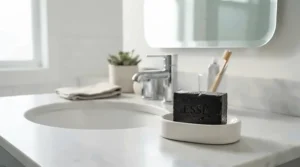
Store your bar on a well-draining soap dish, not sitting in standing water — a soggy bar dissolves faster and can harbor bacteria between uses. Follow up with a lightweight, oil-free moisturizer every time, even on oily skin; skipping moisturizer after a drying acne bar is how skin ends up producing even more oil to compensate. If you’re layering a medicated bar with a prescription retinoid or another treatment, alternate days rather than stacking both in the same routine to avoid over-drying.
Real-World Scenarios: Matching the Right Bar Soap to Your Life
The budget-conscious college student. Sharing a communal bathroom, washing twice a day, tight budget. Neutrogena Facial Cleansing Bar or Cetaphil Gentle Cleansing Bar make sense as a daily base — cheap per wash, gentle enough for constant use, and low risk of an embarrassing reaction before a big exam week. If breakouts are more than occasional, adding Grisi Sulfur Soap a few nights a week bridges the gap without blowing the budget.
The gym-goer with body and back acne. Frequent sweating, tight workout gear, breakouts concentrated on the chest and back rather than the face. PanOxyl Acne Treatment Bar is built almost exactly for this scenario — its 10% benzoyl peroxide and large surface coverage make it efficient for washing bigger areas post-workout, ideally used in the shower right after exercise rather than hours later.
The skincare-savvy 20-something with combination, blackhead-prone skin. Already using serums, familiar with pH and syndet formulas, wants something that fits an established routine without extra steps. Good Molecules Clarify and Cleanse Bar slots in cleanly here — the kaolin clay and salicylic acid combination tackles blackheads without disrupting a barrier that’s already being cared for elsewhere.
Common Acne Soap Problems, Solved
Problem: My skin feels tight and flaky after a few days. This is classic over-drying, usually from daily use of a strong bar like PanOxyl Acne Treatment Bar or Grisi Sulfur Soap before your skin has adjusted. Solution: drop to every-other-day use and add a fragrance-free moisturizer immediately after washing.
Problem: I’m breaking out more than before I started. Purging is real with salicylic acid and benzoyl peroxide — both ingredients speed up cell turnover, which can temporarily push existing clogs to the surface faster. Give any new medicated bar, like DermaHarmony Sulfur & Salicylic Acid Bar or Joesoef Anti-Acne Soap, a full 4–6 weeks before judging results.
Problem: The soap bleached my towel. This is a known side effect of benzoyl peroxide specifically, called out directly on PanOxyl Acne Treatment Bar‘s labeling. Solution: use old, dark towels exclusively for your face while using it, and let your skin dry fully before it touches fabric.
Problem: My acne is on my back and I can’t reach it well. A bar on a rope or a long-handled shower brush solves the mechanical problem more than switching products does — pair it with PanOxyl Acne Treatment Bar for coverage across larger areas in one pass.
Problem: I have both dry patches and oily breakout zones. Alternate bars rather than picking one: use Cetaphil Gentle Cleansing Bar on dry days and a medicated option like Good Molecules Clarify and Cleanse Bar on oilier days, rather than forcing one bar to do two contradictory jobs.
How to Choose Acne Bar Soap
- Identify your acne type first. Comedonal acne (blackheads, whiteheads) generally responds better to salicylic acid, while inflamed, bacterial breakouts respond more directly to benzoyl peroxide.
- Check the active ingredient percentage. Benzoyl peroxide ranges from 2.5–10%; higher isn’t automatically better if it leaves you too irritated to use it consistently.
- Consider your skin’s dryness tolerance. If you already run dry or sensitive, start with a non-medicated bar like Cetaphil Gentle Cleansing Bar before introducing an active.
- Factor in secondary benefits. A dual-purpose bar like DermaHarmony Sulfur & Salicylic Acid Bar can replace a second product entirely if you also deal with dandruff or rosacea.
- Price it per wash, not per bar. A $12 bar that lasts three months can be cheaper than a $4 bar you replace weekly — more on this below.
- Read for consistency of review sentiment, not star averages alone. A 4.3-star product with dozens of specific comments about dryness tells you more than a bare number.
- Patch test anything new. Apply to a small area for 2–3 days before full-face use, especially with sulfur or higher-percentage benzoyl peroxide bars.
Drugstore Acne Aisle: What Actually Works vs. What’s Marketing Hype
Standing in the drugstore acne aisle, it’s genuinely hard to tell a breakthrough formula from a clever label. Here’s the filter: active ingredients with decades of clinical backing — benzoyl peroxide, salicylic acid, sulfur — do the real work. Everything else on the label (activated charcoal, “detoxifying” claims, botanical extract blends) is generally cosmetic dressing that may feel nice but isn’t doing the acne-fighting heavy lifting. Per GoodRx’s comparison of benzoyl peroxide and salicylic acid, benzoyl peroxide has more robust clinical trial support for effectiveness, while salicylic acid’s evidence base is comparatively thinner — which doesn’t mean salicylic acid doesn’t work, just that it tends to be gentler and slower rather than a knockout punch. What genuinely matters when scanning the drugstore acne aisle: active ingredient and percentage, contact-time instructions, and whether the product is soap-based or syndet-based. What doesn’t matter nearly as much: “exfoliating beads” (often just texture, not function), trendy superfood ingredient call-outs, or elaborate packaging.
Affordable Acne Soap Bars vs. Prescription Treatment
| Factor | Affordable Acne Soap Bars | Prescription Treatment |
|---|---|---|
| Upfront cost | $3–$14 per bar | Often $0 copay to $100+ depending on insurance |
| Access | Available same-day at any drugstore | Requires a doctor’s visit and prescription |
| Strength | Max 10% benzoyl peroxide OTC | Can include retinoids, oral antibiotics, isotretinoin |
| Best for | Mild to moderate acne | Moderate to severe or cystic acne |
| Commitment | Low — easy to switch products | Higher — often requires months of monitoring |
The table makes the tradeoff pretty clear: affordable acne soap bars like PanOxyl Acne Treatment Bar and DermaHarmony Sulfur & Salicylic Acid Bar win on accessibility and cost, letting you start treatment today rather than waiting weeks for an appointment. Prescription treatment wins on raw strength for stubborn or cystic cases that OTC actives simply can’t touch. A reasonable middle path many dermatologists suggest is starting with a well-chosen OTC bar for 6–8 weeks, and escalating to a prescription route only if there’s no meaningful improvement.
✨ Not sure where you fall on the mild-to-moderate spectrum? Scroll back up and compare the seven picks side by side before you decide.
Cost Per Wash: The Real Long-Term Value of Bar Soap
This is where bar soap quietly wins against nearly every liquid cleanser on the market. A standard 4 oz bar, used correctly, typically lasts 4–8 weeks of daily washing depending on how soggy you let it get and how large a surface area you’re covering. Do the math on Grisi Sulfur Soap at roughly $4 for six to eight weeks of use, and you land somewhere around 7–14 cents per wash — a number that’s almost impossible to beat with any liquid cleanser, which typically run 25–50 cents per pump once you account for the bottle, the pump mechanism, and faster usage rates. Even the pricier DermaHarmony Sulfur & Salicylic Acid Bar, at $12 for a similar lifespan, still lands around 20–25 cents per wash — competitive with mid-tier liquid cleansers while delivering a stronger active ingredient concentration. The takeaway: don’t just compare shelf price. A $14 bar that lasts two months is often objectively cheaper than a $9 bottle of face wash you’ll finish in three weeks.
Common Mistakes When Buying Budget Blemish Soap
The biggest mistake with budget blemish soap is assuming “cheap” and “weak” are the same thing — Joesoef Anti-Acne Soap and Grisi Sulfur Soap both prove that a low price tag doesn’t mean a diluted active ingredient. The second common mistake is buying based on scent alone; a pleasant-smelling bar with no active ingredient, marketed loosely as “for acne-prone skin,” often isn’t doing much beyond basic cleansing. Third, people frequently skip the ingredient list entirely and trust front-of-package claims, missing that a bar labeled “clarifying” might not list any of the three clinically proven actives at all. Finally, a subtler mistake: buying the cheapest medicated bar available and using it aggressively twice a day immediately, rather than easing in — which is how a genuinely good budget blemish soap ends up returned or abandoned after one bad week.
Over-the-Counter Acne Treatment for Different Skin Types
For oily, non-sensitive skin, stronger over-the-counter acne treatment options like PanOxyl Acne Treatment Bar or Grisi Sulfur Soap are typically well-tolerated and can be used close to daily. For dry or sensitive skin, medicated bars need buffering — pair a lighter option like Good Molecules Clarify and Cleanse Bar or Joesoef Anti-Acne Soap‘s lower-percentage salicylic acid with a fragrance-free moisturizer, and consider alternating with Cetaphil Gentle Cleansing Bar rather than using an active daily. For combination skin, targeted use makes more sense than a single bar for the whole face — a medicated bar on the T-zone area and a gentle bar elsewhere avoids over-treating drier cheeks. For teens just starting an acne routine, the Florida health encyclopedia’s guidance on acne self-care recommends starting with basic over-the-counter options before layering in stronger actives, which lines up well with starting on something gentle like Neutrogena Facial Cleansing Bar before graduating to a medicated bar if needed.
Frequently Asked Questions
❓ Is acne bar soap better than liquid face wash for acne?
❓ Can acne bar soap dry out my skin?
❓ How long does it take for acne soap bars to work?
❓ What's the difference between salicylic acid and benzoyl peroxide bars?
❓ Is sulfur soap safe to use every day?
Conclusion
Acne bar soap isn’t a gimmick, and it isn’t a miracle either — it’s a genuinely useful category once you match the right active ingredient to your actual skin, rather than grabbing whatever’s cheapest or best-reviewed in isolation. PanOxyl Acne Treatment Bar brings maximum-strength benzoyl peroxide for stubborn breakouts, Cetaphil Gentle Cleansing Bar and Neutrogena Facial Cleansing Bar offer a gentle daily base that won’t fight with your other products, and bars like DermaHarmony Sulfur & Salicylic Acid Bar, Joesoef Anti-Acne Soap, Good Molecules Clarify and Cleanse Bar, and Grisi Sulfur Soap fill in the space between with real active ingredients at genuinely accessible prices.
The real lesson from the cost-per-wash math is that bar soap rewards patience — a slightly pricier bar that lasts two months often beats a cheap one you’ll burn through in two weeks, and a strong active used correctly for a full month beats any product used inconsistently for a week and abandoned. Start gentle, give it time, watch how your skin actually responds, and adjust from there. That’s the whole strategy, and it works.
Recommended for You
- [Add your blog post link 1]
- [Add your blog post link 2]
- [Add your blog post link 3]
Disclaimer: This article contains affiliate links. As an Amazon Associate, I earn from qualifying purchases. If you purchase products through these links, we may earn a small commission at no additional cost to you.
✨ Found this helpful? Share it with a friend who’s still washing their face with regular soap! 💬🤗
