
In This Article
Here’s a confession every eczema household eventually makes out loud: the soap dish is where good skincare intentions go to die. You buy the pretty bar because it smelled like a spa day, and three washes later your forearms look like you fought a cactus and lost. Gentle bar soap for eczema and allergy-prone skin is, in the simplest terms, a cleansing bar formulated without soap’s traditional harsh detergents, added fragrance, or high alkalinity — the goal being a wash that cleans without stripping the thin, already-compromised lipid layer that eczema-prone skin depends on. That’s the textbook version, and it matters more than it sounds like it should, because the wrong bar can undo an entire routine of expensive moisturizers in about ninety seconds flat.
I’ve spent the last few weeks pulling apart the ingredient decks, aggregated review patterns, and actual formulation science behind the bars people with atopic dermatitis and contact allergies keep reaching for in 2026. Not the marketing copy — the stuff underneath it. What separates a soap that soothes from one that quietly sabotages you usually comes down to pH, surfactant type, and what’s missing from the label rather than what’s added to it. According to board-certified dermatologists at the American Academy of Dermatology, fragrance-free (not just “unscented”) formulas are one of the single biggest levers for reducing flare frequency, and that one distinction alone eliminates more shelf products than you’d expect.
This guide breaks down seven real, purchasable bars spanning budget drugstore staples to small-batch artisan blends, why each one earns or loses points, and how to actually shop this category without another trial-and-error rash. Let’s get into it.
Quick Comparison Table
| Product | Type | Best For | Price Range |
|---|---|---|---|
| CeraVe Hydrating Cleanser Bar | Soap-free, ceramide-based | Barrier repair on a budget | Under $10 |
| Cetaphil Gentle Cleansing Bar | Soap-free, glycerin-based | First-time buyers, kids | $6-10 range |
| Dove Sensitive Skin Beauty Bar | Syndet with colloidal oatmeal | Everyday whole-family use | $8-14 range |
| Aveeno Moisturizing Bar with Colloidal Oatmeal | Oat-based syndet | Oatmeal loyalists on a budget | Under $10 |
| Vanicream Cleansing Bar | Allergen-free, dye/fragrance-free | Severe allergy-prone skin | $10-15 range |
| SheaMoisture African Black Soap Eczema Bar | Homeopathic shea-based | Natural-leaning routines | $7-11 range |
| Southern Natural Oatmeal Soap Bar | Handmade goat milk + oatmeal | Small-batch, minimal-ingredient fans | Mid-$teens range |
Looking at the spread above, the split isn’t really budget-versus-premium — it’s formulation philosophy. Vanicream Cleansing Bar sits at the strict end of allergen exclusion, stripping out dyes, fragrance, lanolin, and formaldehyde-releasers that even some “sensitive skin” bars still quietly include. CeraVe Hydrating Cleanser Bar and Cetaphil Gentle Cleansing Bar occupy the mainstream, dermatologist-office middle ground most people start with. The two colloidal-oatmeal bars — Dove Sensitive Skin Beauty Bar and Aveeno Moisturizing Bar with Colloidal Oatmeal — trade a touch of allergen strictness for oat-derived anti-itch benefits, while SheaMoisture African Black Soap Eczema Bar and Southern Natural Oatmeal Soap Bar lean into shorter, more natural ingredient decks that some allergy-prone users prefer, though “natural” doesn’t automatically mean fewer triggers.
💬 Just one click — help others make better buying decisions too!😊
Top 7 Gentle Bar Soaps for Eczema and Allergy-Prone Skin: Expert Analysis
Every entry below is a real, currently sold product. Coverage spans budget drugstore mainstays, mid-tier dermatologist brands, and smaller allergen-focused or artisan options, so there’s a realistic pick regardless of your skin’s specific triggers or your grocery budget.
1. CeraVe Hydrating Cleanser Bar — ceramide-driven barrier support at a drugstore price
The headline feature here is the ceramide-and-hyaluronic-acid combo baked into a soap-free base, which is a bigger deal than it sounds. Ceramides 1, 3, and 6-II are lipids your skin already makes to seal moisture in, and eczema-prone skin is chronically short on them — this bar essentially hands some back with every wash instead of stripping more away. The MVE (MultiVesicular Emulsion) delivery technology is engineered to release those lipids gradually over hours rather than dumping them all at once, which on paper explains why users report less of the “tight, squeaky-clean” feeling that traditional soap leaves behind.
Who should care: anyone managing dry-to-eczema-prone skin who wants dermatology-office ingredients without a dermatology-office price tag. Reviewers consistently report that skin feels coated rather than stripped post-shower, and this bar carries the National Eczema Association Seal of Acceptance, which requires third-party review of the formula against common irritants. A recurring complaint in aggregated feedback is that the bar softens faster than a typical soap bar if left sitting in standing water, so a draining dish matters more here than with harder-milled bars.
Pros:
- ✅ Ceramide-3 complex actively supports barrier repair
- ✅ NEA Seal of Acceptance for eczema-safe formulas
- ✅ Widely available at mainstream drugstores and big-box stores
Cons:
- ❌ Softens quickly without a draining soap dish
- ❌ Slightly less lather than traditional bar soap
Priced under $10 for a bar that typically lasts several weeks with daily use, this is one of the strongest cost-per-wash values in the entire category — a legitimate first pick before spending more elsewhere.
2. Cetaphil Gentle Cleansing Bar — the dermatologist-office default for a reason
Cetaphil’s cleansing bar is soap-free by design, meaning it skips the high-pH saponified oils that make traditional bar soap so drying in the first place. That single formulation choice is why this bar shows up on so many “what did your dermatologist actually recommend” lists. The five core nourishing ingredients in the base are built to cleanse without disrupting the skin’s naturally acidic mantle, which sits around pH 4.5-5.5 versus a conventional bar soap’s 9-10.
Practically speaking, that pH gap is the difference between a wash that respects your skin barrier and one that actively works against it every single day. This is the pick for people who are brand-new to the “gentle cleanser” category and just want something that won’t make things worse while they figure out the rest of their routine — it’s mild enough that pediatric dermatologists commonly greenlight it for kids. Aggregated reviews describe a consistent, unscented experience with minimal irritation reports even among frequent-flare users, though a subset of reviewers with drier climates note they still need a heavier moisturizer layered on top.
Pros:
- ✅ Soap-free, non-comedogenic formula respects skin pH
- ✅ Gentle enough for pediatric use per common dermatology guidance
- ✅ Widely stocked, easy to find in multi-packs
Cons:
- ❌ Minimal lather compared to true soap bars
- ❌ Doesn’t independently moisturize enough for severe dryness
At roughly $6-10 for a single bar (less per-unit in multi-packs), this is one of the most budget-accessible entry points into gentle cleansing — a sensible starting bar before chasing pricier specialty formulas.
3. Dove Sensitive Skin Beauty Bar with Colloidal Oatmeal — colloidal oatmeal meets everyday convenience
Dove’s sensitive-skin bar folds a nourishing serum containing colloidal oatmeal into its signature quarter-moisturizing-cream base, which is worth pausing on — colloidal oatmeal isn’t just a marketing buzzword here, it’s a National Eczema Association-recognized skin protectant with documented anti-itch and film-forming properties that physically cushion irritated skin during cleansing. Co-created with dermatologists, the bar is built around a syndet (synthetic detergent) base rather than true soap, which keeps the pH closer to skin-neutral.
What most buyers overlook about this bar is that it’s positioned as a whole-family product, not a niche medical one, which matters if you’re trying to standardize one gentle soap across a household that includes both an eczema-prone kid and non-eczema adults. Reviewers frequently describe the lather as noticeably creamier than typical bar soap, and a common theme in aggregated feedback is that it holds up well even with twice-daily showers. On the downside, a portion of users note the bar is softer and dissolves faster than the drier syndet bars in this roundup.
Pros:
- ✅ Colloidal oatmeal serum with NEA Seal of Acceptance
- ✅ Family-friendly, easy one-bar-for-everyone option
- ✅ Widely available at nearly every major retailer
Cons:
- ❌ Dissolves faster than firmer syndet bars
- ❌ Contains more inactive ingredients than stricter allergen-free bars
In the $8-14 range depending on pack size, it’s a strong mid-range value pick, especially for households trying to consolidate to one shared bar without compromising anyone’s skin.
4. Aveeno Moisturizing Bar with Colloidal Oatmeal — oat science on a genuinely tight budget
Aveeno built its reputation on colloidal oatmeal research spanning decades, and this fragrance-free, dye-free bar is the stripped-down bar-soap expression of that pedigree. The oat’s naturally occurring avenanthramides are the compounds doing the real anti-itch work here, interacting with skin’s inflammatory response rather than just physically coating it, which is a meaningfully different mechanism than a bar that relies purely on emollients.
Here’s what the spec sheet won’t tell you, but user reports suggest: this bar tends to perform best as a maintenance-phase product rather than during an active, weeping flare, where a straight moisturizing cream is usually gentler on broken skin. It’s a good fit for budget-conscious buyers who still want ingredient-level oat benefits without paying premium-brand pricing, and reviewers commonly mention it as the bar they switch their whole family to once someone in the house gets an eczema diagnosis. A recurring critique is that the bar’s texture feels slightly grittier than the smoother syndet bars, since it retains visible oat particulate.
Pros:
- ✅ Fragrance-free and dye-free with real avenanthramide content
- ✅ Genuinely budget-friendly for an oat-based formula
- ✅ Decades of brand-backed oat research behind the formula
Cons:
- ❌ Slightly gritty texture from visible oat particles
- ❌ Less ideal on actively broken or weeping skin
At under $10, it’s arguably the best-value colloidal oatmeal bar on the market right now, particularly for maintenance-phase daily use rather than acute flare management.
5. Vanicream Cleansing Bar — the strict-allergen-avoidance benchmark
Vanicream built its entire brand identity around formulating without the ingredients most likely to trigger allergic or irritant contact reactions: no dyes, no fragrance, no lanolin, no formaldehyde-releasing preservatives, no parabens. That’s a notably longer exclusion list than most “sensitive skin” competitors bother with, and it’s precisely why allergists and dermatologists frequently recommend it specifically for patients with confirmed contact allergies rather than just general dryness.
Based on the ingredient-list comparison against the rest of this roundup, Vanicream is the strictest allergen-free formula here by a clear margin — it’s less about pampering and more about eliminating variables for people whose skin reacts to almost everything. Reviewers who patch-test extensively before committing to new products consistently single this bar out as one of the few that “does nothing,” which in this context is the highest possible compliment. The trade-off some buyers report is a plain, almost clinical wash experience with none of the sensory flourishes (lather richness, scent, texture) that make other bars feel more like a self-care ritual.
Pros:
- ✅ Excludes dyes, fragrance, lanolin, and common preservative allergens
- ✅ Frequently recommended by allergists for confirmed contact allergies
- ✅ Non-drying formula suitable for daily use on broken skin
Cons:
- ❌ Minimal lather and no sensory “spa” experience
- ❌ Priced higher than mainstream drugstore bars
Running $10-15 depending on where you buy it, it costs more than the mainstream bars above, but for genuinely allergy-prone skin the reduced risk of a triggered flare can easily offset the price difference in avoided dermatologist visits alone.
6. SheaMoisture African Black Soap Eczema Bar — a natural-leaning homeopathic option
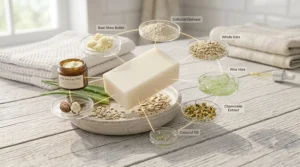
This bar takes a different formulation route entirely, built around fair-trade shea butter, black soap tradition, and aloe vera rather than the syndet chemistry used by the pharmacy-brand bars above. It’s labeled as a homeopathic product intended to help temporarily relieve mild eczema symptoms and itching, which is a narrower and more modest claim than some competitors make, and it’s worth taking that framing at face value rather than expecting prescription-grade results.
What stands out is the sulfate-free lather, which reviewers describe as noticeably different from typical bar soap — less foamy, more of a soft glide. This is the bar for buyers who specifically want to avoid synthetic detergent-based cleansers and are comfortable with a shorter, more traditional ingredient list, even if that means slightly less standardized performance batch to batch, which is common with black-soap-style formulations. A recurring theme in aggregated feedback is appreciation for the moisturizing after-feel, alongside occasional reports that the natural fragrance components (rather than added synthetic fragrance) still bother a subset of highly reactive users — worth patch-testing if you’re fragrance-sensitive specifically.
Pros:
- ✅ Sulfate-free with fair-trade shea butter as the moisturizing base
- ✅ Traditional black soap format many natural-skincare users prefer
- ✅ Sensitive-skin marketing backed by aloe vera inclusion
Cons:
- ❌ Natural fragrance notes may still bother highly fragrance-reactive skin
- ❌ Batch-to-batch consistency can vary more than syndet bars
In the $7-11 range, it’s a reasonably priced entry point for anyone wanting to test whether a more traditional, natural-format bar works better for their specific skin than the syndet options dominating this list.
7. Southern Natural Oatmeal Soap Bar — small-batch, minimal-ingredient, and genuinely handmade
This is the lesser-known pick in the lineup, and it earns its spot through sheer ingredient simplicity: goat milk, colloidal oatmeal, honey, and a short list of base oils, cold-processed in small batches rather than mass-manufactured. Goat milk soap carries naturally occurring fatty acids and lactic acid that some formulators argue support the skin barrier more gently than synthetic surfactants, though it’s worth noting the clinical evidence here is thinner than for ceramide or oat-based formulas — the case is more anecdotal-but-widely-repeated than rigorously studied.
Here’s what most buyers overlook: because it’s handcrafted using traditional cold-process methods, this bar tends to be milder on the skin’s surface pH than mass-produced true soap, while still delivering the “real soap” lather feel that syndet bars can’t replicate. It’s a strong fit for buyers who’ve already ruled out synthetic fragrance and preservative triggers and want to experiment with the shortest possible ingredient deck. Aggregated customer feedback repeatedly mentions the bars lasting longer than expected and a noticeably creamy, non-drying lather, alongside occasional notes that cold-process bars can arrive with minor cosmetic variation between batches since each is hand-cut.
Pros:
- ✅ Extremely short, recognizable ingredient list
- ✅ True lather experience unlike soap-free syndet bars
- ✅ Small-batch, made-in-USA production
Cons:
- ❌ Higher price per bar than mass-market options
- ❌ Batch-to-batch cosmetic variation is normal but noticeable
Running in the mid-teens for a multi-bar pack, it’s priced at a premium relative to drugstore staples, but for buyers specifically avoiding synthetic surfactants it’s one of the few genuinely artisan options with real oatmeal and goat milk rather than trace amounts for label appeal.
✨ Don’t Miss These Exclusive Deals!
🔍 Take your skincare routine to the next level with these carefully selected products. Click on any highlighted item to check current pricing and availability. These gentle formulas can help you build the calmer, less reactive skin routine your family deserves!
Real-World Scenarios: Which Bar Actually Fits Your Life
Specs only tell half the story — the other half is who’s actually standing in the shower. Consider a few realistic profiles. A parent of a 4-year-old with newly diagnosed atopic dermatitis, working with a tight grocery budget and wanting one bar the whole family can share safely, is generally best served by Cetaphil Gentle Cleansing Bar or Aveeno Moisturizing Bar with Colloidal Oatmeal — both are pediatrician-familiar, inexpensive in multi-packs, and mild enough that a non-eczema sibling can use the same bar without complaint.
A adult managing confirmed contact allergies to fragrance and preservatives, who’s already been burned by “sensitive” labels that still contained trigger ingredients, should prioritize Vanicream Cleansing Bar specifically for its unusually long exclusion list — it’s less about comfort and more about risk elimination. Meanwhile, someone in a dry winter climate dealing with chronic barrier breakdown but not a diagnosed allergy is often better matched with CeraVe Hydrating Cleanser Bar, since the ceramide-forward formula is engineered around long-term barrier restoration rather than just gentle cleansing. And a natural-ingredient purist who’s already ruled out synthetic fragrance as a trigger but still wants real lather has a genuine fit in Southern Natural Oatmeal Soap Bar or SheaMoisture African Black Soap Eczema Bar, depending on whether goat milk or shea butter suits their preference more.
Problem → Solution: Fixing the Five Most Common Bar-Soap Mistakes
Problem 1: Skin feels tighter after washing than before. This almost always traces back to a high-pH true soap bar disrupting the acid mantle. Solution: switch to a labeled soap-free or syndet bar like Cetaphil Gentle Cleansing Bar or CeraVe Hydrating Cleanser Bar, both formulated closer to skin-neutral pH.
Problem 2: A “sensitive skin” bar still triggers a reaction. Sensitive-skin labeling isn’t regulated the way “fragrance-free” claims are. Solution: cross-check the full ingredient list against known allergens, or default to Vanicream Cleansing Bar, which excludes the widest range of common triggers by default.
Problem 3: Bar dissolves too fast and gets wasted. Softer, more moisturizing bars — including several colloidal oatmeal formulas — naturally soften faster in standing water. Solution: use a draining soap dish or switch to a firmer cold-process bar like Southern Natural Oatmeal Soap Bar.
Problem 4: Itching flares specifically during active outbreaks. Cleansing during a weeping or actively inflamed flare can be counterproductive with any bar, gentle or not. Solution: shift to a rinse-only or minimal-contact routine during flares, following your dermatologist’s guidance on frequency.
Problem 5: Whole family can’t agree on one soap. Mixed skin sensitivities across a household usually mean somebody’s compromising. Solution: standardize on the mildest common denominator — typically Dove Sensitive Skin Beauty Bar or Cetaphil Gentle Cleansing Bar — rather than juggling multiple bars in one shower.
Buyer’s Decision Framework: A Simple Priority Checklist
If you have a confirmed contact allergy diagnosis, choose the strictest allergen-exclusion formula available, because eliminating trigger ingredients matters more here than texture or lather. If you’re managing general dryness without a diagnosed allergy, choose a ceramide- or oat-based barrier-support bar, because your skin needs lipid replacement more than allergen avoidance. If budget is the binding constraint, choose a mainstream soap-free drugstore bar first, because the pH and detergent-type improvements alone solve most beginner-level irritation. If you’ve already ruled out synthetic triggers and want a more traditional wash feel, choose a natural cold-process option, because true lather and minimal ingredient decks matter more to you than syndet science. And if you’re outfitting a mixed household, choose the single mildest bar that meets everyone’s baseline needs rather than optimizing for any one person’s ideal.
What Is Gentle Bar Soap for Eczema and Allergy-Prone Skin?
Gentle bar soap for eczema and allergy-prone skin is a cleansing bar engineered to clean the skin without high alkalinity, harsh sulfates, or added fragrance — the three most common triggers for irritation and flares in people managing atopic dermatitis, contact dermatitis, or general allergy-prone skin. Most fall into either the “soap-free syndet” category (like Cetaphil Gentle Cleansing Bar) or naturally formulated true-soap bars built around minimal, recognizable ingredients (like Southern Natural Oatmeal Soap Bar).
How to Choose Gentle Bar Soap for Eczema and Allergy-Prone Skin
- Check for “fragrance-free,” not “unscented.” These aren’t interchangeable — unscented products often contain masking fragrance that can still trigger a reaction, while fragrance-free means no fragrance compounds at all.
- Look for the NEA Seal of Acceptance where possible. It signals independent review against common irritants and allergens rather than a marketing claim alone.
- Prioritize soap-free or syndet formulas if you have general dryness. These sit closer to skin’s natural pH and reduce the barrier disruption that true soap causes.
- Scan for your specific known allergens by name. Generic “sensitive skin” claims don’t guarantee any particular ingredient is absent — read the full list every time.
- Consider colloidal oatmeal if itching, not just dryness, is your primary complaint. Its avenanthramide content specifically targets inflammatory itch pathways.
- Factor in texture preference honestly. A bar you avoid using because it feels clinical or joyless won’t get used consistently, and consistency matters more than perfection.
- Patch test any new bar for 3-5 days on a small area first, especially if you’ve reacted to multiple products before — even allergy-friendly formulas aren’t universally safe for every person.
Soap for Atopic Dermatitis: What Changes Once Eczema Gets a Name
There’s a real difference between “sensitive skin” marketing and a formula actually appropriate for diagnosed atopic dermatitis. Atopic dermatitis involves a genetically compromised skin barrier — the skin loses water faster than typical skin and struggles to keep irritants and allergens out, which is why dermatology guidelines treat cleanser choice as a frontline management tool rather than a cosmetic afterthought. Reviewers managing an actual AD diagnosis, versus general dry skin, consistently gravitate toward bars with documented barrier-support ingredients — ceramides, colloidal oatmeal, or strict allergen exclusion — over bars marketed purely on “sensitive” branding.
What most buyers overlook is that atopic dermatitis-appropriate soap isn’t necessarily the priciest option; CeraVe Hydrating Cleanser Bar and Cetaphil Gentle Cleansing Bar both show up repeatedly in dermatologist recommendations precisely because they were formulated with AD-specific barrier science in mind, not just general sensitivity claims layered onto an existing product line.
What Makes a Bar Soap Truly Allergy-Friendly
“Allergy-friendly” gets thrown around loosely, but a genuinely allergy-friendly bar soap excludes the ingredients most frequently implicated in allergic contact dermatitis: fragrance mixes, certain preservatives (particularly formaldehyde-releasers and some parabens), lanolin, and specific dyes. The NEA Seal of Acceptance program exists specifically because label claims alone aren’t a reliable enough filter — it requires manufacturers to submit formulas for independent review against a defined irritant and allergen list.
Based on the ingredient-deck comparison across this roundup, Vanicream Cleansing Bar is the clearest example of allergy-friendly formulation done rigorously, while bars like Dove Sensitive Skin Beauty Bar and SheaMoisture African Black Soap Eczema Bar are gentler than mainstream soap but carry a longer ingredient list overall, which matters more if you have multiple confirmed sensitivities rather than general reactivity.
Why Colloidal Oatmeal Keeps Showing Up in Every Formula
Colloidal oatmeal isn’t filler — it’s finely milled oat that suspends in water and forms a protective film on skin while delivering avenanthramides, compounds with genuine documented anti-inflammatory and anti-itch activity. That’s why it appears across such different price points and formulation styles here, from Aveeno Moisturizing Bar with Colloidal Oatmeal at the budget end to Southern Natural Oatmeal Soap Bar at the artisan end. The spec comparison makes it clear that concentration and formulation base matter as much as the ingredient’s mere presence — a syndet base delivers oatmeal differently than a true-soap base, and reviewers report noticeably different textures and after-feel depending on which route a brand took.
What the label won’t tell you outright is that colloidal oatmeal works best as a symptom-management tool for itch specifically, rather than a cure for the underlying barrier dysfunction driving eczema in the first place — pairing it with a ceramide-based moisturizer typically outperforms relying on oatmeal alone.
Barrier Repair 101: What Bar Soap Can (and Can’t) Fix
The skin barrier is essentially a brick-and-mortar structure — skin cells as bricks, lipids like ceramides as mortar — and eczema-prone skin has gaps in that mortar that let moisture out and irritants in. A gentle bar soap’s job is limited but important: minimize additional damage during cleansing rather than actively rebuild the barrier, which is really the job of a post-shower moisturizer applied while skin is still damp. The National Eczema Association’s soak-and-seal method specifically recommends applying moisturizer within a few minutes of bathing to lock hydration in before it evaporates.
On paper, this means your soap choice and your moisturizer choice function as one system, not two separate decisions. Bars like CeraVe Hydrating Cleanser Bar, which actively deposit ceramides during the wash itself, get a head start on barrier support that a purely cleansing-only bar like Cetaphil Gentle Cleansing Bar doesn’t attempt — though pairing either with a dedicated moisturizer afterward matters more than which bar you pick alone.
Decoding Allergen-Free Formulas: A Label-Reading Guide
“Allergen-free” is not a regulated term, which means it can mean genuinely different things bar to bar. The most rigorous formulas, like Vanicream Cleansing Bar, explicitly list what they exclude: dyes, fragrance, lanolin, parabens, and formaldehyde-releasing preservatives. Less rigorous “allergen-free” claims sometimes just mean “no added synthetic fragrance” while still containing natural fragrance components, preservatives, or plant extracts that are common allergens in their own right — something worth checking closely with bars like SheaMoisture African Black Soap Eczema Bar, where natural fragrance notes come from the shea and botanical base itself rather than an added scent.
Reviewers consistently note that the safest approach is treating “allergen-free” as a starting point for label-reading, not a guarantee — cross-referencing the ingredient list against your own known triggers (via patch testing or an allergist’s panel) remains the only reliable verification method regardless of what the front-of-package claims.
Common Mistakes When Buying Soap for Atopic Dermatitis
The most frequent mistake is trusting “unscented” as equivalent to “fragrance-free” — they aren’t, and this single mix-up derails more routines than any other factor. A close second is assuming natural automatically means gentler; plant-derived fragrance and botanical extracts can trigger allergic contact dermatitis just as readily as synthetic ingredients, sometimes more so, since natural extracts vary in concentration batch to batch. A third common error is switching bars too frequently during a flare, which makes it nearly impossible to identify what’s actually helping or hurting, since eczema reactions can take hours or days to appear after exposure.
Buyers also frequently over-cleanse, scrubbing more aggressively or more often than necessary in an attempt to “get ahead” of a flare, which paradoxically worsens barrier damage. And finally, many people abandon a genuinely good bar too early — barrier repair from consistent, gentle cleansing is a weeks-long process, not an overnight fix, so judging a new bar within the first few washes often leads to prematurely discarding something that would have worked.
Gentle Bar Soap vs. Body Wash: Which Wins for Allergy-Prone Skin
This debate comes up constantly, and the honest answer is: it depends more on formulation than format. Well-formulated bar soap, particularly soap-free syndet bars like Cetaphil Gentle Cleansing Bar, performs comparably to gentle body wash in terms of pH and irritation potential. Where bar soap sometimes has an edge is ingredient simplicity — many bars carry shorter ingredient decks than liquid body wash, which requires additional stabilizers and preservatives to remain shelf-stable in liquid form.
Body wash does have real advantages for households where sharing a communal bar raises hygiene concerns, or where a pump dispenser reduces the temptation to scrub with a washcloth (a common irritation trigger). But for allergy-prone skin specifically, a well-chosen bar like Vanicream Cleansing Bar often has fewer total ingredients than an equivalent liquid formula, simply because bars need fewer stabilizing agents — fewer ingredients generally means fewer potential triggers.
Benefits vs. Traditional Bar Soap
| Factor | Traditional Bar Soap | Gentle/Allergy-Friendly Bar Soap | Best For |
|---|---|---|---|
| pH Level | 9-10 (highly alkaline) | 4.5-6 (near skin-neutral) | Vanicream Cleansing Bar, CeraVe Hydrating Cleanser Bar |
| Fragrance | Often heavily added | Fragrance-free or minimal natural | Vanicream Cleansing Bar |
| Barrier Impact | Strips natural lipids | Deposits or preserves lipids | CeraVe Hydrating Cleanser Bar |
| Common Triggers | Sulfates, dyes, synthetic scent | Formulated to exclude known allergens | Vanicream Cleansing Bar, Cetaphil Gentle Cleansing Bar |
The pH gap in that table isn’t a small technicality — it’s the single biggest mechanical reason traditional soap and eczema-prone skin don’t get along. CeraVe Hydrating Cleanser Bar actively works against that gap by depositing ceramides during the wash, while Vanicream Cleansing Bar attacks the problem from the allergen-exclusion angle instead. Neither approach is strictly “better” — they’re solving slightly different problems, which is why matching the bar to your specific issue (dryness versus confirmed allergy) matters more than chasing whichever product ranks highest online.
FAQ
❓ Is bar soap or liquid soap better for eczema?
❓ What ingredients should I avoid in soap for atopic dermatitis?
❓ Does colloidal oatmeal actually help eczema itching?
❓ How often should I wash with allergy-friendly bar soap?
❓ Can allergen-free formulas still cause a reaction?
Conclusion
If there’s one thing worth taking away from all this label-reading and spec-comparing, it’s that “gentle” isn’t a marketing feeling — it’s a measurable set of formulation choices, from pH to preservative type to what’s deliberately left out. For most people managing general dryness or early-stage eczema, CeraVe Hydrating Cleanser Bar or Cetaphil Gentle Cleansing Bar offer serious dermatology-backed value without a premium price tag. For confirmed contact allergies, Vanicream Cleansing Bar remains the strictest, most defensible choice on this list. And for buyers chasing colloidal oatmeal’s itch-calming benefits or a more natural, minimal-ingredient wash, Aveeno Moisturizing Bar with Colloidal Oatmeal, SheaMoisture African Black Soap Eczema Bar, and Southern Natural Oatmeal Soap Bar each offer a distinct, legitimate path there.
Whichever bar you land on, remember that soap is only one half of the barrier-repair equation — pairing it with a fragrance-free moisturizer applied while skin is still damp will do more for your skin long-term than any single bar could accomplish alone. Start with a patch test, give a new bar a few weeks before judging it, and let your own skin — not the packaging — make the final call.
✨ Ready to Upgrade Your Shower Routine?
🔍 Explore the full lineup above and click through to check current pricing on the bar that fits your skin’s specific needs. Small changes in what touches your skin daily can add up to real relief over time!
Recommended for You
- Hypoallergenic Bar Soap for Newborns and Infants: 7 Best Picks (2026)
- 7 Best Dermatologist-Recommended Bar Soap Picks for 2026
- 7 Best Sensitive Skin Bar Soap Picks for 2026
Disclaimer: This article contains affiliate links. As an Amazon Associate, I earn from qualifying purchases. If you purchase products through these links, we may earn a small commission at no additional cost to you.
✨ Found this helpful? Share it with your friends! 💬🤗
