
In This Article
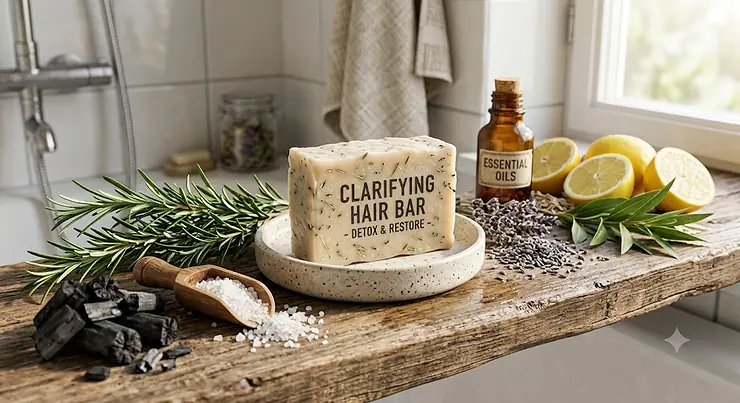
Your hair isn’t dirty, exactly. It’s just… tired. Weighed down by three weeks of dry shampoo, a dozen showers in mineral-heavy tap water, and whatever your conditioner left behind that your regular shampoo never quite lifted back out. That dull, waxy, “why won’t this hold a style” feeling has a name, and it’s buildup — and the fix that’s been quietly taking over bathroom shelves is the clarifying hair bar. Solid, concentrated, and built to strip away what a normal wash leaves behind, a clarifying hair bar works less like a daily shampoo and more like a reset button for your scalp and strands.
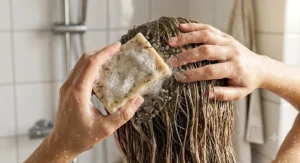
Here’s the honest, unglamorous definition: a clarifying hair bar is a solid, concentrated cleansing bar formulated with stronger surfactants or chelating agents to remove mineral deposits, oil, silicone, and styling-product residue from hair and scalp, typically used weekly rather than every wash. That’s it. No miracle claims, just a harder-working version of shampoo in bar form.
If you’ve never shopped this category, it can look deceptively simple — soap-shaped, small, a little intimidating to price against a $12 bottle of liquid shampoo. But the differences between a true clarifying formula and a bar that just calls itself “clarifying” on the label are significant, and they show up fast in how your hair looks after wash day. This guide breaks down seven real, currently available products across budget, mid-range, and premium tiers, backed by their actual ingredient lists and aggregated customer sentiment — not guesswork. According to board-certified dermatologists at the American Academy of Dermatology, how often you wash and what you wash with should track your scalp’s oil production and buildup, not a one-size-fits-all schedule, and that’s exactly the lens we’ll use here.
We’ll cover hard water performance, scalp-buildup specifics, color-treated safety, and genuine value-for-money — plus the mistakes that send people back to their old liquid shampoo within a month. Let’s get into it.
Quick Comparison Table
| Product | Best For | Price Range | Rating Signal |
|---|---|---|---|
| J.R. Liggett’s Original Formula | Budget shoppers, soft-water areas | Under $10 | Long-running cult favorite |
| Kitsch Tea Tree & Mint Bar | Everyday oil control | $10-$15 | High repeat-purchase volume |
| /liv/ Nature Bar Shampoo | Small-batch, sensitive scalps | $12-$18 | Small-business favorite |
| HIBAR Maintain Bar | Balanced daily-adjacent use | $14-$20 | Strong niche following |
| Ethique Clarifying Bar (Castor Oil) | Oily roots, plastic-free routines | $12-$16 | Long-standing eco brand |
| Kitsch Detox Bar (Hard Water) | Hard water & chlorine buildup | $12-$16 | Fast-growing newer launch |
| SUPERZERO Clarifying Bar | Heavy product buildup, premium tech | $18-$24 | Small business, high praise |
Looking at the lineup, the split isn’t really budget-versus-premium — it’s problem-versus-solution. If your issue is genuinely hard water, the Kitsch Detox Bar is doing a fundamentally different job than J.R. Liggett’s, which is a true soap and will actually react badly with mineral-heavy water. Buyers dealing with heavy styling-product residue should skip straight to SUPERZERO or Ethique, since their chelating and clay-based ingredients are built for cumulative buildup rather than daily oil.
💬 Found a match already? Tap through and compare current pricing before it changes!
💬 Just one click — help others make better buying decisions too!😊
Top 7 Clarifying Hair Bars: Expert Analysis
1. J.R. Liggett’s Original Formula — the legacy pick soft-water users swear by
Before “shampoo bar” was a marketing category, J.R. Liggett’s was already hand-cutting bars on a solar-powered farm in Cornish, New Hampshire, a detail that matters more than it sounds — this is a true saponified soap, not a modern surfactant bar. The formula relies on saponified olive, coconut, and castor oils rather than sulfates or synthetic detergents, which means it lathers gently and rinses with a genuinely clean, almost squeaky feel in areas with naturally soft water.
Here’s the honest trade-off: because J.R. Liggett’s is a real soap, it’s one of the few bars on this list that can actually struggle in hard water, since soap molecules bind to calcium and magnesium ions and leave a waxy film rather than rinsing clean. Based on the spec comparison with the newer chelator-based bars further down this list, this one is best suited to buyers who already know their water is soft, or who mainly want a gentle, budget-friendly everyday cleanse rather than an aggressive detox.
Reviewers consistently note that one bar genuinely outlasts multiple bottles of liquid shampoo, with several long-term users reporting they stopped needing conditioner altogether after switching. A recurring theme in aggregated feedback is that curly and color-treated hair responds especially well to the low-stripping formula, though a handful of reviewers in known hard-water regions did report the waxy buildup issue.
Pros:
- ✅ Genuinely gentle, low-stripping formula for everyday use
- ✅ One of the most affordable bars in this entire category
- ✅ Long track record and loyal repeat-buyer base
Cons:
- ❌ True soap base performs poorly in hard water areas
- ❌ Not marketed or formulated as a heavy-duty detox bar
Priced under $10, J.R. Liggett’s is hard to beat on pure value if your water is on the softer side — check current price before assuming it’s the right fit for your specific tap water.
2. Kitsch Tea Tree & Mint Shampoo Bar — best all-rounder for everyday oil control
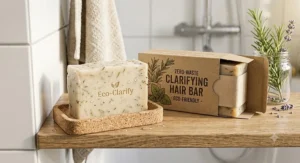
The Kitsch Tea Tree & Mint Shampoo Bar sits in an interesting spot: marketed as a general clarifying bar rather than a hard-water specialist, it’s formulated around tea tree and mint oils plus a clinically tested ingredient called Dandrilys, aimed at reducing visible oiliness after repeated use. In practice, this means it’s less about stripping mineral deposits and more about managing the day-to-day oil and light residue that builds up between washes.
What most buyers overlook about this bar is the pH-balancing claim, which matters more than the tea tree scent — a pH-compatible clarifying formula is what keeps a “deep clean” from tipping into “stripped and frizzy,” and this bar is explicitly positioned as color-safe as a result. It’s a sensible pick for anyone who wants a color-safe clarifying rinse without committing to a full hard-water detox protocol every week.
Reviewers consistently describe a noticeably lighter, less oily scalp within the first few uses, and the sulfate-free, silicone-free formula is repeatedly flagged as gentle enough for frequent rotation rather than strictly occasional use. A common thread in feedback is appreciation for the plastic-free, made-in-USA packaging, which resonates with buyers already invested in low-waste routines.
Pros:
- ✅ Color-safe formula suitable for treated hair
- ✅ Noticeable oil control reported after just a few washes
- ✅ Compact, travel-friendly bar format
Cons:
- ❌ Milder than dedicated hard-water or heavy-buildup formulas
- ❌ Scent profile (tea tree/mint) won’t suit everyone
In the $10-$15 range, this is a strong pick for buyers who want a lighter-touch clarifying shampoo bar in permanent weekly rotation.
3. /liv/ Nature Bar Shampoo — most concentrated small-batch option
/liv/ Nature makes its clarifying bar in small batches, blending lemongrass, lavender, and tea tree oil into a formula explicitly marketed for oily hair and scalp support. The brand leans hard into clean-ingredient positioning, avoiding sodium lauryl sulfate, parabens, phthalates, and synthetic fragrance — a combination that reviewers with reactive or sensitive scalps tend to flag positively.
Here’s what the spec sheet won’t tell you outright: this bar is described by the brand as ultra-concentrated with no water or fillers, and it’s rated to last 50-75 washes, or one to three months depending on hair length and wash frequency. That longevity math actually shifts the value proposition significantly, since a single bar can undercut the cost-per-wash of several liquid shampoo bottles even though the upfront sticker price looks comparable to competitors.
Aggregated reviews frequently mention that the lather builds more slowly than a liquid shampoo, which some buyers initially read as a sign the bar isn’t working — but persistent users report the payoff is a noticeably lighter scalp and reduced oil production over the following weeks. As a small-batch, small-business product, availability and batch consistency get mentioned more often than with larger commercial brands.
Pros:
- ✅ Ultra-concentrated formula stretches to 50-75 washes
- ✅ Clean-ingredient list favored by sensitive-scalp users
- ✅ Handmade in the USA in small batches
Cons:
- ❌ Slower initial lather than mainstream commercial bars
- ❌ Small-batch production can mean inconsistent restock timing
Around $12-$18, the true cost-per-wash here is arguably the best on this list once you factor in the extended wash count.
4. HIBAR Maintain Shampoo Bar — deep cleansing hair bar for balanced, well-behaved hair
HIBAR’s Maintain Shampoo Bar is built around honey, shea butter, and vitamin B5, positioned less as an aggressive detox and more as a deep cleansing hair bar for hair that’s already reasonably healthy but needs consistent upkeep. It’s the bar equivalent of “maintenance mode” rather than “emergency reset,” which is a genuinely useful category to have in a rotation.
Based on the ingredient profile, the honey and shea combination is doing double duty: honey has humectant properties that help retain moisture during the cleansing process, while shea butter offsets some of the drying effect that stronger surfactants can cause. What most buyers overlook here is that “well-balanced hair” claims usually mean a formula tuned for people who wash three to five times a week rather than once — this bar is not meant to sit in a drawer as an occasional detox tool.
Reviewers consistently praise the bar for leaving hair soft rather than squeaky-clean-but-stripped, and the plastic-free, TSA-approved format gets repeated mentions from frequent travelers. A recurring critique in aggregated feedback is that buyers specifically seeking a hard-water or heavy-buildup fix find this formula too gentle for that particular job.
Pros:
- ✅ Balances cleansing with moisture retention
- ✅ TSA-approved, travel-friendly solid format
- ✅ Color-safe, paraben and sulfate-free formula
Cons:
- ❌ Too gentle for serious hard-water mineral buildup
- ❌ Premium-adjacent pricing for a maintenance-tier bar
Priced roughly $14-$20, HIBAR Maintain earns its spot as the deep cleansing hair bar for people who wash often and want consistency, not a once-a-month detox.
5. Ethique Clarifying Shampoo Bar with Castor Oil — best product buildup removing hair bar for oily roots
Ethique’s Clarifying Shampoo Bar (formerly sold as St. Clements) is formulated with castor oil and positioned specifically for oily hair and product buildup, from a New Zealand-founded brand that’s built its reputation on fully plastic-free packaging. One bar is rated by the brand to replace roughly three bottles of liquid shampoo, which meaningfully changes the math on cost-per-wash once you compare it against a $6 drugstore bottle that empties in a month.
What most reviewers overlook about castor oil in a clarifying formula is that it’s not there to add heavy moisture — its ricinoleic acid content has natural cleansing and scalp-conditioning properties that pair well with the bar’s stronger detergent base, helping it cut through product buildup without leaving hair feeling coated afterward. Based on the ingredient list, this is one of the more genuinely dual-purpose bars here: strong enough to clear buildup, gentle enough for regular rotation on color-treated hair.
Aggregated customer sentiment repeatedly mentions the bar’s compact, travel-friendly size and the noticeable difference in shine after switching from a heavier liquid shampoo. A consistent complaint pattern involves the scent fading faster than expected and a wish for a larger bar size at the current price point.
Pros:
- ✅ Explicitly formulated for oily hair and product buildup
- ✅ Fully plastic-free packaging from an established eco brand
- ✅ Color-safe formula gentle enough for regular use
Cons:
- ❌ Smaller bar size relative to price versus competitors
- ❌ Scent longevity criticized in aggregated reviews
At around $12-$16, Ethique is the pick for buyers whose main complaint is oily roots and visible product residue rather than hard water specifically.
6. Kitsch Clarifying Shampoo Bar (Detox for Hard Water & Chlorine) — best hard water hair clarifying bar
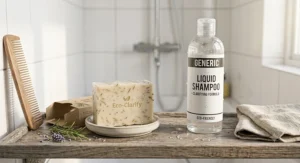
This is the bar built specifically for the problem most “natural” shampoo bars actively make worse: hard water. Kitsch’s Detox Shampoo Bar uses GLDA, a plant-based chelating agent, to bind and lift mineral deposits from calcium and magnesium, alongside activated charcoal for oil absorption and a vitamin C derivative aimed at reducing chlorine residue from pools and treated tap water.
Here’s why the chelating detail matters more than the marketing copy suggests: as covered in the USGS Water Science School’s explainer on water hardness, roughly 85 percent of the United States deals with some degree of hard water, and traditional soap-based bars react with those dissolved minerals to form a residue rather than rinsing clean. A true chelating agent like GLDA is chemically designed to bind those minerals so they wash away instead of sticking to the hair shaft — which is precisely the mechanism a plain soap bar, like the very first product on this list, doesn’t have.
Reviewers consistently describe a “reset” effect after the first use, with dull, weighed-down hair reported as visibly lighter and shinier within one wash — a claim that lines up with what chelating chemistry is actually designed to do. A recurring theme in aggregated feedback is that this bar is intentionally positioned for weekly use rather than daily rotation, since the stronger detox action can feel like too much on already-dry hair if overused.
Pros:
- ✅ Purpose-built chelating formula targets hard water minerals
- ✅ Activated charcoal and vitamin C address oil and chlorine
- ✅ Color-safe, sulfate-free, non-stripping base formula
Cons:
- ❌ Not intended for daily use — weekly detox only
- ❌ Newer launch means a shorter public review history
Priced in the $12-$16 range, this is the single most targeted answer on this list if hard water is your actual, specific problem.
7. SUPERZERO Clarifying Solid Shampoo Bar — premium pick for scalp clarifying soap bar duty
SUPERZERO’s Clarifying Solid Shampoo Bar is the most technically dense formula in this roundup, built on what the brand calls 360 Triflex technology alongside a purifying agent designed to remove impurities and metals, hemisqualane for frizz reduction, a bond-building complex, and triolein to support scalp microbiome health. It’s marketed less as a simple wash and more as a full scalp-reset system in bar form — which is a fair description of what a genuine scalp clarifying soap bar should be doing.
Based on the ingredient breakdown, the inclusion of a dedicated bond-builder is the detail that separates this from most other clarifying bars on the market, most of which focus purely on the cleansing side and leave strand repair to a separate product entirely. What that means in practice: buyers dealing with heavy buildup from styling products, hard water, chlorine, and general environmental pollution get a single bar that’s attempting to both clarify and protect against the micro-damage that aggressive cleansing can otherwise cause.
Reviewers consistently frame this as a “spa-level reset,” with several noting visibly improved shine and reduced frizz after a single wash, aggregated feedback that lines up with the ingredient profile’s dual cleanse-and-condition design. The most common critique is straightforward: it’s the most expensive bar in this lineup, and a handful of reviewers feel the price isn’t justified for hair that isn’t dealing with significant buildup in the first place.
Pros:
- ✅ Multi-function formula combines clarifying with bond repair
- ✅ Targets hard water minerals, chlorine, and heavy metals
- ✅ Carbon-neutral, plastic and microplastic-free production
Cons:
- ❌ Highest price point of any bar in this roundup
- ❌ Arguably overkill for mild, infrequent buildup
At roughly $18-$24, SUPERZERO is the premium call for buyers who want their scalp clarifying soap bar to also double as a bond-repair treatment.
How to Use a Clarifying Hair Bar Without Wrecking Your Ends
Buying the right bar is half the equation — using it correctly is the other half, and it’s the half most first-time buyers skip. Start by soaking the bar briefly under warm water, then either work it directly between wet palms until a lather forms, or run the bar itself over damp roots and scalp two to four passes, focusing on the areas where oil and product actually accumulate rather than dragging it down the full length of dry-prone ends.
For the first thirty days, resist the urge to use a clarifying bar every wash. Most of the formulas above are intentionally stronger than daily shampoo, and using them on that schedule is the single fastest way to trigger the dryness and frizz that gives the whole category a bad reputation. A once-weekly rhythm, or once every ten to fourteen days for coarser or color-treated hair, lets the active ingredients do their job without stripping the scalp’s natural oil balance in the process.
Storage matters more than people expect. A clarifying bar left sitting in a puddle of shower water dissolves fast and unevenly, cutting its lifespan dramatically — a draining soap dish or a hanging bag extends most bars by weeks. After rinsing, many of the bars above, particularly the chelating and castor-oil formulas, pair well with a lightweight conditioner focused on the mid-lengths and ends, since a strong clarifying wash can leave strands needing a little extra slip before detangling.
💡 Quick tip: if your hair feels waxy rather than clean after a soap-based bar like J.R. Liggett’s, that’s a hard-water reaction, not a “transition phase” — switch to a chelating formula like the Kitsch Detox Bar instead of waiting it out.
Real Life Scenarios: Matching the Bar to Your Water, Scalp, and Styling Habits
Picture a college student in a dorm with notoriously hard municipal water, washing her hair every other day and layering dry shampoo between washes because mornings are chaos. Her real problem isn’t oil — it’s a slow accumulation of mineral film from the water itself, compounded by dry shampoo residue that a standard bar won’t fully lift. The Kitsch Detox Bar or SUPERZERO are the more logical fits here, since both are built around active chelating chemistry rather than gentle everyday cleansing.
Now picture a competitive swimmer training five days a week, dealing with chlorine exposure that most shampoos — bar or liquid — aren’t equipped to counter. The vitamin C-derivative chemistry in the Kitsch Detox Bar is specifically aimed at that use case, targeting chlorine residue alongside the mineral buildup swimmers also pick up from pool water treated with hardness-adjusting chemicals.
Finally, consider someone with fine, color-treated hair in a soft-water region whose main complaint is that her roots feel oily by day two no matter what she does. Hard-core chelating bars would be overkill and potentially drying for her situation; the Kitsch Tea Tree & Mint Bar or Ethique’s Castor Oil formula hit the sweet spot of color-safe oil control without the aggressive mineral-stripping action she doesn’t actually need.
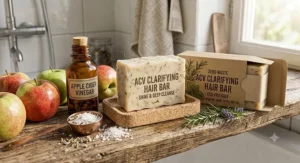
Common Buildup Problems and Which Bar Solves Them
Buildup isn’t one problem — it’s several different ones wearing the same disguise, and matching the cause to the right bar saves both money and disappointment.
Waxy, dull-feeling hair after switching to a bar in the first place usually means a soap-based formula reacting with hard water, which is a hard water hair clarifying bar problem, not a “my hair is adjusting” problem — swap to a chelating formula like Kitsch Detox or SUPERZERO rather than pushing through.
Flat roots by the second day typically points to oil and light product buildup rather than minerals, which is where a milder, everyday-style bar like Kitsch Tea Tree & Mint or HIBAR Maintain does more good than an aggressive detox formula that can overcorrect into dryness.
Heavy, stubborn residue from styling products, dry shampoo, or leave-in treatments calls for genuine chelating or clay-forward chemistry — this is the classic product buildup removing hair bar scenario, and Ethique’s Castor Oil Bar or SUPERZERO are built with exactly that job in mind.
Chronically itchy or flaky scalp alongside buildup deserves a slightly different conversation, since it can overlap with dandruff or seborrheic dermatitis rather than pure product residue; the AAD’s guidance on treating dandruff is worth a read before assuming a stronger clarifying bar alone will fix it.
✨ Not sure which problem is yours? Scroll back to the comparison table and match it to your specific symptom!
What Is a Clarifying Hair Bar?
A clarifying hair bar is a solid, concentrated cleansing bar formulated with stronger surfactants, soap bases, or chelating agents specifically designed to strip mineral deposits, excess oil, silicone, and styling-product residue from hair and scalp. Unlike a daily shampoo bar, it’s typically used weekly, positioned as a reset rather than a maintenance product.
The category exists because standard shampoo — bar or bottle — is formulated for gentle, frequent use, and simply isn’t strong enough to fully remove the layered residue that builds up over weeks of styling products, hard water exposure, and natural oil production. A true clarifying bar trades a little of that gentleness for cleansing power, which is exactly why usage frequency matters so much more here than it does with a regular shampoo bar.
How to Choose a Clarifying Hair Bar
- Identify your actual buildup source first. Hard water, product residue, and natural oil each call for a different formula — using the wrong tool is the number one reason people give up on this category early.
- Check whether it’s a true soap or a modern surfactant/chelator bar. Soap-based bars like J.R. Liggett’s work beautifully in soft water and poorly in hard water; chelating bars like Kitsch’s Detox formula do the opposite job.
- Match the strength to your wash frequency. A deep cleansing hair bar meant for weekly detox will over-dry hair if used daily, while a maintenance-tier bar like HIBAR won’t fully solve heavy buildup.
- Confirm color-safety if you have treated hair. Look for explicit color-safe, pH-balanced claims rather than assuming — several bars above state this directly, others don’t.
- Weigh cost-per-wash, not just sticker price. A $20 bar rated for 75 washes can beat a $10 bar that dissolves in three weeks; brands like /liv/ Nature publish this math directly.
- Read aggregated review themes, not star averages alone. Recurring complaints about waxy residue almost always trace back to a hard-water mismatch, which a star rating alone won’t reveal.
- Start with the gentlest formula that addresses your actual problem. You can always step up to something stronger like SUPERZERO later — stepping back down from over-stripped hair takes longer.
Clarifying Hair Bar vs Traditional Clarifying Shampoo
The core chemistry isn’t wildly different — both formats rely on stronger surfactants or chelating agents to strip buildup — but the format changes the experience in a few concrete ways. A bar is more travel-friendly, generates far less plastic waste, and tends to be more concentrated per ounce, while a liquid clarifying shampoo is often easier to distribute evenly through longer hair and doesn’t carry the same risk of a hard-water reaction that true soap-based bars do.
Cost-per-use tends to favor bars over time, since a single bar frequently outlasts two to three bottles of liquid shampoo, a math point several brands above make explicitly. On the environmental side, plastic packaging remains a significant driver of U.S. municipal waste — the EPA’s data on plastic containers and packaging shows containers and packaging made up over 14.5 million tons of plastic waste in a single recent year, and every bottle a bar replaces is a small dent in that number.
Where liquid clarifying shampoo still wins is convenience and predictability — no lather-building learning curve, no risk of choosing a soap-based formula in a hard-water home by accident, and typically a longer, more established review history for any given product. Buyers who travel frequently or who are already minimizing plastic will likely prefer the bar format; buyers who want zero learning curve may stick with liquid a little longer.
🔍 Ready to make the switch? Check current availability on any bar above before prices shift!
Common Mistakes When Buying a Clarifying Hair Bar
The single most common mistake is buying a soap-based bar while living in a known hard-water area, then blaming the “shampoo bar transition” for weeks of waxy hair that’s actually a mineral-soap reaction that won’t resolve on its own. If you don’t know your water hardness, check your local water utility’s consumer confidence report before choosing between a soap bar and a chelating formula.
A close second is over-buying strength — reaching for the most aggressive detox bar on the shelf when the actual issue is mild daily oil, not heavy buildup. This tends to produce dry, frizzy, over-stripped hair within a couple of uses, at which point buyers often abandon the entire category rather than simply choosing a gentler formula next time.
The third recurring mistake is judging a bar’s value purely by sticker price rather than cost-per-wash. A cheaper bar that dissolves in three weeks because it wasn’t stored on a draining dish can end up costing more over a year than a pricier, more concentrated bar rated for 50-plus washes.
Hard Water and Clarifying Bars: What the Science Actually Says
Hard water is, in scientific terms, water with a higher dissolved concentration of calcium and magnesium, and according to the USGS Water Science School, it’s genuinely widespread across the country rather than a regional edge case. That mineral content reacts with soap to form what’s technically called soap scum — a residue that clings to hair, skin, and shower surfaces alike rather than rinsing cleanly away.
This is the exact mechanism behind that “waxy hair” complaint that shows up so often in shampoo bar reviews, and it explains why a true soap-based bar and a chelating bar can produce completely different results from the same tap water. Chelating agents like GLDA, used in formulas like the Kitsch Detox Bar, work by binding to those mineral ions so they’re carried away in the rinse water instead of bonding to the hair shaft — a fundamentally different chemical process than saponified soap relies on.
There’s no legal EPA standard for water hardness because the minerals involved aren’t considered a health hazard, just a nuisance — which means the responsibility for identifying and addressing hard-water buildup falls entirely on the consumer, and on choosing the right formula for the water actually coming out of the tap.
Long-Term Cost & Maintenance
Run the real numbers and bars tend to win the long game, even when the upfront price looks steep. A $20 bar rated for 50-75 washes works out to roughly 27-40 cents per wash, comfortably undercutting many liquid clarifying shampoos that run $12-$18 for a bottle lasting 15-20 washes, or roughly 60 cents to a dollar per use. Even the budget-tier J.R. Liggett’s bar, priced under $10 and rated to replace up to 24 ounces of liquid shampoo, holds up well against that math.
Maintenance costs stay low across the board as long as storage habits are reasonable — a draining soap dish is a one-time few-dollar purchase that meaningfully extends every bar on this list. The bigger long-term cost consideration is actually usage frequency: because clarifying bars are formulated for weekly rather than daily use, buyers typically need a companion everyday shampoo or co-wash for the rest of the week, which is worth budgeting into the full routine rather than expecting one bar to cover every wash day.
Features That Actually Matter (And Those That Don’t)
The feature that actually matters most is the active cleansing chemistry — whether a bar relies on saponified soap or a chelating/surfactant system — because it directly determines hard-water compatibility, and that single distinction predicts more real-world satisfaction than almost any other spec on the label. Color-safe, pH-balanced formulation matters nearly as much for anyone with treated hair, since a mismatch here can fade color faster than a harsh box-dye stripper would.
Scent, while heavily marketed, matters far less than the ingredient list suggests — tea tree, mint, lavender, and citrus notes are pleasant but interchangeable, and picking a bar for its fragrance alone while ignoring its chelating capability is how buyers end up back at square one. Packaging claims like “carbon neutral” or “plastic-free” are genuinely meaningful for sustainability-minded buyers but have zero bearing on how well a bar will actually clarify your specific hair, so weigh them as a bonus, not a deciding factor.
Frequently Asked Questions
❓ How often should I use a clarifying hair bar?
❓ Can a clarifying hair bar fix hard water buildup?
❓ Is a clarifying bar safe for color-treated hair?
❓ Do clarifying hair bars work as well as liquid clarifying shampoo?
❓ Why does my hair feel waxy after switching to a shampoo bar?
Conclusion
A genuinely good clarifying hair bar isn’t about finding the strongest formula on the shelf — it’s about matching the right chemistry to your actual water, scalp, and styling habits, then using it on a schedule that lets it do its job without overcorrecting into dryness. Budget-conscious buyers with soft water do well starting with J.R. Liggett’s, hard-water households should go straight to the Kitsch Detox Bar, and anyone chasing a genuine scalp reset with bond-repair benefits will get the most out of SUPERZERO.
The through-line across every product in this guide is honesty about what a bar can and can’t do: none of these are magic, none replace a dermatologist’s advice for a persistent scalp condition, and all of them work best as a weekly reset rather than an everyday swap. Start with the problem you actually have, not the bar with the prettiest packaging, and the rest of the routine tends to fall into place.
✨ Don’t Miss These Exclusive Deals!
🔍 Take your hair care routine to the next level with these carefully selected clarifying bars. Click on any highlighted pick above to check current pricing and availability, and give your scalp the reset it’s been asking for.
Recommended for You
- Best Shampoo Bar 2026: 7 Top Picks That Actually Work
- Best Bar Soap for Kitchen Sink: 7 Odor-Busting Picks (2026)
- 7 Best Antibacterial Hand Soap Bar Picks for 2026
Disclaimer: This article contains affiliate links. As an Amazon Associate, I earn from qualifying purchases. If you purchase products through these links, we may earn a small commission at no additional cost to you.
✨ Found this helpful? Share it with your friends! 💬🤗
