
In This Article
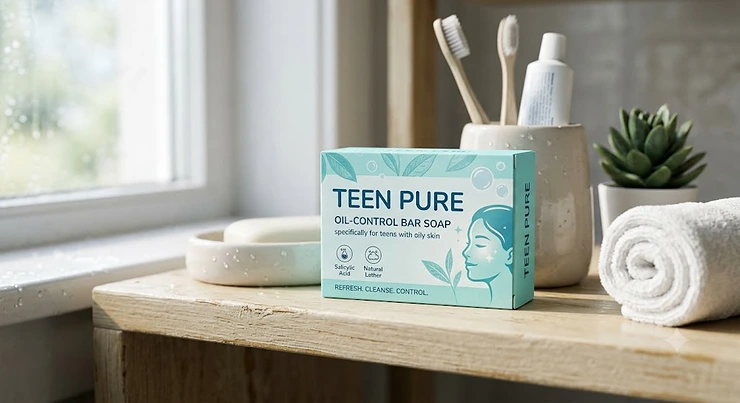
Somewhere between the last day of seventh grade and the first week of ninth, a lot of kids wake up with a face that suddenly acts like a different organ entirely. One month skin is just skin. The next, it’s shiny by ten a.m., stubborn around the nose and forehead, and seemingly allergic to whatever soap has lived in the shower for years. If that sounds familiar, you’re not imagining it, and you’re definitely not alone — this is close to a universal teenage experience, and the right oil-control bar soap for teens with oily skin can make a real, measurable difference without needing a dermatologist’s office visit first.
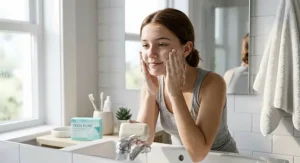
An oil-control bar soap for teens with oily skin is a solid cleansing bar formulated with ingredients — benzoyl peroxide, salicylic acid, sulfur, or oil-absorbing clay and charcoal — that specifically target excess sebum and acne-causing bacteria rather than just rinsing away surface grime. Unlike a basic bath bar, it’s built to interrupt the oil-and-breakout cycle at the source.
This guide skips the fluff and gets straight to what actually works. We researched seven real, currently available bar soaps — spanning drugstore staples, dermatology-aisle regulars, and a couple of naturally formulated options — and broke down what’s actually in them, who each one suits, and what real buyers report after using them. We’ll also dig into the teen skincare soap category more broadly, cover a genuinely useful back-to-school skincare routine, and explain the biology of puberty and sebum so the “why” behind all this oiliness finally makes sense. If you’re building out teen skincare routines from scratch, or just trying to figure out which drugstore teen products are worth the shelf space, you’re in the right place.
Quick Comparison Table
Before the deep dive, here’s the fast version for anyone standing in a drugstore aisle right now trying to make a decision in under two minutes.
| Product | Active Ingredient | Price Range | Best For |
|---|---|---|---|
| PanOxyl Acne Treatment Bar | 10% Benzoyl Peroxide | $8–$11 range | Stubborn face, chest & back acne |
| 111MedCo Benzoyl Peroxide Bar | 10% Benzoyl Peroxide | Under $10 | Budget-conscious BP users |
| Neutrogena Facial Cleansing Bar | Glycerin (non-medicated) | Under $8 | Beginners & sensitive starters |
| Grisi Bio Sulfur Soap | 10% Sulfur | Under $8 | Blackheads, budget shoppers |
| Asepxia Salicylic Acid & Charcoal Bar | 2% Salicylic Acid + Charcoal | Under $8 | Daily deep-pore maintenance |
| Yes To Tomatoes Charcoal Bar | Salicylic Acid + Jojoba Oil | $8–$12 range | Combination, exfoliation fans |
| SheaMoisture African Black Soap | Tea Tree Oil + Shea Butter | $9–$13 range | Sensitive, natural-leaning skin |
Looking at the lineup, the split comes down to strength versus gentleness: the PanOxyl Acne Treatment Bar and 111MedCo Benzoyl Peroxide Bar sit at the top of the potency scale for genuinely stubborn breakouts, while the Neutrogena Facial Cleansing Bar and SheaMoisture African Black Soap are built for teens whose skin reacts badly to medicated formulas. Budget shoppers land in good shape either way — Grisi Bio Sulfur Soap and the Asepxia bar both undercut $8 while still delivering active, dermatologically recognized ingredients rather than just fragrance and filler.
💬 Just one click — help others make better buying decisions too!😊
Top 7 Oil-Control Bar Soaps for Teens with Oily Skin: Expert Analysis
Every product below was chosen because it’s real, currently sold in the U.S., and formulated around at least one ingredient with genuine evidence behind it for managing sebum, acne bacteria, or clogged pores. Prices are shown as ranges only, since exact pricing shifts with retailer and pack size — always check the current price before buying.
1. PanOxyl Acne Treatment Bar — maximum OTC benzoyl peroxide strength
The standout here is blunt: this is the single strongest acne-fighting ingredient concentration you can buy without a prescription, and it shows. The bar carries 10% benzoyl peroxide in a soap-free, pH-balanced base, which matters because benzoyl peroxide’s job is to flood the pore with oxygen and kill the bacteria that turn clogged follicles into inflamed pimples. Glycerin and decyl glucoside are folded into the formula specifically to offset the drying reputation benzoyl peroxide has earned over the decades.
Based on the spec comparison, this bar earns its billing as the go-to for teens dealing with more than the occasional forehead pimple — it’s formulated for face, chest, and back use, which covers the body acne that liquid face washes rarely address well. What most buyers overlook about this model is that it’s genuinely dermatologist-recommended territory: benzoyl peroxide sits on the American Academy of Dermatology’s list of strongly recommended topical acne treatments, which is a meaningfully higher bar than most drugstore claims.
Reviewers consistently report visible improvement within days rather than weeks, including parents who bought it specifically for a teenage son’s back acne and saw redness fade fast. A common complaint in user reviews is the bleaching effect benzoyl peroxide has on colored towels and pillowcases — worth a heads-up before it ruins a favorite hoodie.
Pros:
- ✅ Maximum 10% benzoyl peroxide strength available without a prescription
- ✅ Formulated for face, chest, and back in one bar
- ✅ Glycerin and decyl glucoside reduce over-drying versus older BP formulas
Cons:
- ❌ Can bleach towels, pillowcases, and colored fabric on contact
- ❌ Sensitive skin may need an every-other-day start to avoid irritation
Expect to pay in the $8–$11 range for a standard bar. For a teen with genuinely stubborn, inflamed acne rather than mild shine, the PanOxyl Acne Treatment Bar is worth the investment.
2. 111MedCo Benzoyl Peroxide Bar — same 10% strength at a lower price
The standout feature is right there in the name: this bar matches the maximum-strength 10% benzoyl peroxide of its pricier competitor, but at a noticeably lower price point. The formula leans on decyl glucoside and glycerin for the same non-drying logic, and independent lab notes put its pH in the 6 to 6.5 range — close enough to skin’s natural acidity that it shouldn’t provoke the tightness some medicated soaps cause.
Here’s what to weigh: a smaller company means this bar won’t sit on every drugstore shelf, so buyers typically source it online rather than swinging by a corner pharmacy. On paper this means near-identical acne-fighting power to a bigger-name product, which is exactly the kind of value story budget-focused parents want to hear. What the spec sheet won’t tell you, but user reports suggest, is that the medicinal soap-like scent is more noticeable than fragranced competitors, since the formula skips added fragrance entirely.
The brand also markets its plastic-free packaging, which matters to environmentally minded families trying to cut down on bathroom plastic waste — a small but real point of differentiation in a category that’s otherwise dominated by shrink-wrapped bars.
Pros:
- ✅ Matches 10% benzoyl peroxide strength at a lower price point
- ✅ pH-balanced formula close to skin’s natural acidity
- ✅ Plastic-free packaging appeals to eco-conscious households
Cons:
- ❌ Less consistent retail availability than major drugstore brands
- ❌ No fragrance to mask the medicinal soap scent
Typical pricing lands under $10 per bar. If the only thing standing between a family and the PanOxyl Acne Treatment Bar is cost, the 111MedCo Benzoyl Peroxide Bar is the practical substitute.
3. Neutrogena Facial Cleansing Bar — gentlest entry point for first-time users
This bar’s standout trait is restraint: it’s a transparent glycerin-based soap with no acne medication at all, which sounds counterintuitive in a guide about oil control until you consider who it’s actually for. Based on the spec comparison, this is the bar for a young teen just starting to notice oiliness and the occasional pimple — someone who doesn’t need a 10% benzoyl peroxide bar yet and might react badly to one.
The formula skips dyes and added detergents, which keeps irritation risk low while still delivering a genuine deep clean thanks to its high glycerin content, a humectant that draws moisture into skin even while cleansing away oil. What most buyers overlook about this model is that “non-medicated” doesn’t mean “ineffective” — plenty of mild-to-moderate oiliness responds well to consistent gentle cleansing paired with a proper moisturizer, without ever needing an active drug ingredient.
Reviewers consistently note that this bar feels less harsh than medicated alternatives and works well as a twice-daily face wash without the tightness some benzoyl peroxide bars cause. A common complaint is that the bar can dissolve into a soft, mushy puddle faster than firmer syndet bars if left sitting in standing water.
Pros:
- ✅ Transparent glycerin formula hydrates while it cleanses
- ✅ Free of dyes and added detergents for lower irritation risk
- ✅ Trusted, decades-old drugstore name familiar to parents and teens alike
Cons:
- ❌ No active acne ingredient for genuinely stubborn breakouts
- ❌ Dissolves faster than firmer bars if left in a wet soap dish
Pricing typically stays under $8, making it one of the most accessible entries in this guide.
4. Grisi Bio Sulfur Soap — old-school sulfur power at a budget price
The standout advantage is sulfur itself — a 10% concentration of one of dermatology’s oldest acne treatments, predating benzoyl peroxide by decades. Sulfur works by gently breaking down the outer layer of dead skin cells clogging pores while also carrying antibacterial and antifungal properties, and it’s formulated here with lanolin specifically to offset the drying effect sulfur is known for.
Based on the spec comparison, this bar earns its keep with blackhead-prone, genuinely oily T-zones — sulfur has a particular reputation for absorbing excess surface oil and leaving a mattified finish that lasts hours longer than a plain soap. What most buyers overlook about this model is how effective an ingredient sulfur remains despite being unfashionable; it’s still recommended in combination protocols by dermatologists for exactly the reasons this bar leans on.
Reviewers consistently report clearer skin within one to two weeks of twice-daily use, including several who mention it working after prescription products failed. Aggregated review sentiment repeatedly circles back to one issue: the distinct sulfur odor, often compared to rotten eggs, which fades from skin after rinsing but can catch newcomers off guard the first time they open the wrapper.
Pros:
- ✅ 10% sulfur tackles blackheads and excess surface oil directly
- ✅ Lanolin cushions sulfur’s naturally drying tendency
- ✅ Sold in economical multi-packs for long-term budget use
Cons:
- ❌ Distinct sulfur smell is off-putting for scent-sensitive teens
- ❌ Contains added fragrance and SLS, which may irritate reactive skin
Expect pricing under $8 per bar, often less when bought in multi-packs — one of the best value plays in this entire guide.
5. Asepxia Salicylic Acid & Activated Charcoal Bar Soap — daily deep-pore maintenance
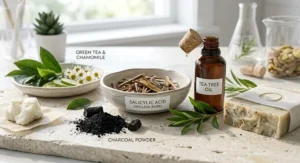
The standout feature pairs two complementary actives: salicylic acid, a beta-hydroxy acid that dissolves the oily buildup inside pores, and activated charcoal, which physically binds to surface oil and grime and rinses it away. Together, they attack the same problem — clogged, oily pores — from two different directions rather than relying on a single mechanism.
Based on the spec comparison, this bar is built specifically with a teen and young-adult audience in mind, which shows in both its marketing and its formulation balance — potent enough to matter, gentle enough for daily use. What most buyers overlook about this model is that salicylic acid’s oil-solubility lets it actually penetrate into the pore lining rather than just sitting on the skin’s surface, which is why dermatologists frequently pair it with benzoyl peroxide rather than treating them as competitors.
Reviewers consistently mention a noticeably matte finish that holds up through a full school day, along with a reduction in blackhead visibility after a few weeks of regular use. A common complaint in user reviews is that the exfoliating texture can feel a touch aggressive for teens with genuinely sensitive, reactive skin rather than straightforwardly oily skin.
Pros:
- ✅ Salicylic acid dissolves oil buildup from inside the pore
- ✅ Activated charcoal lifts surface grime for a visibly matte finish
- ✅ Marketed and formulated specifically for teen and young-adult skin
Cons:
- ❌ Exfoliating texture may feel harsh for sensitive-skin beginners
- ❌ Noticeable scent, not a fragrance-free option
Pricing generally stays under $8, keeping it firmly in budget territory alongside the sulfur bar above.
6. Yes To Tomatoes Charcoal Bar Soap — balanced exfoliation with a lighter touch
This bar’s standout is its balancing act: salicylic acid and activated charcoal for oil control, paired with jojoba oil and tomato extract to keep the formula from tipping into over-drying territory. Willow bark extract, a natural source of salicin closely related to salicylic acid, reinforces the exfoliating effect without stacking on a second harsh ingredient.
Based on the spec comparison, this is the bar for combination-skin teens — oily through the T-zone but drier at the cheeks and jaw — since the jojoba oil closely mimics skin’s own sebum and helps prevent the tight, stripped feeling that pure charcoal-and-salicylic-acid bars can cause on drier patches. Here’s what to weigh: it’s formulated and marketed directly at teens as part of its “for men, women, and teens” positioning, which lines up with real ingredient choices rather than just branding.
Reviewers consistently describe the lather as gentler than expected given the charcoal content, and several mention it working well as both a face and body bar without the tightness some competitors cause. A common complaint is straightforward cost — at 6 to 7 ounces, it runs a bit pricier per bar than the smaller 4-ounce medicated options above.
Pros:
- ✅ Jojoba oil and tomato extract offset salicylic acid’s drying effect
- ✅ Willow bark extract adds a second, gentler exfoliating mechanism
- ✅ Vegan, cruelty-free formula popular with teen and young-adult shoppers
Cons:
- ❌ Less potent than benzoyl-peroxide bars for active, inflamed breakouts
- ❌ Larger bar size means a higher per-purchase price
Expect to pay in the $8–$12 range depending on retailer and pack size.
7. SheaMoisture African Black Soap — natural formula for reactive, sensitive skin
The standout here is the ingredient philosophy: traditional African black soap base combined with tea tree oil, tamarind extract, and organic shea butter, aimed at balancing oil production rather than aggressively stripping it. Tea tree oil brings natural antibacterial properties to the table, while tamarind extract offers gentle exfoliation, and shea butter cushions the skin barrier throughout the process.
Based on the spec comparison, this bar suits teens whose skin reacts to synthetic actives like benzoyl peroxide or high-percentage salicylic acid with redness or excessive dryness — a real and common scenario, since teenage skin barriers are still maturing and can be more reactive than adult skin. What most buyers overlook about this model is that “natural” doesn’t automatically mean “weak” here: tea tree oil has genuine antimicrobial research behind it, even if it acts more gradually than pharmaceutical-strength benzoyl peroxide.
Reviewers consistently describe a calming effect on irritated, blemish-prone skin, with several mentioning it as the first bar that didn’t leave their face feeling raw. Aggregated review sentiment does include some who saw only modest change to active acne without weeks of consistent use, since this bar plays a longer game than the medicated options above.
Pros:
- ✅ Tea tree oil and tamarind extract mattify without over-stripping skin
- ✅ Shea butter cushions the skin barrier during acne treatment
- ✅ Paraben-free, cruelty-free formula favored by natural-skincare households
Cons:
- ❌ Natural ingredient bars can vary slightly in color and texture batch to batch
- ❌ Results on active breakouts take longer than medicated alternatives
Pricing runs in the $9–$13 range, positioning it as the more premium, natural-leaning pick in this lineup.
Your First 30 Days With an Oil-Control Bar Soap
Switching a teen onto a new bar isn’t a “use it once and judge” situation — skin needs time to adjust, and going in with a plan beats winging it. Building this into actual teen skincare routines from day one prevents the two most common early mistakes: overuse and giving up too soon.
Week one is about establishing a baseline: wash twice daily, morning and night, for 60 seconds of gentle massage rather than scrubbing, then rinse with lukewarm (not hot) water. Heat strips more natural oil than warm water does, which can actually trigger the skin to overproduce sebum in response — the opposite of the goal. For medicated bars like the benzoyl peroxide or sulfur options above, dermatologists commonly suggest starting with once-daily use for the first few days, then working up to twice daily once the skin shows it can tolerate it.
By weeks two and three, watch for two signals: improvement (less shine by midday, fewer new blemishes forming) and irritation (persistent redness, flaking, or a burning sensation that doesn’t fade). The first is a green light to continue; the second means dialing back frequency rather than switching products immediately, since some initial adjustment is normal with active ingredients. A common first-30-days mistake is stacking multiple active treatments at once — a benzoyl peroxide bar plus a salicylic acid toner plus a retinol cream, for instance — which multiplies irritation risk without multiplying results. One active ingredient at a time is the safer default until skin proves it can handle more.
By day 30, most teens have a good read on whether a given bar is the right long-term fit. If oiliness and breakouts are visibly improved with minimal irritation, that’s a bar worth sticking with for the long haul rather than chasing the next trending product.
✨ Don’t Miss These Exclusive Deals!
🔍 Take your teen skincare soap shopping to the next level with these carefully selected products. Click on any highlighted item to check current pricing and availability. These bars will help you build a routine your family will actually stick with!
Real-World Scenarios: Matching the Right Bar to Your Teen
Different teens, different skin, different constraints — here’s how three common situations map onto the products above.
Consider a 13-year-old just starting to notice shine and the occasional pimple, with a parent nervous about “starting too strong” on young skin. This scenario calls for the Neutrogena Facial Cleansing Bar as a first step — no active drug ingredient, low irritation risk, and a gentle enough introduction to a twice-daily cleansing habit before anything stronger enters the picture.
Now picture a 16-year-old varsity athlete dealing with genuine back and chest acne from sweat, shoulder pads, and a helmet chinstrap trapping oil against skin for hours. This is a strong case for the PanOxyl Acne Treatment Bar, since its face-chest-back formulation and maximum benzoyl peroxide strength directly address body acne that a facial-only routine won’t touch, and the price is easily justified by how much of the body it treats at once.
Finally, think about a college-bound high school senior with combination skin — oily T-zone, drier cheeks — who’s tried harsher products before and reacted with redness and flaking. The Yes To Tomatoes Charcoal Bar or SheaMoisture African Black Soap both fit here, since their added oils and butters prevent the over-drying that pushed this teen away from stronger actives in the first place, while still delivering real oil control through salicylic acid or tea tree oil respectively.
Building a Back-to-School Skincare Routine Around Oil Control
Late summer is genuinely the worst time for teen skin, and it’s not a coincidence — new academic stress, disrupted sleep schedules, and a return to daily sunscreen and possibly makeup or sports gear all collide right around the same few weeks. A solid back-to-school skincare routine built around an oil-control bar soap for teens with oily skin can head off a lot of that seasonal breakout spike before it starts.
Mornings should stay simple: cleanse, a lightweight oil-free moisturizer (yes, even oily skin needs this — skipping it can trigger rebound oil production), then a non-comedogenic sunscreen since school days mean hours of midday sun exposure walking between classes or at practice. Evenings matter more for oil control specifically, since that’s when the bar soap gets to work on the day’s accumulated sebum, sweat, and — for athletes — helmet or equipment residue.
One under-discussed factor tied to school schedules is pillowcase and towel hygiene. A face that’s freshly cleansed at night still meets a pillowcase carrying a week’s worth of oil and product residue, quietly undoing some of the bar soap’s work. Swapping to a clean pillowcase weekly during the school year is a low-effort habit that measurably supports whatever oil-control bar soap for teens with oily skin is already in rotation. According to one campus health resource, teenage acne can actually worsen when school resumes after a summer of more sun exposure and lower stress, which is exactly why building the routine now — rather than reacting to breakouts in October — pays off.
How to Choose an Oil-Control Bar Soap for Teens with Oily Skin
Picking the right oil-control bar soap for teens with oily skin comes down to matching ingredient strength to actual skin sensitivity, not just grabbing whatever has the most dramatic packaging claims. Here’s the reasoning dermatology-minded shoppers actually use:
- Start with skin sensitivity, not skin oiliness. Oily and sensitive aren’t opposites — plenty of teens have both — so a 10% benzoyl peroxide bar isn’t automatically the right move just because skin looks shiny.
- Match the active ingredient to the main complaint. Benzoyl peroxide targets active, inflamed breakouts; salicylic acid targets blackheads and clogged pores; sulfur splits the difference at a lower price; natural oils and butters suit reactive skin that needs oil control without aggression.
- Check for face-and-body versatility if body acne is part of the picture. Not every bar is formulated for chest and back use — check the label rather than assuming.
- Factor in scent tolerance. Sulfur and unscented medicated bars have a noticeably different smell profile than fragranced options, and a teen who hates the smell won’t stick with the routine no matter how effective the formula is.
- Consider the introduction timeline. A teen brand-new to active ingredients should generally start milder (glycerin or salicylic-acid bars) before moving to maximum-strength benzoyl peroxide.
- Weigh price per use, not just sticker price. A $12 bar that lasts two months often beats a $6 bar that dissolves in three weeks.
- Watch for the first two weeks of feedback. Redness, peeling, or excessive dryness signal it’s time to scale back frequency rather than switch products entirely — most irritation from a new active ingredient settles within that window.
Puberty and Sebum: Why Teen Skin Gets So Oily
None of this happens by accident, and understanding the biology makes the whole category — and the frustration — make more sense. Puberty and sebum are directly linked: rising hormone levels, particularly androgens, signal the skin’s sebaceous glands to ramp up oil production dramatically compared to childhood levels. That extra oil, combined with dead skin cells shed inside hair follicles, is the raw material that clogs pores and sets the stage for acne.
This is precisely why puberty and sebum production track so closely together on a timeline — most teens notice the shift within a year or two of other puberty milestones, and it typically continues through the late teens or early twenties before hormone levels stabilize. According to HealthyChildren.org, published by the American Academy of Pediatrics, increased hormone levels during the teen years directly increase sebum production, which in turn clogs pores and creates the conditions for breakouts.
What this means practically: an oil-control bar soap for teens with oily skin isn’t fighting a bad habit or poor hygiene — it’s working against a hormonally driven biological process. That reframing matters, especially for teens who feel embarrassed or blame themselves for something that’s really just a normal, temporary stage of development. It also explains why consistency matters more than intensity; since the oil production is ongoing and hormone-driven, a gentle bar used every single day generally outperforms a harsh bar used inconsistently.
Oil-Control Bar Soap vs Liquid Cleanser for Teen Skincare Routines
The bar-versus-bottle debate comes up constantly in teen skincare routines, and the honest answer is that format matters less than formula — but there are real, practical differences worth knowing before committing to one over the other.
| Factor | Bar Soap | Liquid Cleanser |
|---|---|---|
| Travel-friendliness | Solid, no spill risk, TSA-friendly | Prone to leaks in a gym bag |
| Cost per use | Generally lower per wash | Generally higher per wash |
| Formula precision | Fixed concentration, no dilution control | Easier to layer with other steps |
| Best For | PanOxyl, 111MedCo, budget-conscious routines | Multi-step routines, precise dosing |
The practical takeaway is that a well-formulated bar soap can absolutely match a liquid cleanser’s effectiveness — what matters is the active ingredient and concentration, not the delivery format. Where liquids pull ahead is precision dosing for multi-step routines involving serums or spot treatments layered afterward, while bars pull ahead on cost-per-use and sheer convenience for a teen who just wants a fast, simple, no-mess routine before running out the door.
Common Mistakes When Buying Teen Skincare Soap
Even well-intentioned parents and teens make predictable errors shopping for teen skincare soap, and most of them are easy to avoid once you know what to look for.
The biggest mistake is reaching straight for maximum strength out of frustration with slow results, jumping to a 10% benzoyl peroxide bar without ever testing a gentler option first. This often backfires as irritation, which then gets misread as “this brand doesn’t work for my skin” rather than “this was too much, too fast.” A second common error is ignoring fragrance and dye content entirely — a stressed, breakout-prone teen doesn’t need an added irritant layered on top of an already reactive skin barrier. Third, shoppers frequently overlook the difference between a facial bar and a body bar; using a harsh, body-formulated bar on delicate facial skin, or vice versa, wastes money and risks irritation in both directions. Finally, plenty of buyers skip reading the actual active ingredient percentage on the label, comparing products purely on marketing language like “deep clean” or “acne-fighting,” which says nothing concrete about formulation strength.
Drugstore Teen Products: What’s Actually Worth Buying
Not every drugstore teen products display lives up to its shelf placement, so it helps to know which claims translate into real formulation choices versus which are just packaging noise.
Products worth trusting generally list their active ingredient and percentage clearly on the front or back label — benzoyl peroxide, salicylic acid, or sulfur, each with a specific concentration rather than a vague “acne-fighting formula” claim. Products marketed specifically toward teens, like several in this guide, often do reflect genuine formulation choices (gentler surfactants, added moisturizing oils) rather than just repackaged adult formulas with different branding. What’s generally not worth the premium: heavily fragranced “detox” or “clarifying” bars that lean on trendy ingredient names without a clinically backed active ingredient behind them, since fragrance itself does nothing for oil control and can actively irritate reactive skin.
A useful drugstore heuristic is to check the ingredient list order — active ingredients are listed with their percentage upfront under an “Active Ingredients” heading on medicated bars, which is a reliable way to separate a genuinely medicated product from one that’s simply marketed with acne-adjacent language.
Safety, Regulations & FDA Facts Parents Should Know
Over-the-counter acne treatments like benzoyl peroxide and salicylic acid bars are regulated by the FDA as OTC drug products, meaning their active ingredient concentrations, labeling, and warning requirements follow federal monograph rules rather than being purely marketing decisions. That’s part of why every medicated bar in this guide lists an “Active Ingredient” section with a specific percentage — it’s a regulatory requirement, not a formatting choice.
For teens specifically, dermatologists generally consider benzoyl peroxide and salicylic acid both appropriate for adolescent skin when used as directed, though the American Academy of Dermatology recommends washing no more than twice daily and avoiding harsh scrubbing, since over-washing can worsen irritation and even trigger additional oil production as skin tries to compensate. Sulfur soaps carry a general caution against use on broken or heavily irritated skin, and any medicated bar should be discontinued if severe redness, swelling, or persistent burning develops, with a doctor consulted if symptoms don’t resolve. For teens on other prescription acne medications, particularly oral retinoids, checking with a dermatologist before adding a second active-ingredient product is a sensible precaution, since combining multiple strong actives can compound dryness and irritation rather than compounding results.
Frequently Asked Questions
❓ Is bar soap actually good for oily teen skin, or does it dry it out?
❓ How often should a teen use an oil-control bar soap for teens with oily skin?
❓ Can benzoyl peroxide bars be used on the body, not just the face?
❓ Why does teen skin get oilier even with a good skincare routine?
❓ What ingredient should a first-time user look for in teen skincare soap?
Conclusion
Finding the right oil-control bar soap for teens with oily skin isn’t about grabbing the strongest thing on the shelf — it’s about matching real ingredients to real skin sensitivity, then giving the routine enough consistent time to actually work. Whether that lands on the maximum-strength PanOxyl Acne Treatment Bar, the budget-friendly 111MedCo Benzoyl Peroxide Bar, the gentle entry-level Neutrogena Facial Cleansing Bar, the old-school Grisi Bio Sulfur Soap, the dual-action Asepxia Salicylic Acid & Activated Charcoal Bar Soap, the balanced Yes To Tomatoes Charcoal Bar, or the naturally formulated SheaMoisture African Black Soap, every option above has a real ingredient story behind its price tag rather than just marketing language.
The bigger picture matters too: teen skin is navigating a genuine hormonal shift, not a hygiene failure, and building sustainable teen skincare routines now — twice-daily cleansing, a non-comedogenic moisturizer, sunscreen, and patience through the adjustment period — pays off well beyond whichever single bar ends up in the shower caddy this school year.
Recommended for You
- Charcoal Soap for Oily and Acne-Prone Skin: 7 Picks That Work in 2026
- Bentonite Clay Bar Soap Reviews for Oily Skin: 7 Picks (2026)
- Mattifying Bar Soap for Oily Face: 7 Picks That Actually Work (2026)
Disclaimer: This article contains affiliate links. As an Amazon Associate, I earn from qualifying purchases. If you purchase products through these links, we may earn a small commission at no additional cost to you.
✨ Found this helpful? Share it with your friends! 💬🤗
