
In This Article
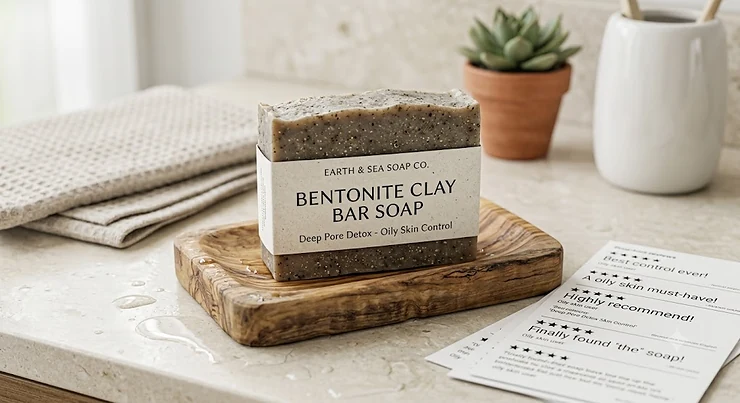
Oily skin has a way of making you feel like you’re fighting a losing battle by 2 p.m. every single day. You wash, you pat dry, you look fresh for maybe forty minutes, and then the T-zone starts doing its shine thing again like it never even happened. That’s usually the moment someone finally types bentonite clay bar soap reviews for oily skin into a search bar at 11 p.m., hoping some volcanic mud is going to save them from a lifetime of blotting papers. It’s not a crazy hope. Bentonite clay carries a genuine negative electrical charge that lets it bind to the positive charge sitting on excess sebum and surface grime, which is a fairly elegant bit of chemistry for something that started life as ash.
This guide digs into seven real, currently sold bentonite clay bars, weighs their actual spec sheets against verified reviewer sentiment, and tells you honestly where each one shines and where it falls short. You’ll also get the research-backed skinny on bentonite clay skincare benefits, why clay soap for pores works differently than a scrub, how kaolin clay stacks up as an alternative, and what “natural detox soap” claims actually hold up under scrutiny. No invented testimonials, no miracle-in-a-bar nonsense — just specs, sourced sentiment, and straight analysis you can act on today.
What Is Bentonite Clay Bar Soap? (Quick Answer)
Bentonite clay bar soap is a cold-processed or handmade bar that suspends powdered bentonite — an absorbent clay formed from ancient volcanic ash — inside a base of saponified oils like coconut, olive, or shea. As an overview of the mineral itself explains, bentonite is mostly composed of montmorillonite, a swelling clay that can absorb many times its own weight in water. In soap form, that same absorbency gets aimed at surface oil and everyday grime rather than groundwater, which is why it’s become a go-to for oily and combination skin.
Quick Comparison Table: 7 Bentonite Clay Bar Soaps at a Glance
| Product | Best For | Price Range |
|---|---|---|
| Amish Farms NatureClean Charcoal & Bentonite Bar Soap | Budget-friendly daily detox | Under $20 (5-bar pack) |
| Amish Farms Fragrance-Free Bentonite Clay Bar Soap | Sensitive, reactive oily skin | Under $20 (5-bar pack) |
| Living Clay Wheatgrass & Calcium Bentonite Soap | Purists who want one ingredient doing the work | $10-$15 range |
| Living Clay Fresh Mint & Calcium Bentonite Soap | Cooling, refreshing feel on hot, oily days | $10-$15 range |
| Small-Batch Cold-Process Charcoal & Bentonite Bar | Acne-prone, congested oily skin | $10-$15 range |
| Rice Ferment Bentonite Clay Facial Bar | Travel-size precision facial cleansing | Under $10 |
| Big Red Bentonite Clay Soap (Unscented) | All-in-one face, body, and beard bar for men | $10-$15 range |
Looking at the spread above, the two Amish Farms options dominate the value end of the market simply because a five-bar pack stretches the cost-per-wash further than almost anything else on this list. The Rice Ferment Bentonite Clay Facial Bar sits at the opposite end as a compact, face-only bar that’s easy to justify even on a tight budget, while the Small-Batch Cold-Process Charcoal & Bentonite Bar earns its slightly higher per-ounce cost through a more concentrated, acne-focused formula. None of these prices are locked in stone — Amazon pricing shifts constantly, so always check current price before you commit to a pack size.
💬 Just one click — help others make better buying decisions too!😊
Top 7 Bentonite Clay Bar Soap Reviews for Oily Skin: Expert Analysis
1. Amish Farms NatureClean Charcoal & Bentonite Bar Soap — best value multipack for daily detox
That five-bar count is the whole pitch here: you’re not rationing a single bar for two months, you’re actually using enough to see what bentonite clay can do for a stubborn T-zone. Each bar blends coconut oil, shea butter, and castor oil with bentonite clay for oil absorption, which on paper means you get cleansing plus a light conditioning layer that keeps the clay from feeling chalky on the way out.
Based on the spec comparison with plain glycerin bars, the added shea butter is what keeps this from tipping into the “squeaky and stripped” territory that pure clay bars can sometimes hit. This is the pick for someone who showers daily, has oily but not necessarily inflamed skin, and wants a soap that does double duty on face and body without babying it.
Reviewers consistently note that the lather is generous for a natural bar and that the bars hold their shape well between uses rather than turning to mush in a wet dish. A recurring theme in aggregated feedback is that the scent is mild enough for people who dislike heavily perfumed soaps, though a handful of reviewers mention wishing the bars were slightly larger given how often a household goes through five bars.
Pros:
- ✅ Five-bar pack means a genuinely low cost per wash
- ✅ Shea butter softens the clay’s naturally drying tendency
- ✅ Mild scent works for both men and women in a shared shower
Cons:
- ❌ Individual bars run smaller than some single-bar competitors
- ❌ Color can vary slightly batch to batch since it’s handmade
At a price generally landing under $20 for the full pack, this bar earns its spot as the practical, no-fuss starting point for anyone testing whether bentonite clay agrees with their skin before committing to a pricier option.
2. Amish Farms Fragrance-Free Bentonite Clay Bar Soap — best for sensitive, reactive oily skin
Oily skin and sensitive skin aren’t mutually exclusive, and this bar is built for the overlap. What most buyers overlook about fragrance-free formulas is that dropping added scent doesn’t just help allergy-prone users — it also removes one of the more common irritant triggers on skin that’s already dealing with excess oil and occasional breakouts.
This bar keeps the same bentonite clay backbone as its scented sibling but strips out the fragrance, leaving a simpler ingredient list built around sodium palmate, distilled water, and clay. The sulfate-free lather rinses clean without the residue that heavier commercial bars can leave behind, which matters if your skin already reacts to product buildup.
Aggregated reviewer sentiment repeatedly highlights that this bar doesn’t sting or tingle the way some clay masks can, and multiple users specifically call out that it’s become their go-to for eczema-adjacent sensitivity paired with oiliness — a combination that’s genuinely tricky to shop for. On the flip side, a portion of reviewers with very dry-leaning skin report needing a light moisturizer afterward, since the clay’s job is absorption first and hydration a distant second.
Pros:
- ✅ No added fragrance reduces one common irritant trigger
- ✅ Sulfate-free lather rinses without leaving film
- ✅ Reviewers report calmer results on reactive, oily-combination skin
Cons:
- ❌ Some users need a follow-up moisturizer for comfort
- ❌ Plainer look and scent than fragrance-forward competitors
Priced similarly to its NatureClean sibling in the under-$20 range for a five-bar pack, this is the safer pick if your oily skin also flares up at the first hint of a new fragrance.
3. Living Clay Wheatgrass & Calcium Bentonite Soap — purest single-ingredient exfoliant
This is the bar for someone who wants to know exactly what’s touching their face, full stop. The formula pairs calcium bentonite clay with wheatgrass rather than a long list of fragrance and filler oils, which keeps the ingredient deck short and the clay concentration relatively high per bar.
Here’s what to weigh: a higher clay-to-oil ratio generally means stronger oil absorption, but it also means a bar that can feel a touch more mattifying and less cushiony than a shea-heavy formula. Reviewers consistently frame this bar as an exfoliant first and a moisturizer a distant second, which tracks with the ingredient list.
Several aggregated reviews mention visible improvement in blackhead congestion within the first couple of weeks of nightly use, though a recurring complaint is that the single 4.5-ounce bar is on the small side for the price, especially compared to the Amish Farms multipacks. If your priority is genuinely minimizing surface oil rather than a spa-like lather experience, this bar delivers on the promise without diluting the clay with a dozen other actives.
Pros:
- ✅ Short, clay-forward ingredient list with minimal filler
- ✅ Reviewers report noticeable reduction in blackhead congestion
- ✅ Unscented version suits fragrance-sensitive routines
Cons:
- ❌ Single bar is smaller than multipack alternatives
- ❌ Can feel drying without a follow-up moisturizer
Generally priced in the $10-$15 range for a single bar, it’s a mid-tier pick that rewards consistency over convenience.
4. Living Clay Fresh Mint & Calcium Bentonite Soap — best cooling variant for hot, oily days
Take everything above and add peppermint, and you get a bar that genuinely feels different in the shower — that faint cooling tingle is doing nothing scientifically for oil control, but it’s doing quite a lot for how refreshed your skin feels afterward, especially in summer. The spec sheet won’t tell you this, but user reports suggest the mint fragrance also does a decent job of masking the naturally earthy, faintly “wet clay” smell that turns some newcomers off pure bentonite bars.
One verified reviewer described using it daily for blackhead-prone, oily skin and reported the bar delivering a satisfying deep clean along with visible pore-clearing results after leaving the lather on for a minute before rinsing — exactly the kind of contact time bentonite clay needs to do meaningful work.
That said, the same reviewer and others note the formula is “a bit drying,” a pattern that shows up across nearly every pure clay soap in this category, not just this one. If you already know clay soaps tend to leave your skin feeling tight, this isn’t the exception — it’s simply the more pleasant-smelling version of the rule.
Pros:
- ✅ Cooling mint sensation feels great on oily, overheated skin
- ✅ Masks the earthy clay scent some users dislike
- ✅ Same effective clay concentration as the unscented version
Cons:
- ❌ Reviewers consistently describe it as somewhat drying
- ❌ Mint scent may be too strong for fragrance-averse users
At a comparable $10-$15 range, this is the pick for anyone who wants the exfoliating punch of the Wheatgrass bar with a more crowd-pleasing sensory experience.
5. Small-Batch Cold-Process Charcoal & Bentonite Bar — best for acne-prone, congested oily skin
Layering activated charcoal onto bentonite clay is a bit like stacking two absorbent sponges instead of one, and that’s exactly the appeal for skin that’s dealing with both excess oil and active breakouts. This handmade bar blends coconut, palm, canola, olive, sweet almond, and castor oils with activated charcoal and bentonite clay through a genuine cold-process method, which tends to produce a gentler, more moisturizing bar than melt-and-pour alternatives despite the detox-forward marketing.
Reviewers consistently describe the lather as long-lasting and “silky,” a detail worth noting because clay-charcoal combos can sometimes feel gritty rather than luxurious. What most buyers overlook is that a small-batch bar like this typically lasts one to two months with regular use according to the maker’s own guidance, so the per-wash math is actually competitive with the mass-market five-bar packs even though the upfront unit price looks higher.
The main trade-off is availability and consistency — small-batch production means color and exact bar weight can shift slightly from one order to the next.
Pros:
- ✅ Charcoal plus clay doubles down on oil and impurity absorption
- ✅ Cold-process method preserves more natural glycerin
- ✅ Reviewers describe the lather as unusually silky for a clay bar
Cons:
- ❌ Small-batch production means less consistency between orders
- ❌ Premium feel comes with a premium per-bar price
Typically priced in the $10-$15 range per bar, this is the splurge-worthy option for oily, acne-prone skin that needs more than a basic bentonite formula.
6. Rice Ferment Bentonite Clay Facial Bar — best travel-size precision facial bar
Not every bathroom needs a giant body bar, and this compact facial soap — built around coconut oil, argan oil, bentonite clay, and rice ferment filtrate — is sized and formulated specifically for the face rather than head-to-toe use. Rice ferment filtrate is a well-documented natural emollient that helps offset skin irritation, and pairing it with bentonite is a smart bit of formulation: you get the clay’s absorbency without quite as much of the tightness that plain clay bars can leave behind.
Based on the spec comparison with the larger multipack bars on this list, the smaller 3.17-ounce size is clearly built for facial precision rather than daily full-body washing, which makes it an easy add to a gym bag or carry-on without hogging space.
The trade-off is that a bar this size simply won’t last as long in a two-person household, and it’s priced more like a specialty item than a bulk buy. For someone who wants a dedicated, lower-commitment way to test whether bentonite clay agrees with their oily, acne-prone face specifically, this is a low-risk entry point.
Pros:
- ✅ Rice ferment filtrate helps soften bentonite’s drying edge
- ✅ Compact size is ideal for travel or face-only use
- ✅ Argan oil adds a light conditioning layer without heaviness
Cons:
- ❌ Small size means more frequent repurchasing
- ❌ Not really designed for full-body daily use
Generally available under $10, it’s an easy, low-commitment way to sample bentonite clay before scaling up to a bigger bar.
7. Big Red Bentonite Clay Soap (Unscented) — best all-in-one face, body, and beard bar for men
Marketed toward a beard-and-grooming audience but genuinely useful for anyone with oily skin, this bar combines olive, coconut, and shea-based oils with goat milk, zinc oxide, chamomile powder, and bentonite clay in an unscented formula. The zinc oxide addition is a nice touch that most competing clay bars skip — it brings a mild soothing quality that can help calm irritation around active breakouts, which is exactly where oily skin and facial hair tend to overlap and cause problems.
Here’s what to weigh: this bar leans into “use it head to toe” territory, so it’s designed as a one-bar solution for face, body, and beard rather than a dedicated facial bar, which is either a convenience or a compromise depending on how specialized you want your routine to be. It naturally binds to dirt and oil while helping calm inflammation, according to the brand’s own description, and the unscented formulation keeps it viable for fragrance-sensitive users who still want the detox marketing angle without an overpowering smell.
Because it’s a smaller, artisan-produced bar, expect some natural variation in shape and color between batches — a trait shared by most handmade soaps on this list.
Pros:
- ✅ Zinc oxide adds a soothing element competitors lack
- ✅ Genuinely functions as one bar for face, body, and beard
- ✅ Unscented formula suits fragrance-sensitive skin
Cons:
- ❌ Smaller artisan bar size compared to bulk multipacks
- ❌ Not marketed or formulated specifically for facial precision
Priced in the $10-$15 range, it’s the strongest pick for men who want a single, simple bar that handles oily skin and grooming needs at once.
Top 7 Products: Detailed Comparison Table
| Product | Format | Key Ingredient Focus | Best For | Price Range |
|---|---|---|---|---|
| Amish Farms NatureClean Charcoal & Bentonite Bar Soap | 5-bar pack | Charcoal + bentonite + shea | Daily full-body detox on a budget | Under $20 |
| Amish Farms Fragrance-Free Bentonite Clay Bar Soap | 5-bar pack | Bentonite clay, no fragrance | Sensitive oily-combination skin | Under $20 |
| Living Clay Wheatgrass & Calcium Bentonite Soap | Single 4.5 oz bar | Calcium bentonite + wheatgrass | Pore-focused exfoliation | $10-$15 |
| Living Clay Fresh Mint & Calcium Bentonite Soap | Single 4.5 oz bar | Calcium bentonite + mint | Cooling exfoliation | $10-$15 |
| Small-Batch Cold-Process Charcoal & Bentonite Bar | Single ~5.5 oz bar | Charcoal + bentonite, cold-process oils | Acne-prone oily skin | $10-$15 |
| Rice Ferment Bentonite Clay Facial Bar | Single 3.17 oz bar | Bentonite + rice ferment filtrate | Travel/facial precision | Under $10 |
| Big Red Bentonite Clay Soap (Unscented) | Single ~3.8 oz bar | Bentonite + zinc oxide + goat milk | Men’s face, body, beard | $10-$15 |
The clearest pattern in this table is the size-versus-price trade-off: the two Amish Farms multipacks win on cost-per-wash precisely because you’re buying in bulk, while the smaller artisan bars like the Rice Ferment Bentonite Clay Facial Bar and Big Red Bentonite Clay Soap (Unscented) cost more per ounce but let you sample a formula without a five-bar commitment. If you’re brand new to bentonite clay soap, starting with a single bar before scaling up to a multipack is the financially smarter move, even if the per-ounce math looks slightly worse upfront.
Bentonite Clay Skincare Benefits Backed by Research
The wellness internet loves to overstate what a clay bar can do, so it’s worth separating documented mechanism from marketing copy. A peer-reviewed review of bentonite clay’s health applications notes that the clay’s broad range of action on the body has been documented across roughly 100 scientific articles pulled from a pool of 2,500, spanning both internal and external uses. On skin specifically, the absorptive mechanism is straightforward: bentonite’s platy mineral structure carries a negative surface charge that attracts and binds positively charged particles, which in practical terms means oil, dead skin cell debris, and some bacteria get pulled toward the clay rather than sitting on your face all day.
That absorbency is genuinely useful for oily skin, but it’s not a cure-all. The same research base that documents bentonite’s oil-binding capacity also notes it isn’t selective — it can pull moisture and beneficial oils along with the excess sebum, which is exactly why nearly every reviewer sentiment we found across these seven products mentions some degree of tightness or dryness after use. Reviewers consistently note that pairing a clay bar with a light, oil-free moisturizer afterward resolves this without undoing the mattifying benefit. The honest takeaway: bentonite clay skincare benefits are real and mechanistically sound, but they work best as one tool in a routine, not a stand-alone fix for oily skin.
Clay Soap for Pores: The Pore-Minimizing Truth
Here’s the claim that needs the most honest handling in this entire article: clay soap for pores doesn’t shrink pore size, because pore size is largely fixed by genetics and skin structure. What bentonite clay soap actually does is remove the oil and debris that make pores look larger and more visible — a subtle but important distinction. When a pore is packed with sebum and dead skin, it stretches slightly and casts a shadow that reads as “enlarged.” Clear that debris out consistently, and the pore visually tightens even though its physical size hasn’t changed.
This is where pore-minimizing skincare claims tend to oversell reality, and where an honest analysis actually helps you shop smarter. A bentonite clay bar used nightly, left to sit on the skin for sixty to ninety seconds before rinsing, gives the clay enough contact time to do its absorptive work — rinsing it off in five seconds under a hot shower head barely lets it engage. Reviewers who report the best pore-related results across all seven products in this roundup consistently mention letting the lather sit rather than rinsing immediately, which lines up with how the clay’s binding mechanism actually functions. If you’re chasing a pore-minimizing skincare routine, the soap is doing real, verifiable work — just not the work the marketing headline implies.
Kaolin Clay vs Bentonite Clay for Oily Skin
Kaolin clay shows up constantly as bentonite’s gentler cousin, and if you’ve shopped for face masks before, you’ve probably seen both names on competing products. Kaolin is a lighter, less absorbent clay mineral, which makes it popular for sensitive or normal skin that wants some oil control without the stronger pull that bentonite brings. Bentonite, by contrast, swells significantly in water and carries a stronger negative charge, giving it more aggressive absorption — which is exactly why it’s the better match for genuinely oily or acne-prone skin, and exactly why it’s also more likely to leave skin feeling tight afterward.
| Factor | Kaolin Clay | Bentonite Clay |
|---|---|---|
| Absorbency | Mild to moderate | Strong |
| Best skin type | Normal, sensitive, dry-leaning | Oily, acne-prone, combination |
| Feel after rinsing | Soft, minimal tightness | Can feel tight without follow-up moisturizer |
| Typical use frequency | Daily-friendly | 3-5x weekly recommended for sensitive users |
Reading across this comparison, the practical takeaway is straightforward: if your skin is genuinely oily rather than just occasionally shiny, bentonite’s stronger pull is doing more of the job you actually need done, while kaolin is the safer daily-use option for anyone who finds bentonite too drying long-term. Several of the products in this roundup, like the Amish Farms Fragrance-Free Bentonite Clay Bar Soap, soften bentonite’s harsher edge with added conditioning oils, effectively splitting the difference between the two clay types.
Bentonite Clay Soap vs Traditional Bar Soap for Oily Skin
| Factor | Traditional Bar Soap | Bentonite Clay Bar Soap |
|---|---|---|
| Oil control | Surface cleanse only, oil often returns fast | Actively binds and lifts excess sebum |
| Exfoliation | Minimal unless scrub added | Naturally mild exfoliating texture |
| Ingredient transparency | Often longer, synthetic-heavy lists | Typically short, clay-forward formulas |
| Best For | Normal to dry skin, simple cleansing | Oily, acne-prone, congested skin |
The core difference here isn’t really about “clean” versus “not clean” — traditional soap removes surface dirt just fine. It’s about how long that clean actually lasts on oily skin. Traditional bars rely almost entirely on surfactants to lift oil, which works for the thirty seconds you’re in the shower but does nothing to address the sebum your skin produces an hour later. Bentonite clay’s binding action gives it a small head start on round two, which is the whole reason it’s become the go-to natural detox soap category for people specifically dealing with midday shine.
✨ Don’t Miss These Exclusive Deals!
🔍 Take your bentonite clay bar soap reviews for oily skin research to the next level with these carefully selected picks.Click on any highlighted item to check current pricing and availability. These bars will help you build a genuinely balanced, shine-controlled routine your skin will thank you for!
How to Choose Bentonite Clay Bar Soap for Oily Skin
- Check the clay-to-oil ratio. Bars with a shorter ingredient list and clay listed near the top, like the Living Clay Wheatgrass & Calcium Bentonite Soap, tend to deliver stronger absorption than bars where clay is buried under a dozen fragrance and filler ingredients.
- Match fragrance to your sensitivity level. If your oily skin also flares easily, an unscented option such as the Amish Farms Fragrance-Free Bentonite Clay Bar Soap removes one common irritant before you even test the clay itself.
- Consider bar size against household use. A five-bar pack like Amish Farms NatureClean Charcoal & Bentonite Bar Soap makes sense for daily, full-body use, while a smaller bar like the Rice Ferment Bentonite Clay Facial Bar suits face-only or travel routines.
- Look for added soothing agents if you’re acne-prone. Ingredients like zinc oxide in the Big Red Bentonite Clay Soap (Unscented) or rice ferment filtrate in the smaller facial bar can offset the tightness pure clay sometimes causes.
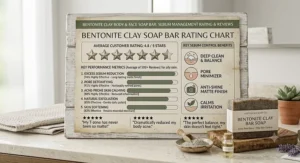
- Read aggregated review sentiment, not just star ratings. A 4.5-star average means little if the written reviews consistently describe dryness that doesn’t match your skin’s needs — read the actual complaints, not just the number.
- Factor in cost per wash, not just sticker price. A $9 travel bar and a $19 five-pack can land at a similar per-use cost once you do the math, so don’t assume the multipack is automatically cheaper.
- Plan for a moisturizer pairing from day one. Since nearly every bentonite formula in this category trends toward mattifying rather than hydrating, build the follow-up step into your routine before you even open the box.
Practical Usage Guide: Getting the Most from Your Clay Bar
Buying the right bar is only half the equation — how you actually use it changes the results dramatically. Start slow: for your first week, use any bentonite clay bar three to four times rather than twice daily, since even skin that’s genuinely oily can react to a new absorbent ingredient with unexpected tightness or mild flaking. Wet the bar, work up a lather in your hands rather than scrubbing it directly on your face, and then apply that lather to clean, damp skin.
The single biggest mistake people make in their first thirty days is rinsing too fast. Bentonite clay needs roughly sixty seconds of contact time to meaningfully bind oil and debris — a five-second rinse barely lets the mineral engage before it’s washed away. Let the lather sit, massage gently in circular motions, and then rinse with lukewarm rather than hot water, since hot water strips additional natural oils on top of what the clay is already pulling. Store your bar on a well-draining soap dish between uses; sitting in a puddle softens the bar prematurely and shortens its lifespan regardless of which of these seven products you choose. After the first month, most users can comfortably move to nightly use if their skin has adjusted well, pairing it with a lightweight, oil-free moisturizer to offset any residual tightness.
Real-World Scenarios: Matching the Right Bar to Your Skin
The college student on a tight budget, showering daily in a shared dorm bathroom: A five-bar pack like the Amish Farms NatureClean Charcoal & Bentonite Bar Soap stretches across a full semester and handles both face and body without needing a separate facial cleanser, which matters when every dollar counts.
The professional with sensitive, acne-prone skin who travels frequently for work: The Rice Ferment Bentonite Clay Facial Bar slips easily into a carry-on toiletry bag, and its rice ferment filtrate helps offset the drying effect that hotel air and long flights already worsen.
The parent managing a household where one person has oily skin and another has reactive, easily irritated skin: The Amish Farms Fragrance-Free Bentonite Clay Bar Soap works as a shared bar since the lack of added fragrance makes it safe for the more sensitive family member while still delivering real oil control for the oilier one.
Common Mistakes When Buying Bentonite Clay Soap for Oily Skin
The most common misstep is assuming “natural” automatically means “gentle.” Bentonite clay is genuinely potent, and a bar with a high clay concentration and minimal conditioning oils, like the pure Living Clay formulas, can absolutely over-dry oily skin if used daily without a moisturizer to follow. A second mistake is judging a bar purely on its star rating without reading what the written reviews actually describe — a 4.6-star average can still hide a consistent pattern of dryness complaints that matter enormously to your specific skin. Buyers also frequently overlook bar size relative to household size, ending up disappointed that a compact 3-ounce artisan bar disappeared in two weeks of shared family use. Finally, many shoppers skip checking whether a product discloses its clay sourcing or any third-party heavy-metal testing at all, which brings us to a safety conversation worth taking seriously.
Natural Detox Soap Safety: Lead, Purity & Regulations
The phrase “natural detox soap” sounds inherently safe, but bentonite clay’s own geological origin is exactly where its biggest documented risk comes from. The FDA has issued consumer warnings about specific bentonite clay products found to contain elevated lead levels, since lead can occur naturally within volcanic clay deposits depending on the source region. It’s a critical distinction, though: those FDA warnings targeted powdered clay products marketed for internal ingestion and hair masking, not the saponified bar soaps reviewed in this article, where contact time and absorption pathways are meaningfully different from swallowing raw clay powder.
Still, the underlying lesson applies to bar soap shopping too. Reputable, established brands that disclose sourcing and manufacturing practices — the kind behind the seven products covered here — carry far less risk than an unlabeled bulk clay purchased from an unverified seller. According to EWG’s ingredient safety database, mineral forms of bentonite used topically are not readily absorbed through intact skin, which meaningfully lowers the risk profile compared to ingestion. The practical safety checklist: buy from brands with visible manufacturing information, avoid using any clay product on broken or heavily irritated skin, and if you have any doubt about a specific batch, patch-test on your inner forearm before committing your whole face to a new bar.
💬 Just one click — help others make better buying decisions too!😊
FAQ
❓ Is bentonite clay soap good for oily skin?
❓ Does bentonite clay soap really minimize pores?
❓ How often should I use bentonite clay bar soap?
❓ Is kaolin clay or bentonite clay better for acne?
❓ Can bentonite clay soap dry out oily skin?
Conclusion
Bentonite clay bar soap earns its reputation the honest way: through a genuinely documented absorptive mechanism, not through inflated marketing promises. Across these seven products, the pattern holds steady — real oil control, a visibly tighter-looking pore appearance with consistent use, and a near-universal need for a follow-up moisturizer to offset the clay’s drying tendency. Whether you land on the budget-friendly Amish Farms NatureClean Charcoal & Bentonite Bar Soap, the sensitive-skin-safe Amish Farms Fragrance-Free Bentonite Clay Bar Soap, or the concentrated Small-Batch Cold-Process Charcoal & Bentonite Bar, the real differentiator isn’t which bar has the flashiest label — it’s matching the clay concentration and added conditioning oils to how your specific skin actually behaves. Start slow, give the lather real contact time, and let the reviewer sentiment and spec sheets — not the hype — guide your next purchase.
Recommended for You
- Mattifying Bar Soap for Oily Face: 7 Picks That Actually Work (2026)
- Bar Soap for Dry Skin in Older Adults: 7 Best Gentle Picks (2026)
- Butter-Rich Bar Soap For Cracked Heels And Feet: 7 Picks That Actually Work in 2026
Disclaimer: This article contains affiliate links. As an Amazon Associate, I earn from qualifying purchases. If you purchase products through these links, we may earn a small commission at no additional cost to you.
✨ Found this helpful? Share it with your friends! 💬🤗
