
In This Article
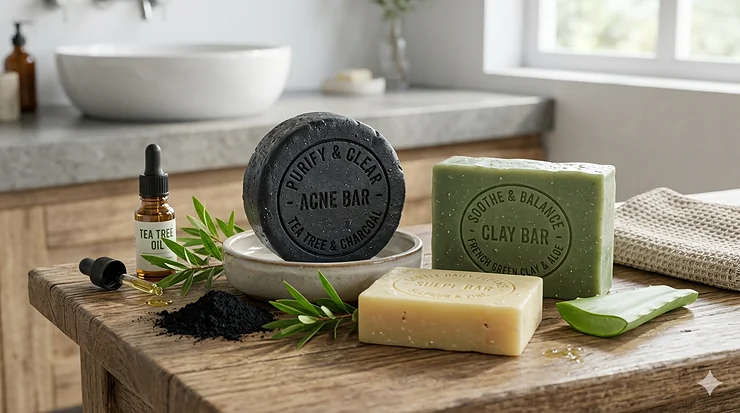
Walk down the soap aisle and you’ll notice it splits into two camps. On one side: pastel bars promising “spa freshness” that do roughly nothing for a clogged pore. On the other: a wall of medicated-looking boxes covered in warning labels, daring you to pick correctly. Somewhere in between is what you actually need — a bar soap for acne prone skin that’s strong enough to matter and gentle enough that you’ll still be using it in March.
Here’s the thing nobody tells you when you’re standing there squinting at ingredient lists: a soap bar is a contact-time product. It’s on your face for maybe twenty seconds before it swirls down the drain, which means the active ingredient and the concentration matter more than almost anything else on the label. A bar with 10% benzoyl peroxide is doing real chemistry in that window. A bar that just says “tea tree” and a stock photo of a leaf is mostly doing marketing.
This guide skips the marketing. We dug through real, currently available options — the kind you can actually order today — and broke down what each one is built to do, who it’s genuinely suited for, and where it falls short. Whether you’re dealing with the occasional jawline breakout or skin that seems to manufacture a new blemish every time you look at a donut, there’s a bar soap for acne prone skin on this list that fits your situation. Let’s get into it.
What Is the Best Bar Soap for Acne-Prone Skin?
The best bar soap for acne-prone skin is a cleansing bar built around a proven anti-acne active — benzoyl peroxide, salicylic acid, or sulfur are the big three — at a concentration strong enough to actually do something, paired with a base gentle enough not to wreck your skin barrier in the process. Anything less than that is just soap with a good marketing budget.
Quick Comparison Table
| Soap | Active Ingredient | Best For | Price Range |
|---|---|---|---|
| PanOxyl Acne Treatment Bar | 10% Benzoyl Peroxide | Stubborn, inflammatory breakouts | $8–$13 |
| 111MedCo Benzoyl Peroxide Bar | 10% Benzoyl Peroxide | Budget-minded BP users | $9–$14 |
| DermaHarmony Salicylic Acid Soap | 2% Salicylic Acid | Blackheads, clogged pores | $9–$15 |
| DermaHarmony Sulfur Bar | 10% Sulfur | Sensitive, BP-intolerant skin | $10–$15 |
| DermaHarmony Pyrithione Zinc Bar | 2% Zinc Pyrithione | Fungal acne, rosacea overlap | $9–$14 |
| Wonderfully Natural African Black Soap | Cocoa pod ash, shea butter | Dark spots, natural routines | $10–$16 |
| Aspen Kay Dead Sea Mud Soap | Dead Sea mud, activated charcoal | Combination/oily, gentle daily use | $7–$12 |
A quick read on the numbers above: the benzoyl peroxide bars sit in the middle of the pack price-wise but punch well above their weight in actual acne-clearing power, while the sulfur and zinc options cost a touch more for what is, frankly, a much gentler ride. The natural picks are the cheapest entry point, but they’re working with botanical actives instead of an FDA-recognized OTC drug monograph ingredient — worth knowing before you set your expectations.
💬 Just one click — help others make better buying decisions too!😊
✨ Don’t Miss These Exclusive Deals!
🔍 Take your skincare routine to the next level with these carefully selected bars. Click on any highlighted product to check current pricing and availability — your clearest skin yet is one click away! 😊
How to Choose a Bar Soap for Acne-Prone Skin
- Identify your acne type first. Inflammatory, red, angry breakouts respond best to benzoyl peroxide. Blackheads and clogged pores respond better to salicylic acid, which is oil-soluble and gets down into the follicle.
- Check the actual percentage. A “salicylic acid bar soap for acne” that doesn’t list a concentration on the label is almost always sitting below the 0.5%–2% range the FDA’s acne monograph recognizes as effective — you’re paying for the word, not the ingredient.
- Match strength to sensitivity. If you’ve reacted to benzoyl peroxide before (the classic signs: peeling, redness, towel-bleaching), sulfur or zinc pyrithione bars offer overlapping pore-clearing benefits without the harshness.
- Think about where you’re breaking out. Face-only acne can tolerate a more concentrated bar used briefly. Back and chest acne — harder to treat with creams — actually benefits more from a soap format, since you can lather, wait, and rinse in the shower.
- Don’t ignore the inactive ingredients. Glycerin, oat kernel flour, and shea butter in the base counteract the drying effect of the active. A bar with bare-bones, stripped ingredients will clear acne and also leave you reaching for moisturizer twice as often.
- Budget for the long game. Acne treatment is a marathon, not a single purchase — dermatologists note that visible improvement typically takes six to eight weeks, so cost-per-week matters more than the sticker price on one bar.
- Read for your skin tone, not just your skin type. If post-inflammatory hyperpigmentation (the dark marks acne leaves behind) is your bigger concern than active breakouts, ingredients like cocoa pod ash and licorice-adjacent botanicals in natural bars are worth weighing alongside straight acne actives.
Top 7 Bar Soaps for Acne-Prone Skin: Expert Picks
1. PanOxyl Acne Treatment Bar with 10% Benzoyl Peroxide
PanOxyl built its reputation on being the brand dermatologists actually mention by name, and the bar version delivers the same maximum-strength formula as its best-selling face wash. The standout feature here is straightforward: 10% benzoyl peroxide, the highest concentration sold without a prescription.
What that means in practice is this isn’t a “give it a try” soap — it’s a workhorse. Benzoyl peroxide kills acne-causing bacteria on contact and helps unclog the follicle from the outside in, and at 10% concentration you’re getting noticeably faster results than the 2.5%–5% versions that flood drugstore shelves. The catch most buyers don’t expect: at this strength, it can also bleach towels, pillowcases, and dark fabric, so keep it away from anything you care about.
Customer feedback skews strongly positive — the line carries a 4.7-star average across nearly 6,000 reviewers, with people specifically calling out that it holds up against stubborn hormonal and cystic breakouts on the face, chest, and back. This is the bar for someone who has tried gentler options and is ready for something that actually fights back.
✅ Highest OTC-strength BP available
✅ Works on face, chest, and back
✅ Vegan, fragrance-free, no dyes
❌ Can bleach fabric on contact
❌ Too harsh for already-dry or sensitive skin without easing in
Price range: $8–$13 for a 4 oz bar. For the concentration you’re getting, this is genuinely solid value — a comparable prescription-strength wash often costs two or three times as much.
2.111MedCo 10% Benzoyl Peroxide Acne Treatment Cleansing Bar
If PanOxyl is the brand-name benzoyl peroxide bar, 111MedCo is the one that quietly matches it on paper at a friendlier price. This bar also carries 10% benzoyl peroxide — same maximum OTC strength — manufactured in a GMP-compliant, FDA-registered facility, which matters if you’re the type to actually check where your medicated skincare comes from.
The real-world difference between this and the bigger-name option is mostly about formulation polish rather than chemistry. Both rely on decyl glucoside and glycerin to offset the drying reputation BP has earned, and both are soap-free, pH-balanced, and fragrance-free. What 111MedCo does particularly well is positioning itself as a no-frills, ingredient-transparent option — there’s no brand premium baked into the price, which matters if you’re treating a larger area like your back, where you’ll burn through a bar faster.
Shoppers consistently mention the bar lathers easily and doesn’t leave the tight, stripped feeling some BP products are known for, crediting the glycerin-forward base. It’s a strong pick for anyone who wants prescription-grade strength without paying for marketing.
✅ Same max-strength 10% BP as premium brands
✅ Made in an FDA-registered, GMP facility
✅ Lower price point for the same active concentration
❌ Smaller brand footprint means fewer long-term reviews
❌ Still carries standard BP risks (dryness, fabric staining)
Price range: $9–$14 for a 4 oz bar.
3. DermaHarmony 2% Salicylic Acid Body and Facial Bar Soap
For blackheads, whiteheads, and that rough, bumpy texture that benzoyl peroxide doesn’t always touch, DermaHarmony’s salicylic acid bar is the move. It sits at 2% salicylic acid — the top of the range the FDA’s acne drug monograph permits — and the brand is unusually transparent about that number, calling out that some competing “salicylic acid bar soap for acne” products don’t disclose their concentration at all.
The practical difference salicylic acid makes versus benzoyl peroxide comes down to mechanism. Salicylic acid is a beta hydroxy acid, meaning it’s oil-soluble and actually penetrates into the pore to dissolve the buildup of oil and dead skin that creates blackheads and whiteheads, rather than primarily targeting bacteria the way BP does. That’s why it’s often the better comedone-clearing cleanser bar for people whose main complaint is texture and clogged pores rather than red, inflamed pimples.
DermaHarmony adds olive oil, oat kernel flour, and vitamin E to the formula specifically to offset salicylic acid’s drying reputation — a thoughtful touch that shows up in reviews, with one of the brand’s most popular salicylic bars racking up well over 3,600 positive ratings. It’s registered with the FDA as an OTC drug and made in the USA, which adds a layer of accountability you don’t get from unregulated “natural” alternatives.
✅ Maximum monograph-strength 2% salicylic acid
✅ Olive oil and oat kernel flour offset dryness
✅ Transparent, FDA-registered OTC formulation
❌ Some users find it drying if used twice daily right away
❌ Plain packaging that undersells the formula quality
Price range: $9–$15 for a 4 oz bar.
4. DermaHarmony 10% Sulfur with Tea Tree Oil Acne Bar Soap
Sulfur is the acne ingredient your grandmother’s dermatologist probably used, and it’s having a quiet comeback for a good reason: it works without the harshness of benzoyl peroxide or the sometimes-aggressive exfoliation of salicylic acid. DermaHarmony’s version delivers 10% sulfur — the maximum concentration allowed under the FDA’s OTC acne monograph — blended with Australian tea tree oil specifically to mask sulfur’s notoriously rotten-egg smell.
What most buyers overlook about sulfur is that it works through a different pathway than BP or salicylic acid: it dries out the surface oil and debris that feeds blemishes rather than chemically exfoliating or directly killing bacteria, which is exactly why it tends to be far better tolerated by people with reactive or already-irritated skin. It also won’t bleach your towels, a small but real upgrade over benzoyl peroxide for anyone who’s ruined a few dark pillowcases already.
This bar has built serious credibility — DermaHarmony cites over 17,000 combined ratings and reviews across retail channels with a 4.4-star average, manufactured in Portland, Maine, by a company that’s been formulating medicated sulfur soaps since 1997. For anyone who’s tried BP, found it too drying, and assumed that meant they were out of OTC options, this is the bar that proves otherwise.
✅ Maximum monograph-strength 10% sulfur
✅ Gentler than BP, won’t bleach fabric
✅ Tea tree oil masks the classic sulfur smell
❌ Some residual scent persists for sensitive noses
❌ Slower-acting than benzoyl peroxide for active inflammation
Price range: $10–$15 for a 4 oz bar.
5. DermaHarmony 2% Pyrithione Zinc (ZnP) Bar Soap
Here’s an honest piece of expert commentary most acne soap roundups skip: pyrithione zinc’s FDA-recognized indication is actually dandruff and seborrheic dermatitis, not acne directly. But it’s earned a loyal following among acne sufferers for a real reason — it has documented antifungal and anti-inflammatory properties, and a meaningful slice of stubborn “acne” is actually Malassezia folliculitis, a yeast-driven condition that looks like acne but doesn’t respond to benzoyl peroxide or salicylic acid at all.
If you’ve cycled through every acne-causing bacteria soap treatment on the market and nothing’s worked, this bar is worth a try specifically because it’s solving a different problem. DermaHarmony’s version uses the maximum monograph concentration of 2% zinc pyrithione under FDA OTC Monograph M032, and it doubles as relief for rosacea-adjacent redness and irritation — a useful two-for-one if your skin runs both oily and reactive.
The brand backs this formulation with over 6,800 Amazon reviews and a 4.4-star average, and it’s been manufactured under the same unchanged formula for more than two decades. It’s not the bar to reach for if you have classic, textbook inflammatory acne — but for the subset of “nothing else works” cases, it can be the missing piece.
✅ Targets fungal/yeast-driven breakouts BP and SA can’t touch
✅ Doubles as rosacea and seborrheic dermatitis rel
e✅Maximum monograph strength, two decades of unchanged formula
❌ Not designed for classic bacterial acne — wrong tool for that job
❌ Less dramatic results if your acne isn’t fungal in origin
Price range: $9–$14 for a 4 oz bar.
6. Wonderfully Natural #1 Organic African Black Soap
For anyone building a more natural routine, this African black soap is the most-reviewed option of its kind on Amazon, and it earns that position honestly. Hand-cured in Ghana from unrefined shea butter, cocoa pod ash, and coconut oil, it leans on traditional saponification rather than a single isolated active ingredient — which is exactly why it appeals to people who want a bar soap for acne prone skin that doesn’t read like a chemistry set.
The practical upside here isn’t just acne control — it’s the secondary benefit the brand specifically markets: helping fade the look of dark spots, acne scars, and post-inflammatory hyperpigmentation over six to eight weeks of consistent use. For skin tones where dark marks linger long after a blemish heals, that’s often the bigger frustration than the breakout itself, and this bar is positioned to address both at once.
With more than 120,000 customers since 2017 and 14,000-plus verified reviews holding a 4.3-star average, it’s the most-trusted entry in this category — though it’s worth flagging that traditional black soap can run on the drying side for some users, so pairing it with a basic moisturizer is a smart default rather than an optional extra.
✅ Most-reviewed African black soap on Amazon
✅ Targets dark spots and hyperpigmentation, not just active acne
✅ Vegan, black-owned, traditional handmade process
❌ Can be drying without a follow-up moisturizer
❌ No standardized “active percentage” the way OTC drugs have
Price range: $10–$16 for a 1 lb bar — genuinely excellent value given the size.
7. Aspen Kay Naturals Dead Sea Mud Soap Bar
Rounding out the list is a gentler, everyday option for combination and oily skin that doesn’t need maximum-strength intervention every single day. Aspen Kay Naturals’ dead sea mud bar combines real Dead Sea mineral mud imported from Israel with activated charcoal, hand-crafted in small batches using the traditional cold-process method.
The real-world value of this combination is in oil control rather than aggressive treatment: activated charcoal binds to excess sebum and surface impurities, while Dead Sea mud delivers trace minerals that have a long, if mostly anecdotal, history in skin therapy. This is the bar for someone whose acne is mild-to-moderate and oil-driven rather than cystic or hormonal — a daily maintenance bar rather than a targeted medication.
Independent review analysis covering over 1,000 verified ratings found roughly 84% positive sentiment, with a 4.7-star average reported elsewhere, and customers frequently mention it leaves skin clean without the tight, stripped feeling that medicated bars can cause. It’s also genuinely multi-purpose — usable as a face, body, or even shaving soap — which makes it a smart, low-commitment way to add a bar soap for acne prone skin into a routine that’s mostly built around gentleness.
✅ Real Dead Sea mud and activated charcoal, not just marketing buzzwords
✅ Gentle enough for daily use without a medicated active
✅ Versatile — face, body, and shaving soap in one
❌ No clinically proven acne-fighting active ingredient
❌ Essential oil fragrance may not suit fragrance-sensitive skin
Price range: $7–$12 for a 4.5 oz bar.
Bar Soap vs. Liquid Cleanser for Acne-Prone Skin
The bar-versus-bottle debate isn’t just about preference — it changes how the active ingredient behaves. Liquid cleansers spend more time being formulated for even distribution of an active, while a solid bar has to suspend that same ingredient in a saponified base, which is part of why some salicylic acid soap bars don’t disclose their exact percentage — it’s harder to formulate consistently than in a liquid.
| Format | Strength | Contact Time | Travel-Friendly | Cost Per Use |
|---|---|---|---|---|
| Medicated bar soap | Often matches max OTC strength | 30–90 seconds typical | Excellent, no leaks | Low |
| Liquid/gel cleanser | Wide range, often diluted | User-controlled | Poor, TSA limits | Moderate-High |
What this comparison actually tells you: bar soaps win decisively on travel convenience and cost-per-use, since a single bar lasts four to six weeks of daily use and never triggers a liquids restriction at airport security. Liquid cleansers win when you want to control exactly how long the active sits on your skin, since you can rinse immediately or let it sit, whereas a bar’s contact time is whatever you can manage before it slides off your hands. For body acne specifically — chest, back, shoulders — bars have a practical edge, since lathering a large area with a bottle of foaming wash gets expensive fast.
Common Mistakes When Buying Acne Bar Soap
Even with the right product in hand, a few habits quietly sabotage results:
- Switching products every two weeks. Acne treatments need six to eight weeks before you can fairly judge them. Trying something new too soon is one of the most common habits dermatologists flag as actually worsening acne, since constant ingredient-switching irritates skin without ever letting one product finish its job.
- Using the medicated bar all over, all at once. Jumping straight to twice-daily use of a 10% BP or sulfur bar across your entire face is the fastest way to end up red, peeling, and convinced the product “doesn’t work for you.” Start with once daily.
- Skipping moisturizer because the soap is “treating” the skin. Every active ingredient on this list — benzoyl peroxide, salicylic acid, sulfur, zinc pyrithione — has a documented drying effect. Skipping moisturizer doesn’t make the treatment more effective; it just adds irritation on top of the acne you’re already managing.
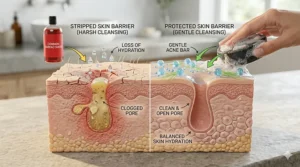
- Over-washing. More washing does not equal more clearing. Two gentle cleanses a day, plus one after a sweaty workout, is the dermatologist-recommended baseline — scrubbing your face four or five times daily strips your skin barrier and can actually trigger more oil production.
- Ignoring fabric warnings on BP products. This is a laundry mistake, not a skin one, but it’s the single most common regret in benzoyl peroxide reviews: bleached towels and pillowcases that nobody warned them about until it was too late.
Real-World Scenarios: Matching the Soap to Your Situation
The teenager with sudden, widespread breakouts. Teenage acne is often driven by surging hormones and excess sebum production across the whole face, not just isolated spots. A 10% benzoyl peroxide bar like PanOxyl or 111MedCo, started at once-daily use, tends to be the most efficient option here — strong enough to make visible progress in weeks rather than months.
The adult dealing with hormonal jawline acne. Bar soap for hormonal acne that clusters along the jaw and chin benefits less from sheer strength and more from consistency paired with a gentler active. DermaHarmony’s sulfur or salicylic acid bars tend to outperform aggressive BP here, since hormonal breakouts often respond better to slow, steady pore-clearing than to bacterial knockdown alone.
The person who’s tried everything and nothing sticks. If you’ve rotated through multiple OTC actives with no luck, it’s worth considering whether a Malassezia-driven component is in play — the zinc pyrithione bar is the one product on this list built to test that theory before you escalate to a dermatologist visit.
The natural-ingredients-only shopper with dark spots as the bigger concern. If active breakouts have mostly calmed but the marks they left behind haven’t, the African black soap’s dark-spot positioning and the Dead Sea mud bar’s gentler daily-use profile are better fits than another round of medicated treatment.
Practical Usage Guide: Getting the Most From a Medicated Bar
Getting real results from any of these bars comes down to a routine, not a single great purchase:
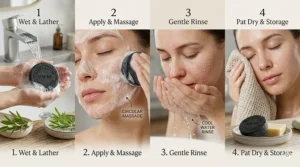
- Week 1: Use the bar once daily, ideally at night, on clean, dry hands worked into a lather first — never rub the bar directly on your face.
- Weeks 2–3: If skin tolerates it well (no excessive peeling or redness), move to twice daily. If irritation shows up, drop back to every other day before increasing again.
- Ongoing: Let the lather sit on skin for 30–60 seconds before rinsing — this is where the active ingredient actually does its work, and rinsing immediately cuts effectiveness significantly.
- Every time: Follow with a fragrance-free, non-comedogenic moisturizer. This single habit prevents most of the dryness complaints associated with medicated bars.
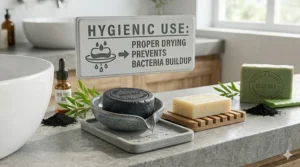
- Storage: Keep the bar on a draining soap dish, not sitting in standing water — a bar that stays wet between uses breaks down faster and can develop a mushy texture that’s harder to control on your face.
What to Expect: Real-World Performance Timeline
Set expectations correctly and you’ll stick with the product long enough to see it work. In the first one to two weeks, expect a possible “purging” phase — slightly more visible breakouts as the active ingredient brings existing congestion to the surface faster. By weeks three to four, oiliness and new blemish frequency should noticeably decrease if you’ve picked the right active for your acne type. Research on facial cleansing routines backs this timeline, noting that consistent twice-daily cleansing measurably improves skin hydration and microbiome balance over a period of weeks, not days. Full results — meaning a real reduction in both active breakouts and the marks they leave — typically take the full six-to-eight-week window dermatologists cite, sometimes longer for hormonal or cystic patterns.
Long-Term Cost & Maintenance
A 4 oz medicated bar used once daily on the face alone typically lasts four to six weeks, which puts most of the bars on this list at roughly $2–$4 per week of treatment — meaningfully cheaper than most prescription acne washes, which can run $30–$60 per bottle for a similar treatment window. Using a bar on a larger area like the back or chest will cut that lifespan to two to three weeks, so budget accordingly if body acne is part of what you’re treating. The natural options (African black soap, Dead Sea mud) tend to last slightly longer per ounce since they’re typically used as a gentler maintenance step rather than a twice-daily medicated treatment.
Features That Actually Matter (And Those That Don’t)
Actually matters: the disclosed percentage of the active ingredient, FDA OTC monograph registration (it means the formula has met a real regulatory bar, not just a marketing claim), and the presence of glycerin or oils in the inactive ingredient list to offset dryness.
Doesn’t matter nearly as much: scent (tea tree masking sulfur odor is a nice-to-have, not a performance factor), bar shape or color, and vague claims like “detoxifying” or “purifying” that don’t map to any specific, provable mechanism. If a listing leans hard on aesthetic language but won’t tell you the active ingredient percentage, that’s a signal to keep scrolling.
Frequently Asked Questions
❓ Can bar soap actually treat acne, or is liquid cleanser always better?
❓ Is benzoyl peroxide or salicylic acid bar soap better for acne?
❓ How often should I use a sulfur bar soap for acne?
❓ Will an acne bar soap for face use also work on body acne?
❓ Why does my acne bar soap smell unpleasant?
Conclusion
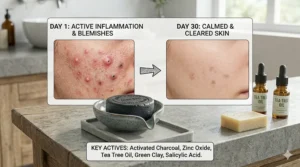
There’s no single best bar soap for acne prone skin that works for every face — there’s only the right active ingredient matched to the right kind of breakout. If you’re dealing with inflamed, angry acne, reach for benzoyl peroxide. If clogged pores and texture are the bigger issue, salicylic acid does more precise work. If your skin reacts to both of those, sulfur and zinc pyrithione offer a gentler but still genuinely effective path forward, and the natural options round things out nicely for anyone managing mild acne alongside dark spots or simply building a less clinical routine.
What actually moves the needle isn’t finding a miracle bar — it’s picking one that matches your specific situation and sticking with it through the full six-to-eight-week window it takes to see real change. Consistency beats intensity every time.
✨ Don’t Miss These Exclusive Deals!
🔍 Ready to upgrade your routine? Check current pricing and availability on any of these picks above, and give your skin the consistent, targeted care it’s been waiting for! 🧼
Recommended for You
- Facial Cleansing Bar Guide: 7 Best Picks That Actually Work (2026)
- Can You Use Bar Soap on Face? 7 Best Picks (2026)
- Bar Soap vs Body Wash: 7 Best Picks for 2026
Disclaimer: This article contains affiliate links. As an Amazon Associate, I earn from qualifying purchases. If you purchase products through these links, we may earn a small commission at no additional cost to you.
✨ Found this helpful? Share it with your friends! 💬🤗
