
In This Article
Somewhere around 2015, bar soap got demoted. It became the thing in your grandmother’s bathroom, sitting in a dish that never quite dried out, while everyone else upgraded to pump bottles with seventeen syllables in the ingredient name. And for a while, that demotion was fair — a lot of old-school bar soap really was too harsh for your face, the kind of squeaky-clean that actually meant “stripped raw.”
But the facial cleansing bar of 2026 is a different animal entirely. Dermatology brands rebuilt the format from the inside out, swapping old-fashioned saponified soap for syndet (synthetic detergent) bases that sit closer to your skin’s natural pH. The result is a cleanser that does the actual job — lifting dirt, oil, sunscreen, and makeup — without leaving your face feeling like it just lost an argument with a chalkboard.
There’s also a quieter reason bars are having a moment: they’re refillable-friendly, travel-proof, and they don’t sit in a half-used bottle leaching plastic into a landfill for the next 400 years. A bar lasts. It doesn’t spill in your gym bag. And contrary to what you might assume, a well-formulated one can be every bit as gentle as a $40 cream cleanser.
What is a facial cleansing bar? A facial cleansing bar is a solid, hand-held cleanser — either true soap or a soap-free syndet — formulated to remove dirt, oil, makeup, and sunscreen from the face without disrupting the skin’s protective barrier. Unlike body bar soap, the better facial versions are pH-balanced, fragrance-free, and built for repeated daily use on more delicate skin.
Below, we’ll walk through seven real, current picks for different skin types and budgets, then dig into how to actually choose, what mistakes to avoid, and which marketing claims are worth your money.
Quick Comparison: 7 Facial Cleansing Bars at a Glance
| Product | Best For | Standout Feature | Price Range |
|---|---|---|---|
| CeraVe Hydrating Cleansing Bar | Dry, normal skin | Ceramides + hyaluronic acid | $10–$18 (multi-pack) |
| Cetaphil Gentle Cleansing Bar | Sensitive, dry skin | Classic glycerin-based syndet | $8–$15 (multi-pack) |
| Vanicream Cleansing Bar | Eczema-prone, ultra-sensitive skin | Zero fragrance, zero dyes | $10–$20 (multi-pack) |
| CeraVe Foaming Cleansing Bar (Kaolin Clay) | Oily, combination skin | Kaolin clay + niacinamide | $7–$13 |
| Neutrogena Original Transparent Facial Cleansing Bar | Combination, all skin types | Glycerin-rich, removes makeup | $3–$10 |
| Aveeno Gentle Moisturizing Bar | Dry, easily irritated skin | Colloidal oat | $8–$15 (multi-pack) |
| PURPOSE Gentle Cleansing Bar | Oil-free seekers, all skin types | Sulfate-free, hypoallergenic | $8–$15 |
A few patterns jump out fast. The two driest-skin options — CeraVe Hydrating and Vanicream — both lean on barrier-supporting ingredients rather than foam, while the oil-control picks (CeraVe Foaming, PURPOSE) trade some of that richness for oil-absorbing clay or sulfate-free surfactants. Neutrogena’s classic transparent bar remains the budget anchor of the category, and it’s the one most likely to double as a makeup-removing bar in a pinch. If you’ve got combination skin, notice that three of these (Neutrogena, PURPOSE, and CeraVe Foaming) are explicitly formulated to avoid over-drying the cheeks while still controlling oil down the T-zone.
💬 Just one click — help others make better buying decisions too!😊
✨ Don’t Miss These Exclusive Deals!
🔍 Take your skincare routine to the next level with these dermatologist-formulated picks. Click on any highlighted bar to check current pricing and availability — your skin (and your bathroom counter) will thank you.
The 7 Best Facial Cleansing Bars: Expert Analysis
1. CeraVe Hydrating Cleansing Bar
CeraVe built its entire reputation on three essential ceramides, and the Hydrating Cleansing Bar doesn’t skip that homework. Each 4.5 oz bar carries ceramides NP, AP, and EOP alongside hyaluronic acid and roughly 5% of CeraVe’s signature moisturizing cream, released gradually through its MVE delivery system.
What that actually means on your face: most cleansing bars wash the moisture away the moment you rinse. This one keeps depositing a thin, breathable layer of ceramide-rich cream even after the water runs clear, which is why dry-skin users tend to report that telltale “tight” feeling shows up far less often. It’s formulated at a physiological pH of 5.5–6.5 — translation, it won’t shock your skin’s natural acid mantle the way old-fashioned bar soap does.
This is the bar for people whose skin reacts badly to anything foamy or fragranced, and for anyone managing eczema-adjacent dryness who still wants the convenience of a bar over a tube. Reviewers consistently single out the lack of that post-wash “squeaky” feeling as the main draw, with the occasional complaint that the bar softens faster than a true soap if left sitting in standing water.
✅ Pros: Ceramide + hyaluronic acid barrier support · Fragrance-free · Doesn’t strip skin
❌ Cons: Dissolves faster if not stored on a draining dish · Not strong enough oil control for very oily skin
Price range: $10–$18 for a multi-pack — Verdict: a strong value pick if dryness, not oiliness, is your main complaint.
2. Cetaphil Gentle Cleansing Bar
Cetaphil has been the dermatologist’s reflexive recommendation for sensitive skin for decades, and the Gentle Cleansing Bar is the bar-soap version of that legacy. It’s a soap-free, glycerin-forward syndet that leans on humectants rather than harsh detergents to do its cleansing.
The practical payoff: glycerin pulls moisture toward the skin surface during the wash itself, which is part of why this bar has a reputation for not leaving that filmy, dry aftertaste some soap bars do. It’s non-comedogenic and hypoallergenic, which in plain terms means it’s been formulated to avoid clogging pores or triggering common allergens — useful if you’re also acne-prone but can’t tolerate foaming cleansers.
This is the safe, slightly boring, extremely reliable choice — the bar you recommend to a friend who’s never thought about skincare ingredients and just wants something that won’t make their face angry. Long-time users tend to praise its consistency bar after bar; the most common gripe is that it can feel a touch waxy if you don’t lather it fully before applying.
✅ Pros: Decades of dermatologist trust · Gentle enough for kids · Travel and gym-bag friendly
❌ Cons: Minimal oil control · Can feel slightly waxy without a full lather
Price range: $8–$15 for a multi-pack — Verdict: the dependable, no-surprises option for sensitive or combination skin.
3. Vanicream Cleansing Bar
If Cetaphil is the safe choice, Vanicream is the extremely safe choice. This bar carries the National Eczema Association’s Seal of Acceptance and is built with almost nothing extra: no fragrance, no dyes, no botanical extracts, no masking scents, no parabens.
What that buys you in practice is a bar with one of the lowest allergen profiles on the market. The proprietary Vanicream Cream Base sits in the formula to keep skin from feeling stripped, even though there’s nothing in the ingredient list trying to smell nice or feel luxurious. For someone managing eczema, rosacea, or contact dermatitis, that absence of “extras” is the entire point — every fragrance compound or plant extract is a potential trigger removed from the equation.
This is the bar for the person who’s been burned by “gentle” products before — the ones labeled fragrance-free that still had a masking scent buried in there. Feedback tends to cluster around two things: relief from flare-ups after switching, and a slightly more “plain” lather than people are used to, since there’s nothing added to make the foam feel fancy.
✅ Pros: NEA Seal of Acceptance · Zero fragrance, zero dyes · Kid-safe
❌ Cons: No deep-cleaning oil control · Plain, no-frills lather
Price range: $10–$20 for a multi-pack — Verdict: the right call if your skin has ever reacted to a “gentle” product that wasn’t gentle enough.
4. CeraVe Foaming Cleansing Bar (Kaolin Clay)
This is CeraVe’s answer for the half of the population whose problem isn’t dryness, it’s shine by 2 p.m. The formula swaps the moisturizing cream emphasis of the Hydrating Bar for kaolin clay, niacinamide, and a lighter foam — while still keeping the three-ceramide base intact.
Here’s what that combination means for actual oily or combination skin: kaolin clay is mineral-based and absorbs surface oil mechanically rather than chemically stripping it, so you get mattifying without the rebound oiliness that harsher cleansers can trigger later in the day. Niacinamide is along for the ride to help calm any redness that oil-control products sometimes provoke. It’s paraben-free and labeled pH-balanced, important since oily skin is often pushed toward more alkaline products that can backfire.
This bar is built for the T-zone-shiny, cheek-normal combination-skin crowd, and for anyone who’s been told “use a clay mask” but wants that benefit baked into a daily step instead of a weekly ritual. The most repeated feedback is that it controls shine well without the tight, post-wash dryness that salicylic-acid washes sometimes cause; a smaller group notes the oil absorption doesn’t last all day on very oily skin types.
✅ Pros: Kaolin clay oil absorption · Niacinamide for calming · Still ceramide-supported
❌ Cons: Oil control fades by evening for very oily skin · Lighter foam than true acne-targeted washes
Price range: $7–$13 — Verdict: the best “deep pore” pick on this list for combination skin that doesn’t want to sacrifice barrier support.
5. Neutrogena Original Transparent Facial Cleansing Bar
This is the bar that’s been sitting in drugstore aisles since before most skincare influencers were born, and it’s stuck around for a reason. The transparent, glycerin-rich formula was engineered to rinse completely clean, without the waxy residue that opaque soap bars can leave clogging pores.
The glycerin content is doing real work here: it’s a humectant that helps the bar attract and hold moisture even as it’s cutting through oil, sunscreen, and yes, makeup. That’s the original claim to fame for this bar — it was marketed for decades as a makeup-removing cleansing bar before “double cleansing” was even a phrase people used. It’s hypoallergenic and free of harsh detergents, dyes, and hardeners, which keeps it surprisingly gentle for something this affordable.
This is the budget pick, full stop — the one to recommend to someone who wants a facial cleansing bar soap without spending real money to test the format out. The recurring praise is about how cleanly it rinses and how well it handles makeup removal; the recurring complaint is that it can feel slightly tight on already-dry skin, since it leans more toward a true syndet-soap hybrid than the ultra-moisturizing CeraVe or Vanicream bars.
✅ Pros: Extremely affordable · Clean-rinsing, no residue · Removes makeup effectively
❌ Cons: Can feel tight on very dry skin · No added barrier-support ingredients
Price range: $3–$10 — Verdict: the best entry point if you’re new to facial bars and not sure you’ll like the format yet.
6. Aveeno Gentle Moisturizing Bar
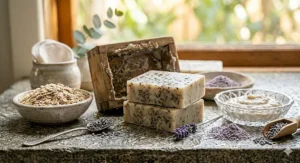
Aveeno’s whole identity is built on colloidal oatmeal, and the Gentle Moisturizing Bar is where that ingredient meets the cleansing-bar format. Powder-fine oat flour is blended with skin-conditioning agents in a soap-free base designed specifically for dry, easily irritated skin.
Practically speaking, oat isn’t just a marketing buzzword here — it genuinely has mild anti-irritant properties, which is why it shows up so often in eczema and dermatitis-focused formulas. Combined with the bar’s soap-free, fragrance-free, dye-free build, the effect is a wash that absorbs dirt and oil gently rather than emulsifying it away with stronger detergents. It’s non-comedogenic, so it won’t undo any progress you’ve made managing clogged pores elsewhere in your routine.
This is the natural-leaning pick for dry-skin sufferers who want an ingredient story they can actually pronounce, and it’s gentle enough that it shows up regularly in pediatric dermatology recommendations too. Feedback tends to highlight the soft, soothed feeling post-wash; some users note the bar can feel a bit chalky if it’s not lathered with enough water first.
✅ Pros: Colloidal oat soothes irritation · Fragrance and dye-free · Family and kid-friendly
❌ Cons: Minimal oil-control · Can feel chalky without enough water
Price range: $8–$15 for a multi-pack — Verdict: a strong natural-ingredient pick for dry, sensitive, or eczema-prone skin on a budget.
7. PURPOSE Gentle Cleansing Bar
PURPOSE doesn’t have the brand recognition of CeraVe or Neutrogena, but dermatologists have quietly recommended it for years as an oil-free, sulfate-free alternative that flies under the radar. It’s developed specifically to be hypoallergenic and suitable across all skin types, including oily and acne-prone.
The “oil-free” and “sulfate-free” claims aren’t just label noise here — sulfates are the detergents most likely to over-strip natural oils and trigger that tight, dry rebound that makes oily skin produce more oil to compensate. By skipping them entirely, PURPOSE manages to cleanse effectively without setting off that cycle, which is the exact mechanism dermatologists point to when explaining why “stronger” isn’t always better for breakout-prone skin.
This is the pick for someone whose skin gets confused by harsher acne washes — breaking out more after switching to something marketed as deep-cleaning — and who wants oil control without the sulfate trade-off. It’s also a reasonable pick for combination skin that’s tried both ends of the spectrum (too rich, too stripping) and landed nowhere comfortable. The general sentiment among long-term users skews toward appreciating how it doesn’t disrupt makeup-wearing routines layered on top, with the occasional note that the lather is thinner than sulfate-based foaming washes.
✅ Pros: Sulfate-free oil control · Hypoallergenic · Works across multiple skin types
❌ Cons: Thinner lather than sulfate-based foams · Less brand recognition, harder to find in stores
Price range: $8–$15 — Verdict: an underrated oil-free option worth trying if sulfates have burned you before.
Practical Usage Guide: Getting the Most Out of Your Bar
A facial cleansing bar only performs as well as the habits around it. A few adjustments make a real difference:
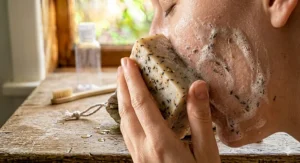
- Lather in your hands first, not on your face. Building a lather between wet palms — rather than rubbing the bar directly across your skin — distributes the cleanser more evenly and reduces the friction that can irritate sensitive cheeks.
- Use a draining soap dish. Bars left sitting in standing water dissolve faster and can develop a softer, mushier texture within days. A ridged dish that lets water run off roughly doubles a bar’s lifespan.
- Don’t over-lather. The instinct is “more foam, cleaner face,” but a thick, dense lather usually means you’re using more product than needed and stripping more oil than necessary. A light lather is enough for daily cleansing.
- First 30 days, watch for purging vs. reacting. If you’re switching from a liquid cleanser to a bar with active ingredients (like the kaolin clay or niacinamide options above), give your skin two to three weeks before judging the results — and stop immediately if you see actual irritation rather than typical adjustment.
- Wash the bar itself occasionally. Running the bar briefly under hot water before storing it helps rinse away surface bacteria and residue, a step the American Academy of Dermatology recommends as part of basic cleanser hygiene.
Real-World Scenarios: Which Bar Fits Your Life
The college student sharing a dorm bathroom sink: Budget and simplicity matter more than ingredient lists right now. The Neutrogena Original Transparent Facial Cleansing Bar wins here — cheap, effective, and good at handling a full face of makeup after a long day without needing a separate makeup remover.
The new parent managing a baby’s eczema-prone skin and their own postpartum sensitivity: Both the Vanicream Cleansing Bar and Aveeno Gentle Moisturizing Bar are gentle enough for shared family use, with Vanicream edging ahead for anyone with diagnosed eczema given its NEA seal.
The remote worker dealing with combination skin and constant blue-light exposure stress: The CeraVe Foaming Cleansing Bar with kaolin clay handles the midday shine without compromising the skin barrier, making it a solid AM cleanse before a full day at a screen.
The skincare minimalist who’s been burned by “gentle” products that weren’t: PURPOSE Gentle Cleansing Bar or Cetaphil Gentle Cleansing Bar both deliver on genuinely low-irritation formulas without complicated routines layered on top.
How to Choose a Facial Cleansing Bar (5 Steps)
- Identify your real skin type, not your aspirational one. The AAD recognizes five categories — normal, oily, dry, sensitive, and combination — and most cleansing-bar regret comes from picking based on what you wish your skin was rather than what it actually does day to day.
- Check whether it’s soap or syndet. True soap (saponified fats and alkali) tends to sit at a higher, more alkaline pH; syndet bars are formulated closer to skin’s natural acidity. If you have sensitive or eczema-prone skin, syndet is almost always the safer bet.
- Match the active ingredient to your actual complaint. Ceramides and hyaluronic acid for dryness, kaolin clay or niacinamide for oil, colloidal oat for irritation, nothing extra at all for known allergy sufferers.
- Confirm it’s labeled fragrance-free, not just unscented. “Unscented” can still contain masking fragrance chemicals; “fragrance-free” means none were added at all — a distinction dermatologists flag repeatedly for sensitive skin.
- Decide if you’re cleansing face only or face-and-body. Several bars on this list double as body bars, which can simplify your shower routine, but a few (like the kaolin clay formula) are specifically tuned for facial oil control and may be overkill on rougher body skin.
Common Mistakes When Buying a Facial Cleansing Bar
The biggest mistake is chasing “deep clean” marketing language when your skin is already dry or compromised — a stronger-sounding cleanser is not a better one if it leaves your barrier worse off than before. The second most common error is assuming bar soap and facial cleansing bars are interchangeable; a body bar formulated for back-and-shoulder grime is often too harsh for the thinner skin on your face. Third, people frequently skip the patch test entirely, even though a bar sits on your skin in full contact for longer than a splash of liquid cleanser would, which can amplify a reaction to a new ingredient. Finally, plenty of buyers ignore storage — letting a bar dissolve in standing water — then blame the formula for running out “too fast,” when a $4 draining dish would have solved the problem.
Facial Cleansing Bar vs. Liquid Face Wash
| Factor | Cleansing Bar | Liquid Face Wash |
|---|---|---|
| Packaging waste | Minimal, often plastic-free | Bottle, pump, often single-use plastic |
| Contamination risk | Lower if rinsed and stored dry | Pump mechanisms can harbor bacteria over time |
| Travel friendliness | Excellent — no leaks, no liquid restrictions | Requires travel-size or checked bag |
| Active-ingredient delivery | Limited contact time during quick lather | Can sit longer for actives like salicylic acid |
| Cost per use | Generally lower | Generally higher per ounce |
The packaging and travel advantages tip clearly in the bar’s favor, especially for anyone tired of TSA-sized bottles or leaking toiletry bags. Where liquid cleansers still have an edge is in formulas built around longer-contact active ingredients — a salicylic acid gel cleanser, for instance, can be left on skin for a beat before rinsing in a way a quick-lathering bar generally isn’t designed for. For straightforward daily cleansing, though, the gap in actual cleaning performance between a well-formulated bar and a comparable liquid is smaller than most marketing suggests.
Features That Actually Matter (And Those That Don’t)
Matters: pH-balance claims backed by an actual number (5.5–6.5 range), fragrance-free labeling, and named barrier ingredients like ceramides or hyaluronic acid you can verify on the ingredient list.
Matters less than the packaging suggests: “Micellar” claims on solid bars. Micellar technology relies on water-suspended micelle molecules that aren’t really replicable in a solid format the same way they function in a liquid micellar water — treat “micellar bar” labeling skeptically and look at the actual surfactant list instead.
Matters: Whether a product carries a third-party seal, like the National Eczema Association’s Seal of Acceptance, since that involves independent ingredient review rather than just brand self-reporting.
Matters less: Scent, color, or “luxury” texture claims — none of which affect cleansing performance and all of which add cost without functional benefit for most users.
Frequently Asked Questions
❓ Is a facial cleansing bar better than a face wash?
❓ Can I use a body bar soap on my face?
❓ How long should a facial cleansing bar last?
❓ Are facial cleansing bars good for acne-prone skin?
❓ Do facial cleansing bars remove makeup effectively?
Conclusion: There’s No Single “Best” Bar — Only the Best Bar for Your Skin
If there’s one thing that should be obvious by now, it’s that “best facial cleansing bar” is a moving target depending on who’s asking. Dry, reactive skin wants ceramides and zero fragrance. Oily, combination skin wants kaolin clay and niacinamide without sacrificing the barrier. Budget-conscious beginners want something cheap enough to experiment with, and eczema-prone skin wants the shortest ingredient list humanly possible.
The good news is that the format itself has fully recovered from its dated, drying reputation. A bar that costs less than a coffee can genuinely outperform a fancy bottled cleanser three times its price, provided the formula actually matches what your skin needs. Start with your real skin type, check the label for fragrance-free and pH-balance claims, and resist any cleanser — bar or bottle — that promises a “deep clean” your skin didn’t actually ask for.
✨ Don’t Miss These Exclusive Deals!
🔍 Whichever pick fits your skin type, now’s a good time to compare current pricing and availability before restocking your bathroom shelf.
Recommended for You
- Can You Use Bar Soap on Face? 7 Best Picks (2026)
- Bar Soap vs Body Wash: 7 Best Picks for 2026
- 7 Best Bar Soaps for Tattoo Aftercare That Actually Protect Your Ink (2026)
Disclaimer: This article contains affiliate links. As an Amazon Associate, I earn from qualifying purchases. If you purchase products through these links, we may earn a small commission at no additional cost to you.
✨ Found this helpful? Share it with your friends! 💬🤗
