
In This Article
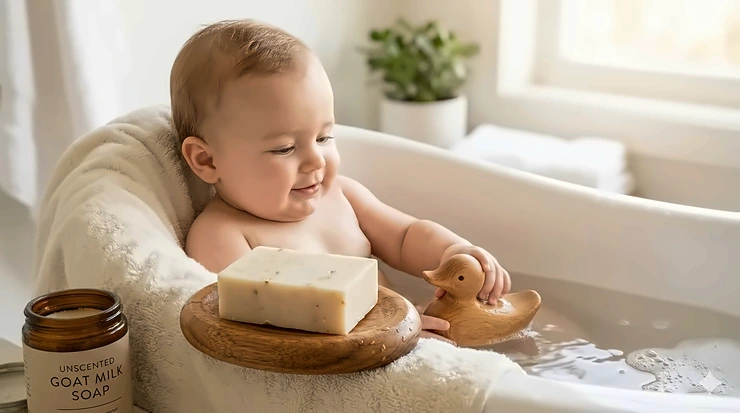
When your little one’s delicate skin erupts in angry red patches, watching them scratch helplessly can break any parent’s heart. Baby eczema affects roughly 20-25% of children, and finding a gentle cleanser that doesn’t trigger flare-ups feels like searching for a needle in a haystack. That’s where goat milk soap for baby eczema enters the picture—not as a cure-all miracle, but as a surprisingly gentle option that many pediatric dermatologists now recommend alongside traditional treatments.
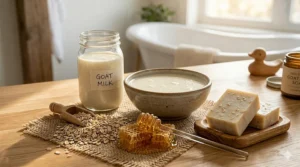
Atopic dermatitis is the most common inflammatory skin condition of childhood, and unlike harsh commercial soaps that strip away protective oils, goat milk soap works with your baby’s skin barrier rather than against it. The natural lactic acid in goat’s milk gently exfoliates while the fat molecules create a moisture barrier—think of it as giving your baby’s skin a protective hug instead of a chemical assault.
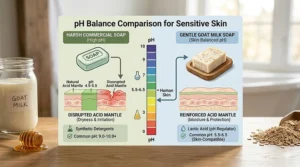
What makes this particularly interesting for parents navigating eczema management is that goat milk has a pH level remarkably similar to human skin. This means it won’t disrupt the delicate acid mantle that keeps irritants out and moisture in. When you’re dealing with skin that’s already compromised and inflamed, that compatibility matters more than you might think.
Quick Comparison Table
| Product Name | Best For | Price Range | Key Feature | Rating |
|---|---|---|---|---|
| Goat Milk Stuff Purity Bar | Ultra-sensitive skin | $20-$28 (4-pack) | 100% fragrance-free | 4.6/5 |
| Beekman 1802 Fragrance Free | Premium quality | $10-$14 (single bar) | Triple-milled formula | 4.5/5 |
| Bend Soap Company Unscented | Eczema-prone babies | $8-$12 (single bar) | 26% fresh goat milk | 4.7/5 |
| The Soap Haven Honey Bar | Budget-friendly | $18-$24 (4-pack) | Non-GMO ingredients | 4.6/5 |
| Southern Natural Oatmeal | Itchy skin relief | $16-$22 (3-pack) | Aged 8 weeks | 4.5/5 |
| Legend’s Creek Farm Bar | All skin types | $9-$13 (single bar) | Cruelty-free certified | 4.4/5 |
| Baby Soap Oatmeal & Honey | Newborns & toddlers | $10-$15 (single bar) | Handmade in USA | 4.6/5 |
💬 Just one click – help others make better buying decisions too! 😊
Top 7 Goat Milk Soap for Baby Eczema: Expert Analysis
1. Goat Milk Stuff Purity Unscented Goat Milk Soap
When a family farm in Indiana started making soap for their own eczema-prone children, they probably didn’t expect to become one of the most trusted names in baby skincare. Goat Milk Stuff Purity represents everything parents want in a plain goat milk soap bar: absolutely zero fragrance, minimal ingredients, and fresh goat milk from their own herd.
Key Specifications:
- Fresh raw goat milk from Alpine and Nigerian Dwarf goats
- Cold-processed to preserve natural glycerin
- 100% fragrance and color-free
- 4-pack available for better value
The bar itself feels substantial—none of that “dissolves after three uses” nonsense you get with commercial soap. Customers consistently mention how it creates a rich, creamy lather without leaving that tight, stripped feeling afterward. One parent shared how their pediatrician actually recommended this specific brand after their baby’s prescription steroid cream wasn’t enough on its own.
Price Range: $20-$28 for a 4-pack
Customer Feedback: Parents report visible improvement in eczema patches within the first week, though results vary. The lack of any scent—even natural ones—makes this ideal for babies who react to literally everything.
✅ Pros:
- Family farm quality control
- No synthetic ingredients whatsoever
- Long-lasting bars despite daily use
❌ Cons:
- Higher price point than commercial options
- May be too plain for those who prefer mild scents
2. Beekman 1802 Fragrance Free Goat Milk Soap
Starting with a herd of 100 goats, Beekman 1802 has grown into what they call “the world’s largest goat-milk skincare company”—and their fragrance free goat milk soap shows why. This triple-milled bar brings luxury-brand quality to infant-safe milk soap without the luxury-brand fragrance chemicals.
Key Specifications:
- Triple-milled for extra firmness and longevity
- Contains shea butter and botanical oils
- Free from parabens, sulfates, and phthalates
- 9 oz bar (larger than most competitors)
The triple-milling process isn’t just marketing speak—it genuinely creates a harder, longer-lasting bar that won’t turn to mush in your soap dish. What sets this apart for eczema-prone skin is the careful balance of moisturizing ingredients. The shea butter adds an extra layer of hydration that helps seal in moisture after bathing.
Price Range: $10-$14 per bar
Customer Feedback: Dermatologists have recommended this brand specifically for patients struggling with both eczema and psoriasis. Parents love that it’s clinically tested but doesn’t feel “medical.”
✅ Pros:
- Clinically tested formulation
- Large 9 oz size lasts months
- Pleasant natural milk scent without added fragrance
❌ Cons:
- More expensive than multi-pack options
- Shea butter may be too rich for some babies
3. Bend Soap Company Unscented Goat Milk Soap
There’s something refreshingly honest about a company that says “we made this soap to help our son’s eczema” and actually delivers on that promise. Bend Soap Company packs over 26% farm-fresh, vaccine-free goat milk into every bar—significantly higher than many competitors who use powdered milk.
Key Specifications:
- 26%+ fresh goat milk content
- Made with olive, coconut, and castor oils
- Suitable for face, body, and hands
- Chemical-free formula
This unscented goat milk for psoriasis and eczema doesn’t just clean—it actively supports skin moisture balance. The combination of olive oil (antioxidants), coconut oil (lather), and castor oil (deep cleansing) creates a soap that works for everything from cradle cap to full-body eczema.
Price Range: $8-$12 per bar
Customer Feedback: Multiple customers report switching from prescription washes to this soap exclusively. The creamy lather works well even in hard water, which matters when you’re bathing a squirmy baby.
✅ Pros:
- High goat milk percentage
- Versatile for all ages
- Fresh ingredients, not powder
❌ Cons:
- Softer bar that needs good drainage
- Limited scent options for older kids
4. The Soap Haven Goat Milk & Honey Soap (Unscented)
For parents watching their budget while refusing to compromise on quality, The Soap Haven delivers genuine value. These handmade bars use fresh goat milk from Northwest farms and certified non-GMO oils—premium ingredients without premium pricing.
Key Specifications:
- Fresh goat milk and honey from local farms
- Non-GMO certified ingredients
- Free from SLS, parabens, and GMOs
- 4-pack for extended use
The honey addition isn’t just for show—it’s a natural humectant that draws moisture into the skin and has mild antibacterial properties. Combined with the goat milk’s lactic acid, you get gentle exfoliation that removes dead skin cells without irritation. For babies with both eczema and frequent diaper rashes, this dual-action approach makes bath time do double duty.
Price Range: $18-$24 for a 4-pack
Customer Feedback: Parents praise the value without quality sacrifice. The bars are slightly smaller than premium brands but still last 4-6 weeks with daily use.
✅ Pros:
- Excellent value for quality
- Honey adds extra moisture
- Small-batch freshness
❌ Cons:
- Smaller bar size
- Honey may not suit severe allergies
5. Southern Natural Goat Milk Soap – Oatmeal Milk & Honey
When eczema comes with relentless itching that keeps your baby (and you) up at night, Southern Natural offers relief through their oatmeal-enhanced formula. The company’s founder struggled with eczema for years before creating this gentle baby skin cleanser, which shows in the thoughtful formulation.
Key Specifications:
- Colloidal oatmeal for itch relief
- Aged 8 weeks for mildness
- Contains lavender or unscented options
- Premium olive, coconut, and sustainable palm oils
The 8-week aging process is where this soap earns its “premium” status. Most commercial soaps rush from production to shelf in days. Aging allows the saponification to complete fully, resulting in a harder bar that’s paradoxically gentler on skin. The colloidal oatmeal suspended throughout provides instant soothing relief when it touches inflamed skin.
Price Range: $16-$22 for a 3-pack
Customer Feedback: Multiple reviews mention reduced nighttime scratching after switching to this soap. The lavender scent option (natural essential oil) helps with bedtime routines, though the unscented version exists for purists.
✅ Pros:
- Oatmeal provides immediate itch relief
- Long aging process increases mildness
- Two scent options available
❌ Cons:
- Essential oils in scented version may irritate
- Slightly softer due to oatmeal content
6. Legend’s Creek Farm Goat Milk Soap (Unscented)
Rhode Island’s Legend’s Creek Farm brings small-batch artisan quality to infant-safe milk soap. Their cruelty-free certification and “secret blend” of natural oils create a bar that works beautifully for babies and adults alike—making it perfect for families who want one soap for everyone.
Key Specifications:
- Certified cruelty-free
- Contains coconut oil, canola oil, organic shea butter
- 5 oz full-size bars
- Ground oatmeal for gentle exfoliation
What pediatrician recommended bars often lack is that creamy, luxurious lather that makes bath time feel special rather than medicinal. Legend’s Creek manages both—it’s gentle enough for newborn skin yet feels premium enough that adults enjoy using it too. The ground oatmeal provides just enough exfoliation to prevent the buildup that can worsen eczema.
Price Range: $9-$13 per bar
Customer Feedback: Parents appreciate the multi-use aspect—one mom mentioned using it on her own eczema-prone hands while bathing her baby. The lather quality rivals commercial brands.
✅ Pros:
- Family-friendly formulation
- Cruelty-free certified
- Generous 5 oz size
❌ Cons:
- Less goat milk percentage than some competitors
- Oatmeal may clog drains over time
7. Baby Soap – Natural Unscented Goat Milk Kids Soap Bar with Oatmeal & Honey
Designed specifically for babies and toddlers, this handmade baby soap combines three eczema-fighting ingredients: goat milk, oatmeal, and honey. It’s the only product on this list created exclusively for the pediatric demographic, and that focus shows in every detail.
Key Specifications:
- Formulated specifically for babies and toddlers
- Contains soothing oatmeal and moisturizing honey
- Natural, fragrance-free formula
- Can double as gentle shampoo alternative
The brilliance of this formulation lies in its versatility. Babies don’t need separate products for every body part, and this gentle baby skin cleanser works safely from scalp to toes. The oatmeal provides texture for gentle scrubbing without abrasive microbeads, while the honey ensures skin doesn’t dry out post-bath.
Price Range: $10-$15 per bar
Customer Feedback: Parents of newborns report using this from day one without any reactions. The mild formula means it won’t sting if it accidentally gets in eyes during shampoo time.
✅ Pros:
- Purpose-built for infant skin
- Multi-use (body and hair)
- No harsh chemicals whatsoever
❌ Cons:
- May be too gentle for heavy dirt/diaper cream removal
- Smaller bar size than adult options
How Goat Milk Soap Benefits Baby Eczema
The science behind why goat milk soap works for eczema-prone skin isn’t just folk wisdom—it’s rooted in biochemistry that even skeptical dermatologists acknowledge. Let me break down what’s actually happening when you wash your baby with goat milk instead of conventional soap.
The pH Connection That Matters
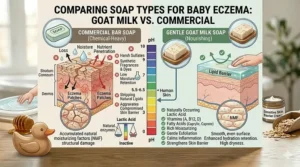
Human skin hovers around a pH of 5.5, creating what scientists call the “acid mantle”—your baby’s first line of defense against bacteria and irritants. Goat’s milk has a different molecular structure than cow’s milk, and crucially, its pH closely matches human skin. When you use regular commercial soap with a pH of 9-10, you’re essentially carpet-bombing that protective barrier. Goat milk soap maintains that delicate balance.
Lactic Acid: Gentle Yet Effective
Goat’s milk contains lactic acid, a naturally occurring and gentle alpha-hydroxy acid that works as a mild exfoliant. For eczema-affected skin, this matters enormously. Dead skin cells accumulate and trap bacteria, creating a cycle of inflammation and infection. The lactic acid gently encourages turnover without the harsh scrubbing that makes eczema worse.
The Moisture Barrier Magic
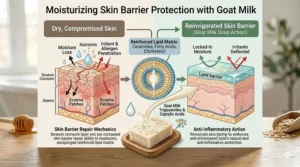
Here’s where it gets interesting: Lactic acid in goat’s milk, combined with the natural fats and oils in the milk, are a natural humectant. Translation? It doesn’t just avoid stripping moisture—it actively helps skin hold onto water. The defective skin barrier of atopic dermatitis permits a route of entry for food and environmental allergens, so strengthening that barrier isn’t just about comfort—it’s about preventing the progression to more severe allergic conditions.
Vitamin and Mineral Support
Goat milk contains vitamins A, B, C, and D, plus minerals like selenium with anti-inflammatory properties. While we can’t claim these cure eczema, they do support overall skin health in ways synthetic ingredients simply can’t replicate.
Choosing the Right Goat Milk Soap for Your Baby
Not all goat milk soaps are created equal, and the wrong choice can actually make eczema worse. Here’s what separates the excellent from the merely adequate when you’re shopping for infant-safe milk soap.
Fresh vs. Powdered Goat Milk
This distinction matters more than manufacturers want you to know. Fresh goat milk retains all its natural fats, proteins, and vitamins in their most bioavailable form. Powdered milk, while shelf-stable and cheaper, loses much of what makes goat milk special during processing. Look for products specifically stating “fresh goat milk” or “raw goat milk”—it’s worth the premium.
The Fragrance-Free Imperative
I know that lavender-scented baby soap smells divine, but perfumes, fragrances and naturally occurring lactic acid can be in some goat’s milk soap and may worsen eczema. Even “natural” essential oils can trigger reactions in compromised skin. Stick with completely unscented options until your pediatrician gives the green light.
Oil Quality Matters
The base oils determine how the soap cleanses and moisturizes. Look for:
- Olive oil: Antioxidant-rich, creates protective barrier
- Coconut oil: Generates lather, has antimicrobial properties
- Castor oil: Draws moisture to skin, fights inflammation
Avoid soaps listing “fragrance,” “parfum,” or synthetic detergents like sodium lauryl sulfate (SLS) in the ingredients.
Size and Aging Considerations
Larger bars (5+ oz) offer better value and last longer, but softer, freshly-made soaps can become mushy. Look for soaps aged at least 4-6 weeks—the aging process completes saponification and creates a harder, milder bar. It’s the difference between soap that lasts a month versus one that dissolves in a week.
The Certification Question
Cruelty-free, non-GMO, and organic certifications aren’t just marketing fluff for baby products. They indicate companies following stricter quality controls and using ingredients less likely to contain irritating pesticides or additives. While not mandatory, they’re reassuring when you’re putting something on inflamed infant skin.
Plain Goat Milk Soap Bar vs. Additive-Enhanced Formulas
The plain goat milk soap bar purist and the “but oatmeal helps!” pragmatist can both be right—it depends on your baby’s specific situation.
When Plain is Perfect
A truly plain goat milk soap bar contains just four ingredients: goat milk, oils (olive, coconut, etc.), lye (which becomes soap through saponification—none remains in the final product), and water. This minimalist approach works beautifully for:
- Newly diagnosed eczema where you’re still identifying triggers
- Babies under 6 months with ultra-sensitive skin
- Cases where every additive seems to cause reactions
The advantage? When skin improves or worsens, you know exactly what’s responsible. There’s no guessing game between the oatmeal, honey, or lavender.
When Additives Add Value
That said, certain additions have earned their place in pediatrician recommended bars:
Colloidal Oatmeal: FDA-recognized skin protectant that reduces itching and inflammation. It’s ground so fine it stays suspended in soap rather than sinking out.
Raw Honey: Natural humectant with antibacterial properties. Helps prevent the secondary infections that often complicate eczema.
Shea Butter: Adds extra moisturizing punch without introducing new allergens for most babies.
The key is keeping additives minimal and well-researched. A soap with oatmeal and honey? Probably fine. One with 15 different essential oils, botanical extracts, and mystery “natural fragrances”? Hard pass.
Testing New Formulas Safely
When trying any new soap—plain or enhanced—do a patch test first. Wash a small area (inner forearm works well) for three consecutive days. No reaction? Proceed to larger areas. This patience prevents whole-body flare-ups that set treatment back weeks.
Fragrance Free Goat Milk Soap: Why It’s Non-Negotiable
Let’s talk about why fragrance free goat milk soap isn’t just a preference for eczema-prone babies—it’s a medical necessity that too many companies ignore in pursuit of “pleasant” scented products.
The Hidden Allergen Problem
“Fragrance” or “parfum” on an ingredient list can represent literally hundreds of different chemicals—companies aren’t required to disclose the specific compounds. For skin already in inflammatory overdrive, each unknown chemical is a potential trigger. Even natural essential oils aren’t innocent; lavender oil, while lovely-smelling, contains over 100 compounds, any of which might cause reactions.
The Sensitization Risk
Absorbing certain ingredients through a compromised skin barrier can lead to food allergies later on. This phenomenon, called transcutaneous sensitization, means what goes on your baby’s skin today might determine their allergic profile tomorrow. Keeping potential allergens to an absolute minimum during eczema flare-ups makes medical sense, as research from the Asthma and Allergy Foundation confirms.
What “Unscented” Really Means
Here’s where labeling gets tricky:
- Fragrance-free: Contains no added scents, period
- Unscented: May contain fragrance to mask base smells (sneaky!)
- Naturally scented: Usually means essential oils (still a trigger)
For infant-safe milk soap, look specifically for “fragrance-free” or “unscented with no masking agents.” Yes, it might smell vaguely like… soap. But that subtle milk-and-oil scent is far preferable to a flare-up triggered by “calming lavender.”
The Exception That Proves the Rule
Some babies tolerate very mild, single-note essential oils once their eczema is well-controlled. But that’s a conversation for after you’ve established a solid baseline with fragrance-free products and consulted your pediatrician. Start strict, relax carefully.
Unscented Goat Milk for Psoriasis: A Related Solution
While our focus is baby eczema, it’s worth noting that unscented goat milk for psoriasis shows promise in adult studies—and the overlap matters for families where skin conditions run genetic.
The Eczema-Psoriasis Connection
Both conditions involve barrier dysfunction and inflammation, though the mechanisms differ. Psoriasis tends to show up later in childhood or adulthood, but babies with severe eczema may develop it eventually. Using gentle cleansers early establishes good habits that serve them lifelong.
What Works for Both
The core principles that make goat milk soap effective for baby eczema apply to psoriasis:
- pH-balanced formula protects acid mantle
- Lactic acid gently removes scales without aggravation
- Natural fats support barrier function
- Lack of irritating additives prevents flare triggers
Many parents report using the same gentle baby skin cleansers on their own psoriatic patches with good results. It’s not treatment—topical medications still handle that—but it prevents the cleansing step from making things worse.
The Autoimmune Consideration
Psoriasis is an autoimmune condition, while eczema is primarily barrier-related (though immune factors play a role). This means psoriasis-specific treatments differ from eczema protocols. However, both benefit from avoiding irritants and maintaining moisture. A quality unscented goat milk soap serves both conditions admirably as part of a comprehensive treatment plan.
Pediatrician Recommended Bars: What Doctors Look For
When pediatricians and dermatologists specifically recommend certain gentle baby skin cleansers, they’re evaluating factors that might not be obvious to parents navigating the soap aisle.
Clinical Testing Standards
Pediatrician recommended bars typically undergo:
- Patch testing: Applied to adult volunteers with sensitive skin for allergic reactions
- HRIPT testing: Human Repeat Insult Patch Test over weeks to check cumulative irritation
- Pediatric trials: Actual testing on children with parental consent (not all products do this)
Standard of care for atopic dermatitis treatment includes topical corticosteroids for active disease and moisturization to repair the barrier defect—meaning doctors view appropriate cleansers as part of the overall treatment strategy, not an optional luxury.
The Ingredient Blacklist
Dermatologists specifically warn against:
- Sodium lauryl sulfate (SLS) and related detergents
- Propylene glycol
- Formaldehyde-releasing preservatives
- Methylisothiazolinone (MIT/MI)
- Cocamidopropyl betaine (despite being derived from coconut)
These ingredients create lather, extend shelf life, or reduce costs—but they do it at the expense of sensitive skin. Quality goat milk soap avoids all of them.
The Prescription Soap Question
Some doctors prescribe specialized cleansers like Cetaphil or Cerave. These work well but lack the natural moisturizing factors in goat milk. The ideal approach? Use prescription cleansers during severe flare-ups, maintain with goat milk soap during calmer periods. Your pediatrician can help you develop a rotation strategy.
When to Insist on Medical Advice
If your baby’s eczema involves weeping, crusting, or signs of infection (yellow crusts, red streaks), soap choice becomes secondary to medical intervention. If eczema herpeticum is suspected, immediately start treatment with systemic aciclovir and refer the child for same-day specialist dermatological advice. No soap, however gentle, replaces appropriate medical care for severe cases.
Gentle Baby Skin Cleansers: Beyond Just Soap
While goat milk soap forms the foundation of eczema-friendly cleansing, understanding how it fits into your baby’s complete skincare routine maximizes its benefits.
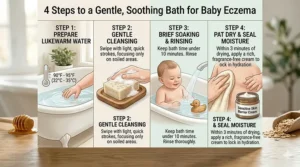
The Soak-and-Seal Method
Dermatologists recommend this proven approach:
- Brief warm bath: 5-10 minutes maximum (longer dries skin)
- Gentle washing: Use goat milk soap sparingly on needed areas only
- Pat dry: Leave skin slightly damp
- Immediate moisturizer: Apply within 3 minutes to seal in water
The soap’s role is supporting this process, not being the star. Think of it as the opening act that sets up the moisturizer’s success.
Frequency Matters
Babies don’t need daily full-body washing unless they’re remarkably messy. The skin of infants under the age of 2 years is characterized by a thinner epidermis and stratum corneum, higher water content, increased transepidermal water loss—meaning they’re already fighting to retain moisture. Spot-cleaning with water between bath days reduces exposure to even gentle cleansers.
The Water Quality Factor
If you live in an area with hard water (high mineral content), even the gentlest soap struggles to lather and rinse cleanly. Consider a shower filter or rinse with distilled water for babies with severe eczema. The soap quality matters less if your water leaves mineral deposits on inflamed skin.
Complementary Products
Pair your chosen goat milk soap with:
- Thick ointment or cream moisturizer: Applied immediately post-bath
- Cotton clothing: Avoids wool and synthetic irritation
- Fragrance-free laundry detergent: Residues contact skin 24/7
- Humidifier: Especially during dry winter months
The entire routine works together—swapping to premium soap while using scented lotion afterward defeats the purpose.
Benefits vs Traditional Alternatives Comparison
| Feature | Goat Milk Soap | Commercial Baby Soap | Prescription Cleanser |
|---|---|---|---|
| pH Balance | Matches skin (5.5) | Often alkaline (9-10) | Neutral to acidic (5-7) |
| Moisturizing | Natural fats & humectants | Stripped during processing | Added synthetics |
| Preservatives | Minimal/none needed | Multiple required | Pharmaceutical-grade |
| Cost | Moderate ($3-7/bar) | Low ($1-3/bar) | High ($10-20/tube) |
| Lather Quality | Rich, creamy | Abundant (detergent-based) | Often minimal |
| Allergen Risk | Low (simple ingredients) | Higher (fragrances, dyes) | Lowest (hypoallergenic) |
| Natural Ingredients | Yes (fresh goat milk, oils) | No (synthetic base) | No (pharmaceutical compounds) |
| Availability | Online/specialty stores | Everywhere | Prescription only |
Price Range & Value Analysis
Understanding the true cost of infant-safe milk soap requires looking beyond the price tag to consider longevity, effectiveness, and overall value.
Budget Tier ($4-8 per bar)
Products like The Soap Haven and Bend Soap Company single bars offer excellent entry points. These handmade options typically last 4-6 weeks with daily use, translating to roughly $0.20-0.40 per use. You’re sacrificing premium packaging and brand recognition, not quality.
Mid-Range ($9-15 per bar)
Beekman 1802 and Legend’s Creek Farm occupy this sweet spot. Larger bar sizes (9 oz vs. 4-5 oz), triple-milling, and clinical testing justify the premium. Cost per use drops to about $0.15-0.25, and these often work better in hard water.
Premium Tier ($20-30 for multi-packs)
Goat Milk Stuff 4-packs and similar bundles represent the best value for committed users. The per-bar cost matches mid-range options, but you’re buying into verified sourcing (farm-fresh milk, organic ingredients) and consistency across batches.
The Hidden Cost of Cheap Soap
That $2 commercial baby soap might trigger a flare-up requiring a $50 dermatologist visit and $40 prescription cream. Suddenly the $10 goat milk bar looks like a bargain. Factor in:
- Reduced flare-up frequency (fewer medical visits)
- Less moisturizer needed (goat milk soap is less drying)
- Multi-use capability (often works for whole family)
- Longer replacement intervals (harder bars last longer)
Making Multi-Packs Work
If you’re nervous about committing to a 4-pack of unfamiliar soap, try this approach:
- Buy single bars of 2-3 different brands
- Patch test all three over a week
- Purchase the winner in multi-pack form
- Store extras in a cool, dry place (properly stored soap lasts 2+ years)
This method costs $25-30 upfront but saves money long-term versus repeatedly buying single bars.
❓ Frequently Asked Questions
❓ Can I use goat milk soap for baby eczema on newborns?
❓ How quickly will goat milk soap improve baby eczema symptoms?
❓ Should I choose plain goat milk soap bar or one with oatmeal?
❓ Can goat milk soap replace prescription eczema treatments?
❓ Is goat milk soap safe if my baby has a dairy allergy?
Conclusion
Finding the right goat milk soap for baby eczema feels less overwhelming when you understand what actually matters: fresh goat milk content, fragrance-free formulation, minimal ingredients, and appropriate pH balance. The seven products we’ve explored represent the best currently available in 2026, each excelling in different areas—whether that’s budget-friendliness, premium quality, or specialized formulations with oatmeal and honey.
Remember that while goat milk soap offers genuine benefits for eczema-prone skin, it’s part of a comprehensive approach including proper moisturizing, trigger avoidance, and medical treatment when needed. The best emollients for eczema are thick creams or ointments that contain little to no water, applied immediately after bathing with your chosen gentle cleanser.
Start with a simple, completely unscented option like Goat Milk Stuff Purity or Beekman 1802 Fragrance Free. Establish a baseline over 2-3 weeks, then carefully introduce enhanced formulas if needed. Your baby’s skin will tell you what works—reduced redness, less scratching, and longer periods between flare-ups signal you’ve found your match.
The journey to managing baby eczema requires patience, experimentation, and partnership with your pediatrician. But armed with the right information and quality products, you’re giving your little one’s delicate skin the gentle care it deserves.
Recommended for You
- 7 Best Certified Organic Goat Milk Soaps That Transform Skin in 2026
- 7 Best Lavender Goat Milk Soap Bars for Sensitive Skin (2026)
- 7 Best Goat Milk Soaps for Dry Skin Relief in 2026
Disclaimer: This article contains affiliate links. If you purchase products through these links, we may earn a small commission at no additional cost to you.
✨ Found this helpful? Share it with your friends! 💬🤗
