
In This Article
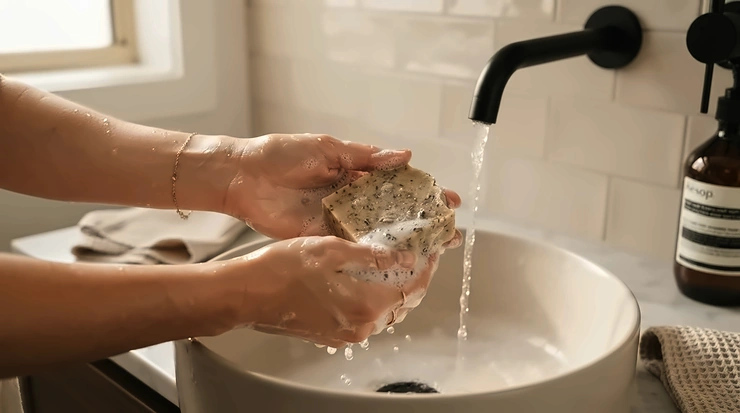
Let’s start with the question that probably brought you here: can a bar of soap actually firm sagging skin? Firming bar soap for sagging mature skin is a category of cleansing bars formulated with ingredients like lactic acid, retinol, collagen, or plant butters that are marketed to support skin’s appearance of tone and elasticity during the short window they’re in contact with your skin. That’s the honest, unglamorous definition — and it matters, because a two-minute wash isn’t a facelift. What these bars can do, when the formula is decent, is cleanse without stripping the skin barrier, deliver a light dose of exfoliation or humectant support, and set the stage for whatever you layer on afterward.

Part of why this category exists at all is hormonal: as Cleveland Clinic explains, declining estrogen during and after menopause accelerates collagen loss, which is exactly the mechanism behind a lot of the sagging and crepiness these soaps are marketed toward. That’s useful context before you spend a dime — it tells you the underlying cause is hormonal and structural, not a hygiene problem soap alone is going to solve.
I’ve spent a lot of time this year digging through ingredient lists, dermatology research, and real Amazon and retail listings for bars marketed toward mature, crepey, or sagging skin, because the category is a mess of overpromising labels sitting right next to genuinely decent formulas. Some of these soaps are essentially rebranded moisturizing bars with an “anti-aging” sticker slapped on. Others contain legitimate actives — lactic acid from goat milk, retinol, kojic acid — in concentrations that could plausibly do something, even if that something is modest.
This guide walks through seven real, purchasable products, breaks down what their ingredients actually do (and don’t), and builds out the kind of practical routine and buying framework that a soap label will never hand you. If you’ve been burned by breathless “skin tightening in 7 days” marketing before, you’re in the right place — we’re going to talk about what’s realistic instead.
Quick Comparison Table
Before the deep dive, here’s a scan-friendly snapshot of how these seven bars stack up against each other on the traits that matter most for sagging, mature skin: exfoliation strength, hydration, and who each one actually suits.
| Product | Key Active | Best For | Price Range |
|---|---|---|---|
| Beekman 1802 | Lactic acid (goat milk) | Crepey, dry mature skin | $10-$14 |
| Legend’s Creek Farm | Lactic acid (goat milk) | Budget-friendly daily use | $8-$12 |
| Goat Milk Stuff | Lactic acid, fragrance-free | Sensitive, reactive skin | $6-$9 |
| Nubian Heritage | Shea butter, oat, vitamin E | Uneven texture on a budget | $5-$7 |
| SheaMoisture | Shea butter, African black soap | Combination body skin | $6-$8 |
| Secret Collagen | Retinol, collagen | Elasticity-focused routines | $16-$22 |
| Valitic | Kojic acid, retinol, turmeric | Multi-tasking brightening + firming | $13-$18 |
A quick read on the data: the two goat milk bars from Beekman 1802 and Legend’s Creek Farm lean on the same mechanism (lactic acid as a gentle alpha-hydroxy acid), so the real differentiator between them is price and fragrance, not performance. Secret Collagen and Valitic sit at the higher end because they’re trying to do more — retinol and kojic acid cost more to formulate and stabilize in a bar format than a straightforward moisturizing soap does. If your skin reacts to almost everything, start at the fragrance-free end of this table with Goat Milk Stuff, not the actives-heavy end.
💬 Found a pick you like already? Save this table and come back to it once you’ve read the full breakdown below.
Top 7 Firming Bar Soaps for Sagging Mature Skin: Expert Analysis
Coverage below spans budget goat-milk bars, mid-range shea and African black soap formulas, and premium retinol-and-collagen bars, so there’s a realistic entry point whether you’re testing the category for $6 or committing to a $20 bar because the ingredient list actually backs it up.
1. Beekman 1802 Pure Goat Milk Soap Bar — natural lactic acid for crepey skin
Beekman 1802 built its whole brand identity around goat milk, and the standout here is lactic acid, which occurs naturally in goat milk and functions as a mild alpha-hydroxy acid (AHA). In practice, that means each wash gives your skin a light chemical exfoliation on top of the physical rinse, helping slough off the dulling buildup of dead cells that tends to accumulate faster once cell turnover slows down with age. The bar is triple-milled, a manufacturing process that compresses the soap and removes excess water, which translates to a denser bar that lasts longer and produces a creamier, less-drying lather than a typical mass-market bar soap.
Based on the ingredient profile, this is a strong pick for anyone whose sagging skin comes paired with visible dryness or a crepey texture, since the lactic acid works double duty as both a gentle exfoliant and a humectant that pulls in moisture. What most buyers overlook about goat milk soap is that the fat content in the milk itself — not just the lactic acid — is doing a lot of the barrier-supporting work, which is why it tends to feel less tight after rinsing than a standard glycerin bar. Reviewers across the goat-milk soap category consistently report that the lather feels noticeably richer than drugstore bars, with common praise centered on scent options and how the bar holds up without turning to mush in a wet soap dish, though a recurring complaint is that scented versions can be too strong for fragrance-sensitive users.
Pros:
- ✅ Naturally occurring lactic acid offers gentle chemical exfoliation
- ✅ Triple-milled formula lathers richly without stripping skin
- ✅ Wide scent lineup so you can match preference to routine
Cons:
- ❌ Fragranced versions may irritate very reactive or eczema-prone skin
- ❌ Premium pricing compared to basic glycerin or syndet bars
Expect to pay in the $10-$14 range for a single bar, and given the exfoliation-plus-hydration combo you’re getting, that price range represents solid value if you’re using it as a genuine skincare step rather than just a hand soap.

2. Legend’s Creek Farm Triple Milled Goat Milk Soap — budget lactic-acid bar for daily use
Legend’s Creek Farm runs on the same core mechanism as Beekman 1802 — triple-milled goat milk delivering natural lactic acid — but at a noticeably friendlier price point, which makes it the more sustainable option if you’re planning to use a firming-adjacent bar every single day rather than saving it for occasional pampering. The brand has been handmaking soap in small batches since 2011, and the ingredient decks lean simple: goat milk, plant oils, and minimal filler.
Here’s what to weigh: because this is a smaller, handmade operation, batch-to-batch consistency can vary slightly more than a large commercial brand, but the tradeoff is a genuinely artisanal bar without artisanal pricing. For mature skin specifically, the appeal is being able to use a lactic-acid-rich bar liberally on the whole body — arms, décolletage, backs of hands — areas that often get neglected in a skincare routine that’s otherwise focused entirely on the face. Aggregated customer sentiment across the brand’s product line points to strong satisfaction with how the bars perform on sensitive skin types, with the unscented and oatmeal-milk-honey variants earning particular praise for gentleness; a common thread in less enthusiastic reviews is that the bars run smaller than expected relative to big-box soap bars.
Pros:
- ✅ Same lactic-acid mechanism as premium goat milk brands, lower cost
- ✅ Handmade in small batches with a simple, short ingredient list
- ✅ Unscented option available for reactive or sensitive skin
Cons:
- ❌ Batch consistency can vary slightly more than mass-produced bars
- ❌ Bar size runs smaller than typical drugstore soap
At around $8-$12 for a multi-pack, this is arguably the best value-per-wash entry point into lactic-acid soap for anyone testing whether the category works for their skin before committing to a pricier bar.
3. Goat Milk Stuff Purity Bar Soap — fragrance-free pick for reactive mature skin
Goat Milk Stuff built its “Purity” line specifically for people whose skin can’t tolerate added fragrance, essential oils, or botanical fillers, which makes it the pick I’d point toward first if your sagging or crepey skin also comes with rosacea, eczema, or general reactivity. The formula strips things back to goat milk, saponified oils, and little else, which means you still get the lactic-acid exfoliation benefit without the layer of scent compounds that can sting compromised, thinning mature skin.
The honest analytical take here is that “fragrance-free” and “hypoallergenic” don’t mean “risk-free” — goat milk itself is still an allergen for a small subset of people — but for the far larger group whose issue is synthetic fragrance or essential oil sensitivity, this bar removes the most common irritant category outright. What the spec sheet won’t tell you, but reviewers note, is that fragrance-free soap often smells faintly “milky” or plain rather than neutral, which some buyers find reassuring and others find underwhelming compared to a scented bar. Aggregated feedback on the brand’s unscented lines skews toward praise for calming irritated, easily inflamed skin, with the recurring caveat that the bar can feel slightly less “luxurious” in the shower than heavily fragranced competitors.
Pros:
- ✅ No added fragrance, essential oils, or botanical irritants
- ✅ Retains the lactic-acid exfoliation benefit of goat milk soap
- ✅ Well suited to eczema-prone or reactive mature skin
Cons:
- ❌ Plain “milky” scent may feel less indulgent than fragranced bars
- ❌ Goat milk itself can still trigger reactions in rare dairy-sensitive users
Priced around $6-$9 per bar, this sits at the affordable end of the goat-milk category, which is a reasonable trade given that you’re sacrificing scent complexity, not efficacy.
4. Nubian Heritage African Black Soap Bar — affordable cleanser with oat and shea for texture
Nubian Heritage has been a fixture on drugstore and Amazon shelves for years, and its African Black Soap bar leans on a traditional West African formula built from plantain-derived ash, shea butter, oats, and aloe vera. The standout feature is the combination of gentle exfoliation from oat kernel meal with heavy moisturizing from shea butter, a pairing that’s historically been used to address rough, uneven, or blemish-prone skin rather than sagging specifically — an important distinction, since this bar’s firming contribution comes almost entirely from moisture retention rather than any collagen-stimulating active.
Based on the spec comparison against the goat-milk bars above, this formula trades chemical exfoliation for a heavier concentration of emollients, which means it’s better suited to someone whose main complaint is rough, dull-looking skin texture layered on top of sagging, rather than someone chasing an AHA-driven renewal effect. Reviewers consistently report that the shea butter content leaves skin feeling notably softer immediately after rinsing, and the brand’s decades-long retail presence has produced a large, generally favorable body of aggregated review sentiment, with recurring praise for how well it addresses dry patches on elbows and knees; a frequent complaint is that the bar’s natural, earthy scent isn’t for everyone.
Pros:
- ✅ Long-established formula with a large, generally positive review history
- ✅ Shea butter and oats deliver strong moisture and softness
- ✅ Budget-friendly enough to use liberally across the whole body
Cons:
- ❌ No meaningful chemical exfoliation, so firming effect is moisture-only
- ❌ Earthy natural scent can be polarizing
At roughly $5-$7 a bar, this is one of the cheapest entry points on this list, and the value holds up well if you’re prioritizing softness and texture improvement over active-ingredient exfoliation.
5. SheaMoisture Bar Soap for Troubled Skin — shea and black soap for combination body skin
SheaMoisture takes a similar African black soap base to Nubian Heritage but markets its version specifically toward “troubled” skin — meaning a combination of dryness, blemishes, and unevenness rather than mature skin exclusively. The standout here is the brand’s heavier lean on raw, unrefined shea butter sourced through its long-running fair-trade shea cooperative program, which gives the bar a thicker, more occlusive finish that helps lock moisture in after rinsing.
Here’s what most buyers overlook: for sagging skin on the body — upper arms, stomach, thighs — moisture retention genuinely does make a visible short-term difference in how “plump” and less crepey skin looks, even though it’s not doing anything to actual collagen density underneath. That’s a legitimate, if temporary, cosmetic win, and it’s honest to say so rather than implying structural change. Aggregated buyer feedback on SheaMoisture‘s black soap line tends to highlight how well it works for combination skin that’s oily in some spots and dry in others, a common concern on the torso and back as skin ages and oil production shifts; some reviewers note the lather is thinner than a typical bar soap, which is characteristic of true African black soap formulations.
Pros:
- ✅ Raw shea butter provides strong short-term moisture plumping
- ✅ Well suited to combination oily-and-dry body skin
- ✅ Backed by an established, ethically-sourced ingredient supply chain
Cons:
- ❌ Thinner lather than conventional bar soap, which can surprise first-time users
- ❌ Moisture effect on sagging appearance is temporary, not structural
Expect around $6-$8 per bar, which puts it squarely in line with Nubian Heritage and makes the choice between the two mostly a matter of scent and lather preference.

6. Secret Collagen Skin Tightening Soap Bar Collection — retinol-rich option for elasticity routines
Secret Collagen markets its bar collection directly at loose, sagging skin on the thighs, arms, belly, and neck, and the formulation leans on retinol as its headline active alongside a rotating cast of botanical additions like shea butter, rosemary, and oatmeal depending on which bar in the collection you pick. Retinol is genuinely one of the most well-studied ingredients in anti-aging skincare — the American Academy of Dermatology notes that retinoids have been used since the 1970s and remain one of the few over-the-counter ingredients proven to reduce fine lines and support collagen with consistent use — which is why its presence here is more credible than the word “collagen” alone would suggest.
That said, here’s the honest analytical caveat this category needs: retinol works through sustained skin contact over minutes to hours, which is exactly what a leave-on cream or serum provides and exactly what a bar soap, rinsed off in under a minute, does not. Based on the spec comparison, treat this bar as a supporting cleanse step rather than your primary retinol delivery method — pair it with a leave-on retinol product if collagen support is genuinely your goal. Independent, verifiable review data on this specific listing is thinner and more mixed than for the legacy drugstore brands on this list; some buyers report liking the scent and lather, while others question whether a wash-off bar can meaningfully “tighten” skin the way the packaging implies, a skepticism that lines up with the dermatological reality above.
Pros:
- ✅ Contains retinol, a dermatologist-recognized collagen-supporting ingredient
- ✅ Multiple variants target different areas (thighs, neck, belly, arms)
- ✅ Botanical additions like shea butter offset retinol’s drying tendency
Cons:
- ❌ Brief wash-off contact time limits retinol’s real-world effectiveness
- ❌ Review history is thinner and more mixed than established brands
At around $16-$22 for the collection, this is the priciest pick here — reasonable only if you view it as a themed cleansing step within a broader retinol routine, not a standalone fix.
7. Valitic Kojic Acid Vitamin C and Retinol Soap Bars with Turmeric — multi-tasking brightening and firming bar
Valitic packs kojic acid, vitamin C, retinol, turmeric, collagen, and hyaluronic acid into a single bar aimed primarily at dark spots, with firming and tone-evening positioned as secondary benefits. Kojic acid is a tyrosinase inhibitor that’s genuinely effective at fading discoloration with consistent use, and turmeric brings mild anti-inflammatory properties on top of that — but the retinol, collagen, and hyaluronic acid additions face the same wash-off contact-time problem outlined above.
What the spec sheet won’t tell you, but the ingredient science suggests, is that this bar is doing its most credible work as a brightening and evening-tone product, with the firming claims riding along as a marketing add-on rather than the primary mechanism. That’s not a knock on the product so much as an honest recalibration of expectations — if uneven tone bothers you as much as sagging does, this multi-ingredient approach gives you more bang for the wash than a single-active bar. Publicly available retail ratings for this product have landed in the solid mid-4-star range out of 5 across a modest number of reviews at the time of research, with buyers commonly citing visible brightening within a few weeks and mixed feedback on fragrance strength.
Pros:
- ✅ Kojic acid delivers genuine, well-supported tone-evening benefits
- ✅ Turmeric adds mild anti-inflammatory support alongside brightening
- ✅ Multi-pack options make it economical for regular use
Cons:
- ❌ Firming and collagen claims are the weakest-supported part of the formula
- ❌ Ingredient list is dense, raising irritation risk for sensitive skin
Multi-packs typically run $13-$18, which is reasonable if brightening is your primary goal and firming is a welcome bonus rather than the deciding factor.
Practical Usage Guide: Getting the Most From a Firming Bar Soap
Buying the right bar is only half the equation — how you use it in the first 30 days determines whether you notice any difference at all. Start slow: use an active-ingredient bar (retinol, kojic acid, or a strong lactic-acid goat milk bar) every other day for the first two weeks rather than daily, since mature skin’s slower cell turnover also means it’s slower to recover from irritation. Lather with your hands rather than a rough loofah — physical scrubbing on top of chemical exfoliants is a common way people accidentally over-exfoliate crepey skin, leading to redness that gets mistaken for the soap “not working.”
Timing matters more than most labels admit. Apply a leave-on moisturizer within two to three minutes of rinsing off any of these bars, while skin is still slightly damp, to lock in whatever humectant benefit the lactic acid or glycerin provided; wait too long and that water simply evaporates, leaving skin drier than before you started. A common first-month mistake is switching bars too quickly out of impatience — genuine skin-barrier changes from consistent cleansing habits take four to six weeks minimum to show, so give one product a fair trial before assuming it’s ineffective. Finally, store the bar in a soap dish that drains water away rather than letting it sit in a puddle, since a bar that turns mushy loses potency faster and becomes a breeding ground for bacteria.

Real-World Scenarios: Who Should Use Which Bar
Scenario one — the budget-conscious daily user. If you’re washing your whole body every day and want a firming-adjacent bar in the rotation without a premium price tag, Legend’s Creek Farm or Nubian Heritage make the most sense. Both are affordable enough to use liberally on arms, legs, and torso rather than rationing a single bar to your face.
Scenario two — the reactive, easily irritated skin type. If retinol creams or fragranced products have burned you before, Goat Milk Stuff is the safer on-ramp into this category. Its fragrance-free formula still delivers lactic acid’s exfoliating benefit without the added risk of essential oils on already-compromised skin.
Scenario three — the routine-builder chasing visible elasticity gains. If you’re already using a leave-on retinol serum at night and want a cleansing step that reinforces rather than works against it, Secret Collagen or Valitic fit as a complementary morning or evening wash — just keep expectations calibrated to “supporting player,” not “star of the show.”
Body Firming Routines: Turning One Bar Into a Real Routine
A single bar of soap, used in isolation, is not a body firming routine — it’s one ingredient in a much larger picture that includes hydration, sun protection, movement, and realistic expectations. Here’s how to build the soap into something more effective:
- Problem: sagging skin with no visible improvement after weeks of use. Solution: audit whether you’re actually applying a leave-on moisturizer or retinol product afterward, since the soap alone was never designed to be a complete treatment.
- Problem: skin feels tight and dry after washing. Solution: switch from a heavily fragranced bar to one of the fragrance-free or shea-heavy options above, and reduce washing frequency on already-dry areas like shins and forearms.
- Problem: uneven results across different body areas. Solution: recognize that skin thickness and oil production vary dramatically by body part — the thin skin on the neck and inner arms responds differently than the thicker skin on the back, so a one-bar-fits-all approach will always show uneven results.
- Problem: motivation fades before results appear. Solution: pair the soap step with something trackable, like a simple weekly photo log in consistent lighting, since day-to-day skin changes are too subtle to judge by feel alone.
- Problem: uncertainty about whether to add other tools. Solution: layer in gentle resistance exercise for the areas that concern you most — building underlying muscle tone genuinely does change how loose skin drapes over the body, independent of anything topical.
How to Choose Firming Bar Soap for Sagging Mature Skin
Picking the right bar comes down to matching the active ingredients to your actual skin concern, not the boldest word on the packaging. Here’s a practical framework:
- Identify your primary concern first. Dryness and crepey texture point toward lactic-acid goat milk bars; uneven tone points toward kojic acid; general moisture loss points toward shea-butter-forward formulas.
- Check your sensitivity threshold. If you have rosacea, eczema, or a history of reacting to fragrance, start with a fragrance-free option regardless of how appealing an active-ingredient bar sounds on paper.
- Read the ingredient order, not just the front label. Ingredients are listed by concentration — a bar with retinol buried near the bottom of a 15-ingredient list is delivering far less of it than one where it appears near the top.
- Set a realistic expectation window. Give any new bar four to six weeks of consistent use before judging results, since skin barrier changes happen gradually, not overnight.
- Match the price to your usage pattern. A premium retinol bar used once a week delivers less cumulative benefit than a budget goat-milk bar used daily — buy what you’ll actually use consistently.
- Pair, don’t rely. Treat every bar on this list as a cleansing step that complements a leave-on moisturizer or serum, never as a standalone treatment.
- Verify current availability and price before buying. Formulas and pricing on smaller-batch and private-label bars can shift; always check the current listing rather than relying on older reviews.
Firming Bar Soap vs Skin Firming Devices
It’s worth being honest about where bar soap sits relative to skin firming devices — the radiofrequency wands, microcurrent tools, and vacuum-massage gadgets that have become popular for at-home use. These devices work through an entirely different mechanism: controlled heat or electrical stimulation that can trigger a genuine, measurable wound-healing response in the dermis, prompting new collagen synthesis over weeks of consistent use. That’s a meaningfully different category of effect than anything a wash-off soap can deliver.
| Factor | Firming Bar Soap | Skin Firming Devices |
|---|---|---|
| Mechanism | Surface exfoliation, hydration, brief active exposure | Heat or electrical stimulation reaching the dermis |
| Typical Cost | $5-$22 per bar | $80-$400+ per device |
| Time to Notice Anything | 4-6 weeks, subtle | 8-12 weeks, more measurable |
| Daily Effort | Seconds, folded into showering | 10-20 minutes, dedicated session |
| Best For | Maintenance and routine-building | Users chasing structural improvement |
The analysis here is straightforward: soap wins on convenience, cost, and low irritation risk, while devices win on the plausibility of a structural, not just cosmetic, effect — though even device manufacturers’ claims deserve scrutiny, since at-home devices rarely reach the intensity of in-office professional equipment. For most people with mild sagging and a modest budget, a good firming soap paired with a leave-on retinol and sunscreen delivers a reasonable return; a device makes more sense once you’re chasing more noticeable, longer-lasting change and are willing to invest the time and money.
Common Mistakes When Buying Skin-Firming Cleanser Bars
The biggest mistake shoppers make is assuming “natural” and “effective” are the same word — a beautifully simple three-ingredient bar can be less useful for firming than a slightly more synthetic one with a genuine active ingredient, and vice versa. A close second is chasing the word “collagen” on packaging without checking whether the collagen molecule listed is actually small enough to do anything topically; most collagen used in cosmetics sits on the skin’s surface as a humectant rather than penetrating to rebuild the dermis, since the molecule is simply too large.
Another frequent misstep is buying based on scent appeal alone, which matters for the shower experience but tells you nothing about whether the formula addresses your actual skin concern. People also commonly underestimate how much bar size and cost-per-use matter over time — a $6 bar that lasts three weeks is often better value than a $20 bar that dissolves in ten days, especially once you calculate true cost per month. Finally, plenty of buyers skip the patch test entirely on active-ingredient bars, then discover irritation on their entire arm or torso rather than a small, manageable test patch on the inner elbow first.
What to Expect: Real-World Performance and the Collagen-Elastin Reality
Understanding why sagging happens in the first place helps set realistic expectations for what any topical product, soap included, can and can’t do. Skin’s firmness comes from a dense network of collagen and elastin fibers in the dermis; as we age, fibroblasts — the cells responsible for producing these fibers — become less active, and existing collagen fibrils progressively fragment and disorganize, a process well documented in dermal aging research. That fragmentation, not a lack of soap-based collagen, is the real driver of visible sagging.
This matters practically: no topical product, bar soap included, reverses that fibril fragmentation. What an elasticity-boosting soap with lactic acid or retinol can realistically do is support surface hydration, gently encourage cell turnover, and create smoother, better-hydrated skin that reflects light more evenly — which reads visually as “firmer” even without any structural change underneath. That’s not a scam; it’s just a different, more modest kind of result than the word “firming” implies on a bottle. Reviewers who report the most satisfaction tend to describe smoother texture and reduced dryness rather than dramatic tightening, which lines up well with what the underlying biology actually supports.
Long-Term Cost & Maintenance
Running the numbers changes the calculus on which bar makes sense for sustained use. A $6 bar of Nubian Heritage used daily by one person typically lasts three to four weeks, working out to roughly $0.25-$0.30 per use — genuinely negligible over a year. A $20 Secret Collagen bar used every other day as a supporting step in a broader routine, lasting perhaps five to six weeks, comes out closer to $0.60-$0.75 per use, still modest but a meaningful multiple of the budget option.
The real long-term cost consideration isn’t the soap at all — it’s whether you’re also budgeting for the leave-on products (moisturizer, sunscreen, and possibly a dedicated retinol serum) that make the soap step worthwhile in the first place. A firming bar soap without daily SPF is working against an opponent — ongoing UV exposure — that actively accelerates the same collagen and elastin breakdown the soap is trying to support. If your total skincare budget is limited, prioritize sunscreen and a basic moisturizer before splurging on the priciest active-ingredient bar on this list; the return on consistent sun protection dwarfs anything a soap bar alone can deliver.
Safety, Regulations & Honest Claims Guide
It helps to understand why these bars can advertise “firming” and “tightening” so confidently without clinical trial data behind every claim. Under U.S. law, cosmetics don’t require FDA approval before going to market, and the FDA’s own guidance on cosmetic labeling notes that while claims must be truthful and not misleading, there’s no pre-approved list of accepted cosmetic claims — as long as a product doesn’t claim to treat or cure a disease or change the body’s structure or function, it stays classified as a cosmetic rather than a drug, which is a much lower regulatory bar. That’s the loophole “firming” and “tightening” language lives in: those are appearance-based claims, not medical ones, so they don’t require the same substantiation a drug claim would.
Practically, that means the burden is on you as a buyer to separate plausible ingredient science (lactic acid’s exfoliating effect, retinol’s cell-turnover support) from vaguer “puffery” language that sounds scientific but promises nothing measurable. If a listing claims dramatic results in days, that’s a signal to lower your expectations, not raise your excitement. Patch-test any new active-ingredient bar on your inner forearm for 48 hours before full use, discontinue if you notice persistent redness or burning beyond mild initial tingling, and consult a board-certified dermatologist before combining multiple active ingredients (retinol plus kojic acid plus an AHA, for instance) if you’re new to actives, since layering can meaningfully raise irritation risk on already-thinning mature skin.
🌿 Don’t Miss These Picks!
🧼 Take your skincare routine to the next level with a bar that actually matches your skin’s needs. Click on any product above to check current pricing and availability before you commit.
FAQ
❓ Does firming soap really tighten sagging skin?
Not structurally — no wash-off soap rebuilds collagen fibers. What it can do is exfoliate gently and hydrate the surface, which makes skin look smoother and temporarily firmer in appearance…
❓ How long does it take to see results from a firming bar soap?
Most consistent users report noticing texture and hydration changes after four to six weeks of daily or every-other-day use, not days or a single week…
❓ Is retinol soap actually effective, or just a marketing gimmick?
Retinol is a legitimate active, but a soap’s brief rinse-off contact time limits how much it can do compared to a leave-on retinol cream or serum…
❓ Can I use a firming bar soap on my face and body?
Many of these bars are gentle enough for both, but facial skin is thinner and more sensitive, so patch test first and consider a lower-frequency schedule on the face…
❓ What ingredients should I look for in a skin-firming cleanser bar?
Look for lactic acid (from goat milk), retinol, kojic acid, or shea butter near the top of the ingredient list, since ingredient order reflects concentration…
Conclusion
Firming bar soap for sagging mature skin isn’t a miracle category, and the products on this list are honest about that when you read the ingredient science instead of the marketing copy. The two goat-milk bars, Beekman 1802 and Legend’s Creek Farm, offer the most dependable, well-understood mechanism through natural lactic acid, while Nubian Heritage and SheaMoisture lean on moisture-driven softness rather than exfoliation. The actives-forward picks, Secret Collagen and Valitic, bring genuinely interesting ingredients like retinol and kojic acid to the table, tempered by the honest caveat that a quick wash limits how much any leave-on-style active can accomplish.
The real takeaway is that a good firming soap works best as one piece of a broader routine — paired with a leave-on moisturizer, daily sunscreen, and patience measured in weeks rather than days. Pick the bar that matches your specific concern and sensitivity level from the seven above, give it a genuine month-long trial, and keep your expectations calibrated to what dermal biology actually supports rather than what the packaging promises.
Recommended for You
- 7 Best Anti-Aging Bar Soap Reviews For Mature Skin (2026)
- Anti-Aging Bar Soap: 7 Real Picks Worth Your $15 in 2026
- 7 Best Long-Lasting Bar Soap for Normal Skin Picks (2026)
Disclaimer: This article contains affiliate links. As an Amazon Associate, I earn from qualifying purchases. If you purchase products through these links, we may earn a small commission at no additional cost to you.
✨ Found this helpful? Share it with your friends! 💬🤗
